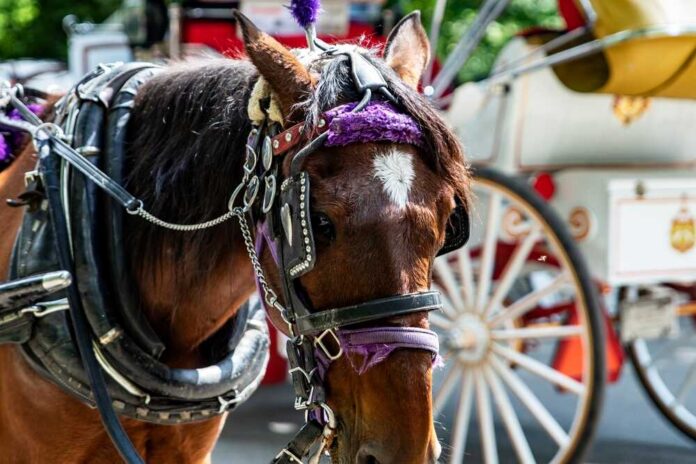
A tragic Central Park crash is now fueling a City Council push to ban carriage rides—despite evidence the real culprit was a toxic plant, not the industry.
Story Snapshot
- Cornell necropsy points to lethal Japanese yew ingestion, not equipment failure [1][2]
- Horse stopped to nibble a shrub near East 90th Street, then collapsed and died [1][2][3]
- Union urges park-wide toxic plant review; ban advocates press harder anyway [1][2]
- City officials weigh new limits as debate shifts from safety to stewardship [2]
Necropsy Findings Shift Blame To Toxic Plant Exposure
Cornell University veterinary pathologists reported “abundant” Japanese yew needles and plant material in Deniz’s mouth and stomach, with quantities “enough to be lethal.” The union representing drivers publicized the findings, which indicate poisoning rather than a carriage or traffic failure. Japanese yew contains toxins that can stop a horse’s heart with a small dose, consistent with the horse trembling, collapsing, and dying shortly after eating from a shrub along the park drive near East 90th Street [1].
The New York Times reported the preliminary Cornell findings while noting the city Health Department will issue the final cause of death after the full necropsy. The Times linked the case to City Council talks on stricter rules or a full ban. That timing matters. A plant-based poisoning suggests an environmental hazard, not proof the carriage trade is inherently unsafe. Still, reform advocates used the death to push their long-standing ban agenda at City Hall [2].
What Happened In The Park That Day
Union accounts say Deniz paused on his route, nibbled a shrub that was later identified as Japanese yew, then quickly showed distress and fell. Media summaries echo this timeline and cite the Cornell review of plant material found in the gastrointestinal tract. This is not an equipment malfunction, spook incident, or heat stroke case. It is a lethal toxic exposure along a permitted horse route in a public park used by families, dogs, and tourists every day [1][3].
That fact raises a simple question for city leaders: why was a deadly ornamental plant accessible along a carriage path? The union has called for an immediate survey and removal of toxic plantings. That is basic stewardship. City institutions can protect people and animals by fencing off, labeling, or replacing known toxic shrubs. That precise fix is faster and more targeted than banning a historic industry based on a poisoning that could threaten any animal—or child—who touches the wrong leaves [1].
The Policy Fight: Ban Narrative Vs. Practical Fixes
Animal-welfare groups argue the industry is outdated and dangerous in a dense city. They say a ban is the only answer. After this incident, those voices grew louder, even as the necropsy suggested a plant hazard, not carriage abuse. The City Council is again weighing bans or tighter rules. But the carriage workforce counters that the case shows the need for better park management, not a job-killing crackdown that ignores the actual cause of death identified by Cornell [2].
Conservatives see a pattern here. Big-city officials reach for bans when maintenance and accountability would do. New Yorkers pay high taxes. They deserve competent park oversight, not culture-war theatrics that erase tradition and livelihoods. Removing toxic shrubs is common sense. Enforcing clear handling rules is fair. Destroying an iconic service because of a plant that can be cut and hauled away looks more like ideology than safety policy [2].
Safety, Responsibility, And What Should Happen Next
City government can act on three clear steps. First, order a full survey to identify and remove or secure Japanese yew and other toxic ornamentals along horse routes and pedestrian areas. Second, post clear warnings and require immediate reporting when known hazards are found. Third, align enforcement so drivers keep horses from browsing, while park managers keep deadly plants out of reach. These actions meet the facts in this case and protect the public without a sweeping ban [1].
ALERT: Horse dies in Central Park after eating Japanese yew plant, and the local union is outraged.
Deniz, a 16-year-old gelding horse, died after allegedly eating Japanese yew, a “highly toxic” poisonous plant, according to TWU Local 100, which represents carriage horse… pic.twitter.com/tfifL0WE4Q
— E X X ➠A L E R T S (@ExxAlerts) June 17, 2026
Leaders should also wait for the final Health Department cause-of-death report before rewriting laws. The preliminary record is strong, but due process matters. If the final findings track Cornell’s review, then the blame belongs with a preventable environmental danger. The fix is to clean up the park and tighten practical rules. That approach respects animal welfare, protects jobs, and rejects the reflex to regulate away a tradition when simple stewardship would save lives [2].
Sources:
[1] Web – Man killed after horse-drawn carriage bolts and flips near popular New …
[2] Web – Necropsy Finds Toxic Plant Caused Death of Central Park Carriage …
[3] Web – Carriage Horse in Central Park Died After Eating a Poisonous Plant