A rare imported Ebola case in France is stirring fresh questions about borders, global health, and government honesty.
Story Snapshot
- France confirms its first-ever Ebola case, a doctor back from the Democratic Republic of Congo.
- The case is tied to a dangerous African outbreak, with no vaccine for the Bundibugyo strain.
- French officials insist risk to the public is “very low,” while rushing to trace contacts.
- The episode exposes how global travel can carry deadly viruses into Europe and beyond.
France’s First Ebola Case: What Really Happened
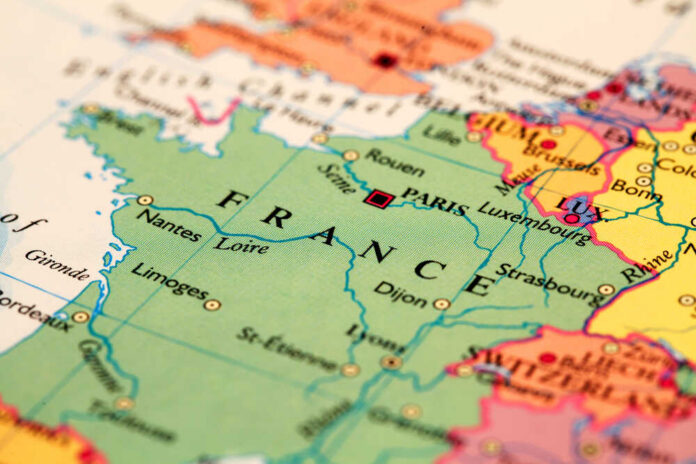
French health authorities have confirmed the country’s first-ever case of Ebola, and it did not come from inside France’s borders.[2] The patient is a doctor who had just returned from a humanitarian mission in the Democratic Republic of Congo, where a major Ebola outbreak has been raging for weeks.[2][6] According to France’s health ministry, the doctor was isolated as soon as he arrived, moved under strict safety rules to a specialized hospital, and is currently in stable condition.[2][4][9]
The ministry’s statement stressed that this is the first time Ebola has been identified on French territory, even though two Ebola patients were airlifted in from West Africa during the 2014–2016 outbreak and treated under tight isolation.[2][7] Back then, France’s surveillance system screened over a thousand suspected cases and found no true imported infection inside the country.[7] That record has now changed. This new case is the first confirmed infection detected in mainland France itself, not just a repatriation from abroad.[2][5][7]
Linked to a Deadly African Outbreak With No Vaccine
This French case is directly linked to a serious Ebola outbreak in the Democratic Republic of Congo, which began last month and has already killed hundreds.[1][3][6] Congolese authorities and the World Health Organization report more than a thousand confirmed infections and around 260–270 deaths so far, showing how fast the virus can spread in unstable regions.[1][3][6] The outbreak is driven by the rare Bundibugyo strain of Ebola, for which there is currently no approved vaccine or specific treatment.[1][4][9]
Ebola is not like the seasonal flu. The World Health Organization says the average death rate for Ebola cases is about 50 percent, with some outbreaks killing up to 90 percent of patients.[8] Early signs include sudden fever, weakness, muscle pain, and sore throat, followed by vomiting, diarrhea, rash, and sometimes internal and external bleeding.[5][3] The virus spreads through direct contact with the blood or bodily fluids of an infected person or of someone who has died from the disease, which makes it especially dangerous in poor health systems and in areas with traditional burial practices.[3][8][15]
Why Officials Say the Public Risk Is “Very Low”
Despite the shock of seeing Ebola inside France, health authorities are trying to calm fears, saying the risk to the general population is very low.[1][2][4] Their argument is simple: Ebola does not spread through the air like a cold or coronavirus. It requires close contact with bodily fluids, which makes large outbreaks in rich countries less likely when hospitals follow strict infection control rules.[4][8][16] The doctor was isolated on arrival, moved in secure transport, and has had only limited, tracked contact with others since landing.[2][4][9]
To back up their message, French officials are launching an intensive contact-tracing effort. Anyone who may have been near the doctor is being identified, told to stay home, and monitored closely for 21 days, the known maximum incubation period for Ebola.[4][6][16] The European Centre for Disease Prevention and Control has also assessed the risk to residents of the European Union as low, and to the wider European public as very low, based on past experience and the virus’s limited ways of spreading.[4][16] This is meant to reassure people that this is a serious event, but not the start of a continental crisis.
Global Travel, Open Borders, and Hard Questions
This first French case fits a pattern that should matter to any reader worried about open borders and global health.[1][16] During the huge West African outbreak of 2014–2016, scientists warned that countries like France faced a high chance of imported Ebola cases because of air travel and migration.[3][12] Yet France, with strong surveillance and screening, did not detect a single true imported infection at that time, only two airlifted patients who were already diagnosed elsewhere.[1][7] That showed good preparation can work—even while global elites kept pushing open-border policies and high travel volumes.
France Reports First Ebola Case In Current Outbreak#France has confirmed its first #Ebola case in the latest outbreak after a doctor returning from a humanitarian mission in the Democratic Republic of Congo tested positive.
The patient is now in isolation, with contact tracing… pic.twitter.com/uopDyZzpoL
— Daily Euro Times (@dailyeurotimes) June 24, 2026
Today, Europe’s own disease agency again says imported Ebola cases should be “very rare,” but it also urges all European countries to strengthen preparedness for exactly this kind of event.[16] That means being able to quickly spot suspected cases, isolate them, trace their contacts, and use strict infection control in hospitals.[16] France’s new Level 1 surveillance cell for Ebola and related viruses is part of that effort.[5] For American conservatives watching from afar, the lesson is clear: in a world of constant travel, you cannot separate border security, public health, and honest government communication. When deadly diseases cross continents in a single flight, weak surveillance and political spin are not just annoying—they are dangerous.
Sources:
[1] Web – France announces first Ebola case
[2] Web – Strengthened Ebola surveillance in France during a major outbreak …
[4] Web – History of Ebola Outbreaks – CDC
[5] Web – Chapter 2: Major Ebola outbreaks in Africa | Mercy Corps
[6] Web – Ebola – ANRS Maladies infectieuses émergentes
[7] Web – Ebola and Marburg haemorrhagic fevers: outbreaks and case …
[8] YouTube – Health workers in DR Congo fear for their lives • FRANCE 24 English
[9] Web – Ebola global – World Health Organization (WHO)
[12] YouTube – Ebola cases reach more than 500 • FRANCE 24 English
[15] Web – Ebola Outbreak: Current Situation – CDC
[16] Web – Ebola virus disease – Santé publique France