Newly declassified intelligence says China stole data on 220 million American voters, and President Trump is warning that our election system is wide open to foreign exploitation.
Story Snapshot
- President Trump declassifies intelligence claiming China stole 220 million U.S. voter files starting in the 2020 cycle.
- White House documents say the breach exposed names, addresses, party preference, and voting history, creating a major election security risk.
- Trump blasts past officials for hiding the threat and orders new investigations into voting systems and foreign meddling.
- Prior federal assessments say voter data theft did not change votes or results, fueling a debate over risk versus impact.
Trump’s Primetime Warning on Election Data Breach
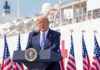
President Donald Trump used a rare primetime address from the White House to tell Americans that China carried out what he called “the largest compromise of election data in history.” He said declassified intelligence shows the People’s Republic of China obtained data from about 220 million U.S. voter files over several years, starting in the 2020 election cycle. Trump framed the breach as proof that America’s election system is dangerously exposed and badly managed by past leaders.
According to the newly posted White House election integrity page, U.S. spy agencies first detected that tens of millions of voters’ data in 18 states had been bought, stolen, or hacked by China in 2020. The site says the stolen records include names, addresses, phone numbers, party preferences, and other details needed to register and vote, and warns this data loss is an “unprecedented election security nightmare.” Trump told viewers this was not a minor leak but a massive failure that foreign powers can now exploit.
What the Declassified Documents Say About Vulnerable Systems
The White House release claims the intelligence community has long known that many voting machines and ballot-counting systems are highly vulnerable to attack. The documents argue that foreign governments can target both the hardware that records votes and the systems that store voter registration data, making hacking and manipulation a serious risk. Trump said China even set up a special data exploitation unit to work on the stolen voter information, underscoring how foreign adversaries treat our elections as a strategic battlefield.
The election integrity materials paint a broader picture of a broken system: hundreds of millions of U.S. voter files in foreign hands, evidence of fraud “buried,” and voter rolls bloated with non‑citizens and deceased individuals. They criticize the lack of voter identification, no proof of citizenship requirements, and “tens of millions of ballots floating aimlessly through the mail.” For many conservatives, these claims echo long‑standing worries that loose rules and complex machines invite chaos and open the door to abuse by bad actors at home and abroad.
Clash With Earlier Federal Assessments and Fact‑Checks
Trump’s new claims sit alongside earlier official assessments that painted a more limited picture of foreign impact. A 2021 U.S. intelligence community report found no evidence that any foreign actor tried to alter or successfully changed any technical part of the 2020 election, including voter registrations, ballots, tabulations, or results. A joint bulletin from the Federal Bureau of Investigation (FBI) and the Cybersecurity and Infrastructure Security Agency said much voter information is already public or sold legally, and past cyber access to registration data did not affect voting or outcomes.
Major news outlets and fact‑checkers note that while foreign hackers have obtained voter registration data, that does not automatically mean votes were changed or that results were rigged. One CBS News fact‑check pointed out that many states openly post voter files or sell them to campaigns, meaning some “stolen” data may simply be widely available information repackaged in alarming terms. At the same time, the fact‑check concedes it is unclear how China accessed all of the data or what they did with it, leaving real questions about how foreign powers might use detailed voter files for targeted influence operations.
Trump’s Push for Tougher Election Rules and Accountability
Trump is using the declassified documents to demand a shift in election policy toward stricter rules and deeper oversight. The White House page argues that, taken together, the disclosures show an election system “so broken and vulnerable that no one can possibly defend it.” Trump has called for aggressive investigations by the director of national intelligence and the FBI, and he is tying the new revelations to long‑standing conservative goals like strong voter identification laws and proof‑of‑citizenship requirements.
President Donald Trump delivered a primetime address revealing declassified intelligence showing the Chinese Communist Party executed the largest election data compromise in U.S. history, illicitly acquiring 220 million American voter files (names, addresses, phone numbers, party… pic.twitter.com/LvrPysOOHq
— Capitol Times Magazine (@capitoltimesmag) July 17, 2026
For many right‑leaning Americans, the story lands in a familiar context: years of warnings about “woke” priorities, globalist deals, and bureaucrats who protect themselves instead of the people. Trump says members of a “deep state” inside intelligence agencies knew about China’s data theft as early as 2020 but kept it quiet, denying both the president and voters the truth. Whether or not earlier reports saw the threat as outcome‑changing, the newly declassified documents give his supporters fresh fuel to press for tighter election security, less reliance on complex machines, and more power back in the hands of citizens watching the process up close.
Sources:
cbsnews.com, cnn.com, foxnews.com, youtube.com, livemint.com