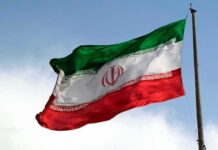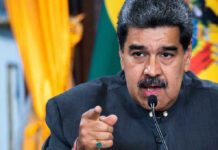
China is blasting President Trump’s Russia sanctions bill as “unilateral bullying,” even as the United States moves to hit Beijing where it hurts most—cheap Russian energy.
Story Snapshot
- Trump-backed **Sanctioning Russia Act of 2025** targets countries that keep buying Russian oil and gas, including China and India.
- The revised bill lets the President slap tariffs up to **100%** on top Russian energy buyers, with authority reaching **200%** in some cases.
- China claims the plan has “no basis in international law” and calls it economic coercion, but offers no data to deny Russia’s war funding from energy sales.
- The fight over tariffs will shape global energy prices, U.S. trade, and whether America can really choke off cash for Putin’s war machine.
Trump’s Sanctions Bill Puts Teeth Behind America’s Russia Policy
The **Sanctioning Russia Act of 2025** is a bipartisan bill in the 119th Congress that gives President Trump power to target not just Russia, but countries that help fund Moscow’s war by buying its energy. The bill was introduced by Senator Lindsey Graham and Democrat Senator Richard Blumenthal, with more than 80 senators and over 150 House members backing it, showing rare unity in Washington. The goal is simple: make it costly to keep buying Russian oil, gas, and uranium while Russian troops are still fighting in Ukraine.
Under the original version, nations that keep importing Russian energy could face tariffs up to 500 percent on goods they ship to America, a massive economic hit. After pushback from key partners, lawmakers revised the plan so the top five buyers—China, India, Slovakia, Hungary, and Azerbaijan—would face maximum tariffs of 100 percent, while the President still holds authority to go as high as 200 percent in some situations. The bill also goes after Russian financial institutions and major energy projects like Yamal liquefied natural gas and Arctic liquefied natural gas, aiming to cut off revenue that helps pay for the war.
China Cries “Unilateral Bullying” While Doubling Down on Russian Energy
Beijing’s leaders are furious that America is calling out their deepening energy ties with Russia and threatening steep tariffs if they keep buying cheap Russian oil. A Foreign Ministry spokesperson argued that U.S. sanctions “have no basis in international law and are not authorised by the United Nations Security Council,” trying to paint Washington as the aggressor. Chinese officials went further, calling the bill “unilateral bullying and economic coercion” and warning it threatens global trade rules and supply chain stability.
China also insists that its “normal economic, trade and energy cooperation” with Russia is “justified, legitimate and beyond reproach,” framing the clash as a fight over national sovereignty, not war funding. But Beijing has not offered a serious rebuttal to the core U.S. claim that Russian energy sales are helping finance the war in Ukraine. Nor has China challenged the data naming it as a top buyer of Russian crude; instead, it focuses on process and law, while openly vowing to step up long-term energy cooperation with Moscow. That makes its legal talk sound more like a shield for its own interests than a defense of global norms.
Tariff Power, Waivers, and the Stakes for U.S. Workers and Allies
President Trump formally approved the revised sanctions framework on January 7, 2026, signaling he is ready to use tariff power to punish countries that keep feeding Russia’s energy cash flows. Reports describe the bill as giving him authority to impose tariffs up to 200 percent on imports from nations that continue buying Russian oil and gas, even after clear warnings. At the same time, the text builds in “narrowly tailored waiver authorities” for European states and gas buyers that import less than 15 percent of their natural gas from Russia and are cutting back over time. That design aims to shield key allies that are already moving away from Russian supplies, while keeping pressure squarely on heavy buyers like China and India.
The Trump administration’s wider Russia policy has already hit major energy players with sanctions, and U.S. Treasury guidance warns that ongoing Russian oil deals could trigger tariffs around 100 percent on Chinese buyers. Analysts say these secondary measures can bite hard, not just by raising costs but by forcing companies and governments to rethink long-term contracts and shipping routes. For American workers and families, the fight matters because it shapes global energy prices, trade flows, and the leverage Washington has when it says enough is enough on foreign wars funded by hostile regimes. If done right, tough sanctions can weaken Russia’s war machine without putting unfair burdens on U.S. households.
Congress Gridlock, Global Blowback, and What Comes Next
Despite Trump’s green light, the sanctions bill has been stuck in Congress for months, with leaders slow-walking votes while the White House weighs separate tariff moves against India and others. That stall raises real questions about enforcement: the bill authorizes big tariffs and secondary sanctions, but does not lay out all the nuts-and-bolts for how penalties would be tracked and applied across complex global supply chains. Critics say without clear rules, foreign buyers could hide behind shell companies, shadow fleets, or non-dollar payments, blunting the full effect on Russia’s revenues.
🚨 The US Senate unveiled a revised Russia sanctions bill proposing tariffs of up to 100% on countries importing Russian energy, including India and China.#USA #Russia #India #China #TTVNews pic.twitter.com/wCRODZ0dPj
— TTV NEWS CHANNEL (@TTVNEWSCHA75532) July 15, 2026
On the world stage, many media outlets and foreign governments frame America’s push as risking trade wars and higher energy costs, while China talks about “firm countermeasures” if Washington follows through. Yet the core fact remains: Russia depends heavily on oil and gas sales to fund its military, and countries that keep buying at a discount are helping that effort, whether they admit it or not. For conservatives who care about strong national defense, fair trade, and an America-first energy policy, the big question is whether Congress will finally move from talk to action—and whether Trump’s team will use these tools to protect our security without shackling our workers with another round of globalist chaos.
Sources:
insiderpaper.com, timesofindia.indiatimes.com, reuters.com, congress.gov, nypost.com, rferl.org, bbc.com, english.scio.gov.cn, energynow.com, economictimes.com, aa.com.tr, energy.economictimes.indiatimes.com, youtube.com, ofac.treasury.gov, nortonrosefulbright.com