President Trump’s second-term executive-order blitz is breaking modern records—and forcing Americans to ask whether Washington’s real power now lives in Congress or in the Oval Office.
Quick Take
- Reporting and official listings indicate Trump has signed more than 130 executive orders since returning to office, with a pace that outstrips historic first-100-day benchmarks.
- The orders span immigration enforcement, DEI-related directives, trade actions, and federal agency restructuring—delivering fast policy shifts with limited legislative friction.
- Supporters see decisive “America First” follow-through; critics argue the strategy sidelines Congress and invites courtroom fights that can halt or narrow policies.
- The bigger story is institutional: heavy reliance on executive orders reflects a public that distrusts Congress to act, even when one party controls Washington.
A record-setting pace that rewires how policy gets made
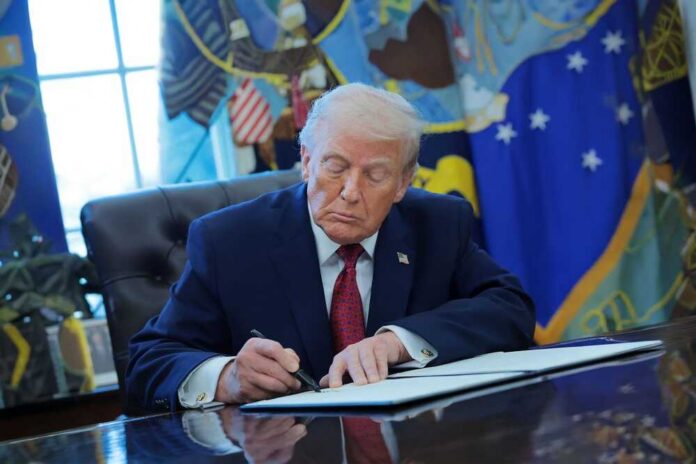
President Donald Trump began his second term with a rapid sequence of executive orders, and commentators have pointed to the volume as historically unusual. The research provided describes more than 130 orders issued since Inauguration Day 2025, including 99 in the first 100 days—figures framed as surpassing Franklin D. Roosevelt’s early-term pace. The White House’s “Presidential Actions” postings add visible, dated proof points that the pipeline is still active into spring 2026.
The political significance goes beyond raw numbers. Executive orders are designed to direct the federal bureaucracy, not replace the legislative process, yet they increasingly function as the quickest route around gridlock. Even with Republicans controlling the House and Senate, the practical incentive remains: orders move immediately, while Congress moves slowly. That dynamic feeds a broader, bipartisan frustration—many voters believe government insiders protect their own power first, leaving everyday families stuck with rising costs and institutional paralysis.
What the orders target: immigration, DEI rules, trade, and agency control
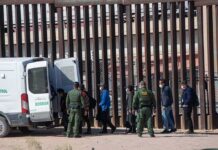
The mix of issues covered by the second-term orders reads like a checklist of modern political flashpoints. It cites immigration reforms and actions affecting federal agencies that implement enforcement, along with orders described as addressing “DEI discrimination” involving federal contractors. The White House’s executive-order archive and presidential-actions feed show recurring attention to themes such as election administration, education-related oversight, and departmental management—areas where a president can exert leverage through procurement rules, staffing, and enforcement priorities.
Supporters argue that this is exactly what voters demanded: visible action against illegal immigration, culture-war bureaucracy, and rulemaking they see as ideological. Skeptics respond that sweeping changes made by pen-and-phone are easier for a future president to reverse—creating policy whiplash for businesses, state governments, and families. The research also flags efforts aimed at restructuring or “closing” parts of the federal apparatus, a long-running conservative goal that clashes with the institutional self-preservation instincts of Washington agencies.
Courts and constitutional guardrails: fast action meets slow litigation
Several of the most controversial initiatives face legal challenges, illustrating the built-in check on executive power: the judiciary. When an executive order pushes into contested constitutional territory, opponents can file suit and seek injunctions that pause enforcement. That reality matters for both sides. Conservatives may get quick movement on priorities, but durable change usually requires either legislation or court victories that clarify presidential authority under Article II.
The litigation cycle also intensifies polarization. Critics interpret a high-volume strategy as “bypassing” Congress, while defenders respond that presidents of both parties have increasingly leaned on executive orders precisely because Congress cannot—or will not—govern consistently. The Miller Center’s discussion of Trump’s impact and legacy underscores how norm-breaking allegations and institutional conflict shape public perception. The key limitation is that it summarizes legal pressure points without detailing final court outcomes for specific orders.
The governing dilemma: decisive leadership vs. a shrinking legislative role
The United States was designed to keep power divided, yet the modern incentive structure often rewards unilateral action. When voters believe lawmakers are more focused on reelection than problem-solving, presidents gain permission—sometimes demanded by their base—to “just do something.” That mood exists on the right and the left, even if their desired outcomes differ. The throughline is that executive orders have become a substitute for trust in Congress, not merely a management tool.
For conservatives, the immediate wins—tighter immigration enforcement posture, pushback on DEI mandates, and faster administrative changes—can feel like long-delayed course correction after years of perceived cultural and fiscal drift. For liberals, the same mechanism can look like government by decree, especially when enforcement touches deportations or agency power. Either way, heavy executive action leaves the country one election away from reversal, reinforcing the sense that ordinary citizens live under rules set by elites who rarely face the consequences of instability.
Sources:
Trump Administration Accomplishments
25 things Trump could do in his first year
2025 Administration Actions: Key Executive Orders and Policies