Defense Secretary Pete Hegseth faces demands for a Securities and Exchange Commission investigation into allegations his broker attempted to invest millions in defense stocks shortly before U.S. military strikes against Iran, potentially violating federal ethics laws that prohibit Pentagon officials from profiting off war.
Story Snapshot
- Financial Times reports Hegseth’s Morgan Stanley broker contacted BlackRock in February 2026 to invest in defense contractor ETF before Iran military action
- Senator Elizabeth Warren demands SEC probe, citing securities law banning “attempts” at insider trading even when trades don’t execute
- Pentagon categorically denies allegations as “entirely false and fabricated,” insisting no contact occurred
- Federal law explicitly prohibits Defense Department officials from owning stocks in major contractors like Lockheed Martin and Northrop Grumman
- Investigation demands emerge amid broader concerns about administration insiders profiting from prediction market bets on military actions
Allegations Spark Bipartisan Ethics Concerns
The Financial Times published a bombshell report in early April 2026 alleging that Pete Hegseth’s Morgan Stanley broker contacted BlackRock in February to purchase millions in the firm’s Defense Industrials Active ETF. The timing raised immediate red flags: the attempted investment occurred shortly before U.S. military operations against Iran commenced, when defense stocks were poised to surge. BlackRock denied the request because the ETF wasn’t available to Morgan Stanley clients, but three anonymous sources provided the details to reporters. The revelation ignited concerns about whether America’s top defense official sought to profit from classified knowledge of imminent warfare.
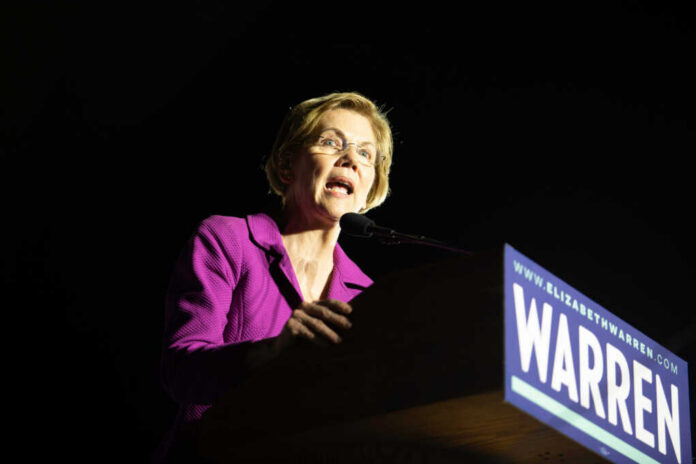
Senator Elizabeth Warren wasted no time demanding accountability. She sent a letter to SEC Chair Paul Atkins on or around April 20, calling for a formal investigation into potential securities law violations. Warren emphasized that federal statutes prohibit not just completed insider trades, but attempts to execute them. Joining her were Democratic Senators Tammy Duckworth, Richard Blumenthal, Gary Peters, and Jeff Merkley, who collectively labeled the allegations a “betrayal” of troops and the American people. House Oversight Committee ranking members Robert Garcia and Suhas Subramanyam simultaneously demanded Hegseth preserve all financial records dating back to November 2024.
Pentagon Issues Firm Denial
The Defense Department responded forcefully, calling the Financial Times story “entirely false and fabricated.” Pentagon officials insisted Hegseth never contacted BlackRock and characterize the anonymous sourcing as unreliable. This flat denial creates a stark contradiction: either the three sources misrepresented events, or the Pentagon is stonewalling legitimate oversight. No trade actually occurred, which weakens claims of completed fraud, but Warren argues the law covers attempts regardless of outcome. The absence of conservative media coverage or Republican congressional responses suggests either confidence in Hegseth’s denial or reluctance to defend potentially indefensible conduct during wartime.
Federal Ethics Rules Designed to Prevent War Profiteering
Current law strictly forbids Pentagon leadership from holding stocks in top Defense Department contractors, including Lockheed Martin, Northrop Grumman, Boeing, RTX, and L3Harris. This prohibition exists precisely to eliminate conflicts of interest, ensuring military decisions prioritize national security over personal financial gain. The alleged Defense Industrials ETF would have provided direct exposure to these prohibited companies, making any investment attempt a clear violation if substantiated. Hegseth’s position grants him access to classified intelligence about planned strikes, troop deployments, and weapons procurement that could move markets by billions. Allowing such officials to trade defense stocks would fundamentally corrupt the integrity of both military strategy and financial markets.
The controversy unfolds against a troubling backdrop of prediction market anomalies. Massive winnings have been reported on Polymarket bets precisely forecasting Trump administration military actions against Iran and Venezuela, fueling suspicions that insiders are leaking classified information for profit. While those cases involve anonymous bettors rather than named officials, the pattern suggests a culture where some view government intelligence as a personal ATM. If a Defense Secretary or his representatives did attempt to capitalize on war plans, it represents not just legal jeopardy but a moral failure that undermines public trust in institutions already viewed by millions as serving elites rather than citizens.
Investigation Demands Test Accountability in Trump Era
The SEC now faces pressure to determine whether laws apply equally to powerful Trump appointees. Chair Paul Atkins must decide if the allegations merit a formal probe despite the Pentagon’s denials and the fact no money changed hands. Warren’s legal argument holds merit: securities law does criminalize attempts at fraud, not just successful schemes. For Americans frustrated that elites play by different rules, this case offers a test of whether oversight mechanisms still function. If the SEC dismisses the matter without investigation, it risks confirming suspicions that Washington’s powerful are above the law, feeding the anger that unites populists across the political spectrum against the so-called deep state.
The stakes extend beyond Hegseth’s career. If defense officials can secretly position themselves to profit from wars they orchestrate, the entire premise of civilian control of the military collapses into a grotesque parody. Troops and their families bear the human costs while leaders potentially cash in on their sacrifices. Investors rely on markets free from fraud by those with classified advantages. Both conservatives valuing accountability and liberals demanding ethics reform should agree: no one should get rich killing Iranians, Venezuelans, or anyone else while wearing the title of Defense Secretary. The SEC investigation Warren demands will reveal whether America still enforces that principle or if corruption has become standard operating procedure.
Sources:
Does the SEC Care Whether Hegseth Is Killing Iranians to Get Rich?
Warren, Dems Demand Probe Into Whether Hegseth Tried to Profit Off Iran War