
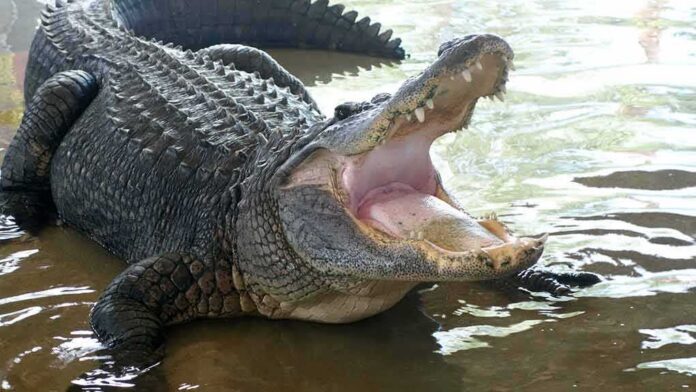
Body-camera video shows Florida deputies securing an 8-foot alligator at a condo, then releasing it unharmed, after floodwaters pushed it into a driveway.
Story Highlights
- Deputies safely restrained and relocated an alligator from a condo complex; no injuries were reported.
- Body-camera footage documents the approach, restraint, transport, and release of the animal.
- A resident’s 911 call placed the gator at Pelican Pointe near Sebastian around 12:30 p.m..
- Florida’s program typically removes thousands of nuisance gators each year for public safety.
Deputies Resolve Flood-Driven Alligator Encounter Without Injuries
Indian River County deputies responded to a 911 call about a large alligator in a condominium driveway near Sebastian on a Friday around 12:30 p.m. at the Pelican Pointe complex on Riverside Drive. The sheriff’s office said high water likely displaced the reptile into the residential area. Deputies used catch poles to control the animal, secured it in a transport cage, and later released it within the county. The agency reported that no people were hurt and the alligator was unharmed.
Released body-camera footage shows deputies approaching, restraining, and loading the animal, which hissed and rolled as they held it. The video also shows a three-deputy team releasing the alligator at a more suitable location in Indian River County. Local reports consistently put the animal’s size near eight feet. The sheriff’s office framed the outcome as a safety win for residents and for the alligator, which was removed from a risky spot and returned to appropriate habitat conditions.
What We Know About Location, Timing, and Size
Vero News tied the event to a specific place and time, citing a resident’s noon-hour call that drew deputies to the Pelican Pointe condos in the 9600 block of Riverside Drive. That report and others described the alligator lunging, tail-whipping, and barrel rolling as deputies held firm control. Coverage across several outlets repeated that the reptile measured about eight feet and that the operation ended without injuries, aligning with the sheriff’s stated outcome and the video record.
Several outlets published the same basic facts: flooding pushed wildlife into neighborhoods, deputies responded, and the animal left the residential area alive. Reports from a regional television station, national weather outlet, and local press reaffirmed the safe relocation. While the sheriff’s office said the gator was not hurt, the record does not include a separate veterinary exam. The visual evidence did not show obvious injury, and the agency’s statement remains the main source on the animal’s condition.
How Florida Handles “Nuisance” Gators and Why This Case Stands Out
Florida’s alligator population is strong across all counties, and the Florida Fish and Wildlife Conservation Commission’s Statewide Nuisance Alligator Program removes about 7,000 nuisance alligators each year. State guidance treats four-foot-and-longer gators as a risk when they threaten people, pets, or property. The long-term average is about five unprovoked bites a year statewide. These numbers explain the quick response to a big gator parked in a condo driveway where families live and children walk.
WATCH: No backup. No fancy equipment. Just a Florida deputy, a roll of duct tape, and an alligator that picked the wrong place to wander.
Wild video shows the deputy carefully grabbing the gator near a fence outside a busy Kissimmee plaza as tourists gather to watch. He manages… pic.twitter.com/akbYLW926R
— Fox News (@FoxNews) November 5, 2026
State materials explain that relocation is not always the first choice, especially for larger alligators that may return or cause conflict at release sites. The program often relies on permitted trappers and strict rules when removal is needed. In this case, deputies documented a same-county release, consistent with state practices that aim to protect people while reducing harm to wildlife. The video-supported chain of custody, from capture to release, underlines that balance between safety and stewardship.
Why This Matters for Public Safety and Common Sense
Residents face higher wildlife encounters after heavy rain. Deputies answered a clear safety risk and resolved it without injury. That is the job: protect people, guard property, and respect wildlife. The prompt call to 911, the trained use of catch poles, and the same-county release show a straightforward, local solution. This is the kind of practical law-and-order work that keeps families safe without drama or overreach, and it is documented on camera for everyone to see.
Sources:
news.com.au, cbs12.com, veronews.com, weather.com, foxweather.com