
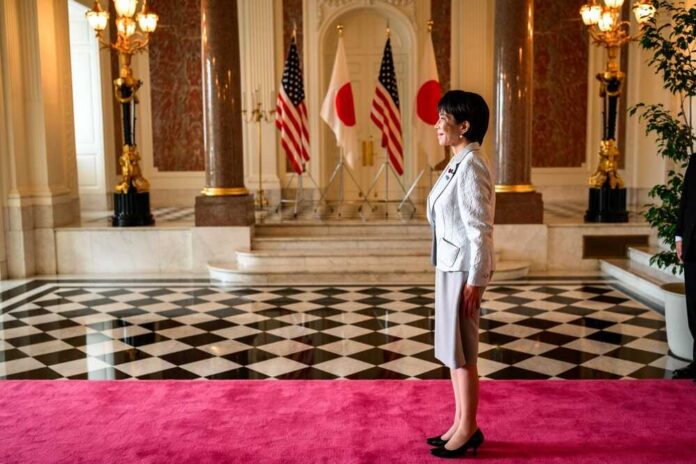
Japan officially downgraded China from “one of the most important bilateral relationships” to merely “an important neighboring country,” signaling a historic rupture in ties and raising questions about whether Washington’s allies are finally standing up to Beijing’s intimidation tactics.
Quick Take
- Japan’s 2026 Diplomatic Bluebook downgrades China’s status, reflecting deteriorated relations stemming from Prime Minister Sanae Takaichi’s November 2025 Taiwan security remarks.
- China responded with economic coercion: rare earth export restrictions, travel bans, seafood import cuts, and military provocations including radar-lock incidents on Japanese aircraft.
- The downgrade signals Japan’s strategic pivot toward reducing dependence on China and strengthening U.S. alliance ties amid regional security concerns.
- Experts warn of escalating military risks in the East China Sea as communication channels weaken and tit-for-tat tensions intensify.
Takaichi’s Taiwan Stance Triggers Beijing’s Wrath
In November 2025, Prime Minister Takaichi departed from decades of careful ambiguity by stating in parliament that a Chinese military attack on Taiwan would constitute an “existential crisis” for Japan, potentially justifying military intervention under Japan’s collective self-defense laws. Rather than engage in dialogue, Beijing responded with aggression. A Chinese consul general in Osaka posted a threatening message on social media targeting Takaichi personally, later deleted but not forgotten. Japan demanded accountability; China refused and escalated.
Economic Coercion and Supply Chain Vulnerability
China weaponized its economic leverage systematically. Beijing imposed travel restrictions, banned Japanese seafood imports, restricted cultural exchanges, and most critically, cut exports of rare earth materials and dual-use items vital to Japanese manufacturing. Rare earths comprise approximately 60 percent of Japan’s supply, making Tokyo acutely vulnerable to Beijing’s pressure tactics. These actions demonstrate how authoritarian regimes exploit economic interdependence as a tool of political control, a concern many Americans share about globalist trade policies that prioritize short-term profits over national security and sovereignty.
Military Escalation Signals Dangerous Miscalculation Risk
Beyond economic measures, China intensified military provocations. In December 2025, a Chinese J-15 fighter jet locked its fire-control radar onto Japanese F-15 aircraft near Okinawa for thirty tense minutes, a dangerous escalation that underscores how quickly geopolitical tensions transform into military incidents. Weakened communication channels between Beijing and Tokyo heighten the risk of accidental conflict spiraling into open warfare. These incidents reveal the fragility of regional stability when one power pursues coercive diplomacy backed by military muscle.
Japan’s Strategic Pivot Away from Beijing
The Bluebook downgrade represents more than diplomatic language revision; it signals Japan’s deliberate strategic reorientation. Tokyo is actively reducing dependence on Chinese rare earths by diversifying suppliers, particularly through Australia partnerships. This shift aligns with broader U.S.-led efforts to build resilient supply chains among democratic allies—a “friendshoring” strategy that resonates with conservatives concerned about reliance on authoritarian regimes. Japan’s move demonstrates that even longstanding economic relationships cannot override fundamental security interests when a rival power demonstrates hostile intent through intimidation.
A Pattern of Coercion Americans Should Recognize
China’s response to Takaichi’s remarks reveals a troubling pattern: Beijing cannot tolerate any challenge to its preferred narrative, so it punishes dissent through economic strangulation and military intimidation. This behavior mirrors concerns many Americans across the political spectrum hold about how powerful elites—whether corporate, governmental, or foreign—suppress legitimate speech and impose their will through coercion rather than persuasion. Japan’s willingness to absorb short-term economic pain to maintain strategic independence offers a lesson in principled leadership.
Sources:
Japan Downgrades China Relations in Diplomatic Bluebook Draft
China’s Response to Japan’s Diplomatic Downgrade
Tokyo Moves to Downgrade Status of China Ties; Beijing Moves to Blame Japanese PM
2025–2026 China–Japan Diplomatic Crisis
Japan Bluebook Reflects Souring China Relations