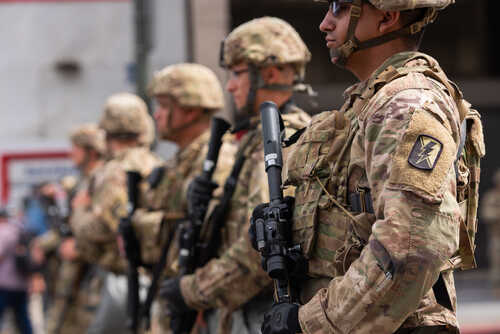
A federal judge has ruled that President Trump’s use of National Guard and Marine forces in Los Angeles violated the Posse Comitatus Act, effectively halting the deployment.
At a Glance
- A U.S. District Judge blocked Trump’s deployment of 4,000 National Guard troops and 700 Marines to Los Angeles on Posse Comitatus grounds.
- Deployment was in response to protests following ICE raids and included crowd control, perimeter setting, and traffic management.
- The ruling applies only to California and is stayed until September 12, pending appeal.
- Governor Gavin Newsom, who filed the lawsuit, hailed the ruling as a victory against unconstitutional militarization.
- The decision raises broader concerns about executive overreach and sets a potential legal precedent.
Background
President Trump federalized thousands of California National Guard members and deployed Marines to Los Angeles in June during protests sparked by ICE-related immigration raids. California Governor Gavin Newsom filed suit, arguing the deployment violated the Posse Comitatus Act—which bars military involvement in civilian law enforcement—by assigning troops to perform crowd control, set perimeters, and manage traffic.
In a preliminary ruling issued in June, U.S. District Judge Charles Breyer declared the deployment unconstitutional and returned command of the National Guard to the state. However, the Ninth Circuit Court of Appeals issued an emergency stay, allowing the federal presence to continue until a full trial could be held.
Watch now: Federal court blocks Trump’s use of National Guard in L.A.
Court’s Decision
On September 2, Judge Breyer concluded that the federal government’s deployment of active military forces and federalized National Guard units in Los Angeles violated the Posse Comitatus Act. His written opinion emphasized that assigning troops to quasi-policing roles amounted to a direct breach of long-standing prohibitions on military participation in domestic law enforcement.
Breyer issued a statewide injunction barring the federal government from using military personnel for crowd control or related functions in California. The ruling is stayed until September 12 to allow the federal government time to appeal. Newsom praised the decision as a check on executive overreach, while the Trump administration stated it intends to challenge the injunction at the appellate level.
National and Legal Implications
Though the ruling is geographically limited to California, it may serve as a judicial precedent in any future challenges to similar federal actions in other states. President Trump has previously floated plans to deploy troops in cities like Chicago and Baltimore, which may now face intensified legal scrutiny.
Legal experts note the decision reinforces constitutional limits on federal authority, particularly concerning the Tenth Amendment and doctrines protecting state sovereignty. The case could influence interpretations of presidential emergency powers and military deployment authority under federal law, potentially reshaping the legal contours of civil-military relations in domestic contexts.
Sources
Reuters
Associated Press
The Atlantic