On Saturday, October 25, 2025, emergency services successfully rescued a man trapped in quicksand in Morecambe Bay, England, just minutes before an incoming tide. The incident highlights the increasing number of quicksand hazards in the area, attributed to changing tidal patterns.
Story Highlights
- A man was found trapped in quicksand with only his head, chest, and one arm visible.
- Multiple rescue agencies collaborated in a high-risk extraction operation as the tide rapidly approached.
- The victim, suffering from hypothermia, was safely extracted using inflatable rescue pathways.
- Quicksand incidents in Morecambe Bay have reached a 30-year high in 2025.
Emergency Response Saves Life in Minutes
Emergency services received a call at 11:30 AM on Saturday, October 25, 2025, reporting a man trapped in quicksand near Silverdale in Morecambe Bay. Bay Search and Rescue led the operation, supported by Arnside and South Lakes Coastguard, Cumbria Fire and Rescue Service, Lancashire Fire and Rescue Service, and North West Ambulance Service. Responders located the victim lying on his back, significantly submerged with only his chest, head, one arm, and part of one leg visible.
Rescue teams utilized inflatable rescue pathways to access the trapped man safely. The extraction was completed in minutes, with the tide beginning to fill the gulley where the man was located. Rescuers provided on-site warming for the hypothermic victim before transferring him to North West Ambulance Service for further medical attention. The timely rescue was critical, as water began to reclaim the area shortly after the teams departed.
Man with just ‘chest, head and one arm’ poking out from quicksand rescued https://t.co/TVIx9qqj7d pic.twitter.com/AgXKPMQGwL
— The Independent (@Independent) October 26, 2025
Morecambe Bay’s Quicksand Challenges
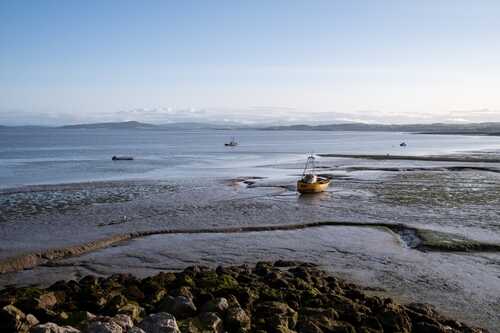
Morecambe Bay is known for its extensive tidal flats and quicksand hazards, where sand becomes saturated with water and loses structural integrity. Rescue teams have reported that 2025 has seen the highest number of quicksand patches in 30 years, a phenomenon attributed to changing tidal patterns and increased waterlogging. The bay’s rapid tides and concealed sandbanks contribute to the danger for individuals venturing onto seemingly solid ground.
The region’s hazards gained international attention in 2004 when 23 Chinese cockle pickers drowned after being trapped by rapidly advancing tides. Since then, specialized rescue teams patrol the area with equipment designed for estuarine emergencies. However, the unpredictable nature of quicksand formation means new danger zones can emerge unexpectedly.
Coordinated Rescue Demonstrates Emergency Preparedness
The successful operation underscored effective inter-agency coordination under challenging conditions. Bay Search and Rescue served as the lead agency, making rapid tactical decisions regarding extraction methods while coordinating with multiple supporting services. Each agency contributed specialized capabilities, including inflatable rescue equipment, medical treatment, and logistical support. This level of preparation and teamwork was essential in preventing a fatal outcome in a hazardous natural environment.
As of October 26, 2025, the rescued man is recovering from hypothermia with no serious injuries reported. Emergency services used the incident to remind the public about the inherent dangers of Morecambe Bay and the importance of vigilance in tidal areas. The rescue emphasizes the ongoing need for specialized training and equipment for estuarine operations, potentially influencing safety protocols and public awareness campaigns for similar coastal regions.
Man rescued from quicksand on Morecambe Bay was 'surreal' close call https://t.co/bmecot4OAB pic.twitter.com/oe3JEMUqk4
— ITV Granada Reports (@GranadaReports) October 26, 2025
Sources:
- Man saved from quicksand was ‘surreal close call’
- Quicksand rescue Morecambe Bay
- Man rescued from quicksand in Morecambe Bay