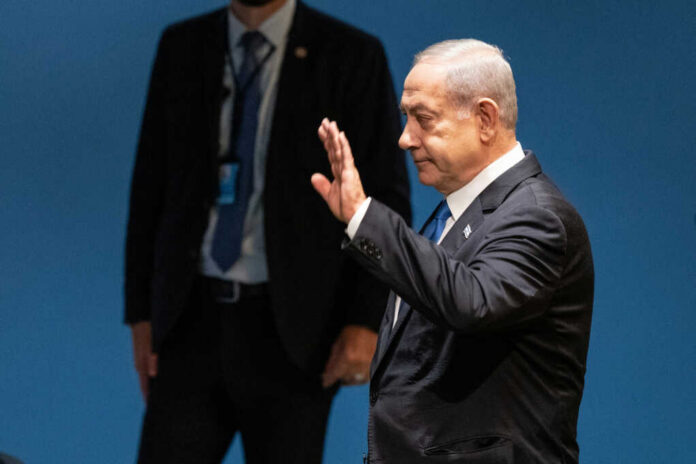
Prime Minister Benjamin Netanyahu warns Israel has reduced Hezbollah to a shadow but vows no letup until the terrorist threat is fully eliminated, signaling unyielding resolve against Iran’s proxy amid fragile ceasefires.
Story Snapshot
- Netanyahu declares Hezbollah “only a shadow of itself” after major Israeli military successes, yet stresses the job remains unfinished.
- Israel commits to targeting remaining rockets and drones threatening northern communities.
- Openness to diplomacy with Lebanon pairs military pressure, aiming for lasting border security.
- Statement delivered April 17, 2026, in Jerusalem, reshaping the northern front dynamics.
Netanyahu’s Direct Warning
Israeli Prime Minister Benjamin Netanyahu addressed the nation on April 17, 2026, in Jerusalem. He stated Hezbollah now stands as only a shadow of its former strength due to Israeli operations. Despite this progress, Netanyahu emphasized Israel has not yet finished the job. Remaining rocket and drone capabilities continue to endanger northern Israeli residents displaced since 2023. This resolve echoes conservative values of strong national defense against persistent threats.
Hezbollah’s Longstanding Threat
Hezbollah, Iran’s Lebanon-based proxy, formed in the 1980s opposing Israel’s southern Lebanon presence. The group fired thousands of rockets in the 2006 war, killing 165 Israelis and 1,200 Lebanese. Post-October 7, 2023, Hamas attacks, Hezbollah launched cross-border assaults. Israel countered with airstrikes and ground incursions, dismantling much infrastructure by 2026. Pre-war rocket stockpiles exceeded 150,000, underscoring the scale of the neutralized danger.
Strategic Balance of Force and Diplomacy
Netanyahu described the northern front as completely changed, with Hezbollah’s capabilities severely degraded. He pledged continued operations against residual threats while opening doors to talks with Lebanon’s government. This dual approach seeks Hezbollah disarmament and peaceful relations. Lebanon, crippled by economic woes and Hezbollah dominance, eyes stability. Such measured strength aligns with principles of deterrence and limited engagement to protect sovereignty.
Power dynamics favor Israel’s military superiority over Hezbollah’s guerrilla tactics. Iran backs Hezbollah to sustain regional influence, but losses like Hassan Nasrallah’s 2024 killing weaken the axis. U.S. mediation and Arab state tensions shape outcomes. Netanyahu’s cabinet and IDF drive decisions, prioritizing citizen safety over premature truces.
Israel has ‘not yet finished the job’ against Hezbollah: Netanyahu pic.twitter.com/wCaK0VWJmK
— Omar (@Omaruncovered) April 17, 2026
Impacts on Communities and Region
Northern Israeli civilians, evacuated since 2023, await safe returns pending full neutralization. Lebanese border residents face instability amid their nation’s crisis. Short-term strikes risk escalation, but success could curb Iran’s reach long-term. Israel’s security costs burden its economy, while Lebanon’s turmoil deepens. Politically, Netanyahu gains domestic support; Lebanon faces pressure to assert control. Defense sectors see shifts, with energy disputes like gas fields lingering.
Sources:
Xinhua: Israel has ‘not yet finished the job’ against Hezbollah: Netanyahu
Dawn: Israel has not yet finished the job against Hezbollah: Netanyahu
L’Orient-Le Jour: Netanyahu: Israel has not yet finished the job against Hezbollah
Naharnet: Netanyahu Says Israel Has Not Yet Finished the Job against Hezbollah
Israel National News: Netanyahu: Israel has ‘not yet finished the job’ against Hezbollah