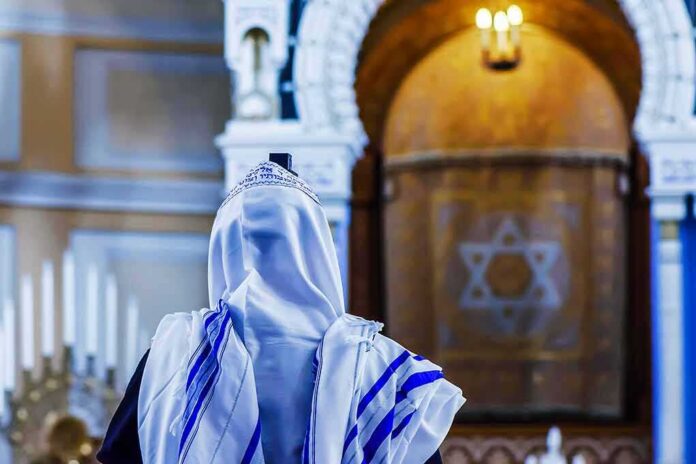
A federal judge blocked Montgomery County’s gun ban at synagogues, restoring the right of a Maryland rabbi and his congregation’s volunteers to carry for self-defense during worship.
Story Highlights
- A federal court granted a preliminary injunction allowing carry inside a Silver Spring synagogue.
- Montgomery County’s law banned firearms in or within 100 yards of houses of worship, except hired guards.
- The synagogue and Rabbi J. Menashe Shapiro sued under the Second Amendment and Free Exercise Clause.
- County police paused criminal enforcement while litigation proceeds.
Judge’s Order Restores Carry Rights in the Synagogue
Judge Deborah Chasanow of the United States District Court for the District of Maryland issued a preliminary injunction that allows Silver Spring Jewish Center and its rabbi, J. Menashe Shapiro, to permit carry inside the synagogue. Reports describe the county law as banning guns at places of worship, except for licensed, paid security guards approved to carry. A news release said the injunction cleared the way for congregants to defend themselves during prayer as the case moves forward.
The lawsuit argues Montgomery County’s ordinance violates the Second Amendment and burdens religious exercise. The complaint states the county’s ban prevents parishioners from defending themselves while engaged in communal prayer. The case challenges a rule that blocked trained volunteers from carrying, even with synagogue approval. The court’s order is temporary but immediate, meaning the congregation may carry now while the court weighs the full constitutional questions.
What the County’s Law Did and Why It Sparked a Fight
Montgomery County enacted Expedited Bill 23-26, which bars selling, transferring, possessing, or transporting certain firearms in or within 100 yards of places of public assembly, including houses of worship. The policy exempts police and hired, licensed security, but not congregation volunteers. County materials describe the law as keeping guns out of “sensitive public places” like schools, parks, libraries, and houses of worship, while adjusting other parts after court rulings.
Silver Spring Jewish Center and Rabbi Shapiro filed suit soon after the law took effect. Their complaint says the ban strips a synagogue of the right to set its own safety rules and to rely on trained members who know the community. Coverage shows the Department of Justice also challenged the county over the synagogue ban, adding pressure on local officials. The pushback led the county to pause criminal enforcement during the legal fight.
Security, Faith, and the “Sensitive Places” Debate After Bruen
This dispute fits a growing line of cases over “sensitive places” after the Supreme Court’s Bruen ruling. Some courts have struck down worship-place bans for lacking clear historical support. A Second Circuit case signaled that broad worship bans likely go too far, at least where churches want to authorize carry by their own members. Other decisions have been more mixed, but the trend has pressed governments to justify each location with history, not broad labels.
The Maryland ruling adds to that pressure. The synagogue argued that criminals ignore gun-free zones, while law-abiding congregants pay the price. The county said its rule protected public safety at sensitive sites. The court’s injunction shows judges are looking for tighter tailoring and respect for property and religious autonomy. The next hearings will test whether the county can point to firm historical analogues to keep its 100-yard buffer around worship sites.
What This Means for Worshipers and Local Control
For now, the synagogue can rely on trained volunteers it trusts, without hiring outside guards who may not know the community. That change matters as threats against Jewish institutions remain a concern nationally. The order respects the synagogue’s right to set safety policies on its own property, consistent with the Second Amendment. It also sends a message to local officials: public safety rules must honor constitutional limits and real-world needs of faith communities.
Next steps include more briefing and possible appeals. The county already paused criminal enforcement, which lowers immediate risks for congregants walking to and from prayer. But the larger legal question remains: can a county draw a sweeping 100-yard zone around worship sites and override a congregation’s decision to protect itself? The answer will shape policy across Maryland and beyond as post-Bruen litigation continues.
Sources:
reason.com, courthousenews.com, foxnews.com, washingtonexaminer.com, mocogopclub.com, foxbaltimore.com, montgomeryplanning.org, mymcmedia.org, wjla.com, churchlawandtax.com, texasattorneygeneral.gov, supremecourt.gov