
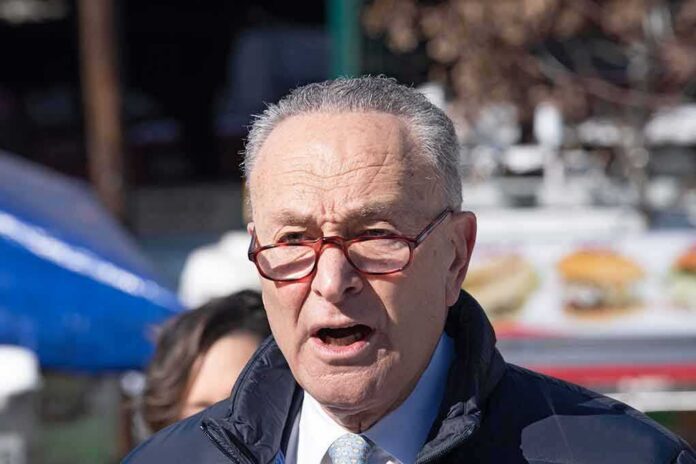
Asked about soaring costs, Sen. Chuck Schumer dodged with “but Trump” talking points, then ended the exchange without answering what Democrats will do now.
Story Highlights
- Schumer blamed President Trump’s tariffs for higher prices, citing a $17,500 hit to homebuilding costs.
- Democrats framed health insurance costs around renewing Affordable Care Act subsidies; nonrenewal raises premiums per the Congressional Budget Office (CBO).
- Republican voices countered that Democrats drove the affordability mess and blocked cost-cutting bills.
- The clash shows a larger fight over who caused inflation pain and who can fix it now.
Schumer’s Core Claim: Tariffs Drive Up Costs
Senate Democratic Leader Chuck Schumer tied today’s affordability squeeze to President Trump’s tariff policy. Schumer said tariffs increased housing construction costs by $17,500 per home, shutting families out of ownership. He repeated the message in press and floor remarks as Democrats centered their midterm push on “affordability.” The talking point targets a visible pain point: home prices and mortgage costs. It also tries to pin broad price stress on a discrete policy lever that voters can picture paying for at the store or job site.
Schumer and allied outlets extended the same frame across groceries, energy, and care. They argued Republicans “send costs skyrocketing” and called the price squeeze “Trump’s affordability crisis”. That line pairs tariffs with other claims about policy choices that add to bills. The message aims to focus voter anger at the White House and Republicans in Congress. It also sets up a simple cause-and-effect story for a complex economy with many moving parts and global inputs.
Health Insurance Fight: Subsidies And Your Premium
Democrats also leaned on Affordable Care Act premium tax credits. They pressed to extend enhanced credits and said Republicans were blocking relief. The Congressional Budget Office (CBO) has found that if the expanded credits are not extended, average marketplace premiums paid by enrollees rise and more people go uninsured. That is a real pocketbook link. Extending the credits lowers out-of-pocket premiums for eligible buyers. Not extending them pushes more costs back onto households, with ripple effects in coverage.
CBO background shows how the premium tax credit works and who benefits most. The credit is designed to shrink the share of income that families must spend on a benchmark plan. Larger benefits flow to lower and middle income households who buy through the marketplace. That policy lowers monthly bills for many families, but it also raises federal spending when expanded. Lawmakers now weigh relief at the kitchen table against higher deficits from a permanent expansion. Voters feel both sides when paychecks and debt both matter.
Republican Rebuttal: Democrats Own The Pain
Republican voices answered that Democrats helped cause the crisis they now campaign on. A White House spokesperson said Democrats “created the affordability crisis,” and a Republican National Committee spokesperson blamed Democrats for surging prices. Conservatives also point to Democratic blocks on energy and power-cost bills, arguing that those moves kept electricity prices higher than needed. That case links government spending, regulation, and supply limits to the higher costs families face each month.
Policy analysts across the spectrum note a broader truth that sits under the spin. Price pressure rarely comes from one switch. Markets, supply chains, wars, and rates all move prices. Politicians, though, highlight tools voters know: tariffs, subsidies, and taxes. That is why Schumer singles out tariffs and insurance credits. That is why Republicans hammer regulation and spending. Each side points at levers it can brand as a fix or a foul. Voters weigh the stories against their bills and pay stubs.
What Matters Now For Your Wallet
For housing, Schumer’s $17,500 figure is his cited hit to construction budgets from tariffs. If Congress rolls back targeted tariffs on core inputs, some building costs could ease. If not, builders will keep passing costs along where they can. For health insurance, Congress must choose whether to keep enhanced credits in place. CBO says ending them raises what many enrollees pay and shrinks coverage. That choice shows up directly in monthly bills during open enrollment.
For energy and power, Republicans argue more supply and fewer mandates would ease costs, and they fault Democrats for blocking measures they say would lower rates. Democrats counter with targeted relief and blame tariffs and “corporate greed.” The bottom line for readers is simple. Watch what passes, not what trends. Tariffs, energy rules, and subsidy levels all change your costs. Demanding clear votes and plain numbers is how citizens hold Washington to account.
Sources:
twitchy.com, forth.news, washingtonexaminer.com, govinfo.gov, congress.gov, yahoo.com