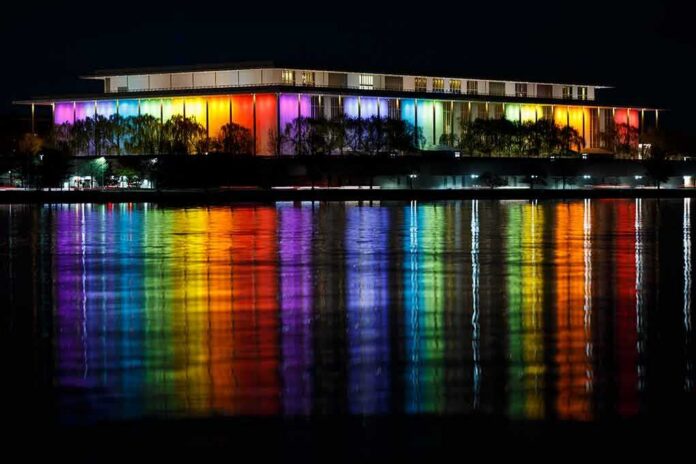
A Justice Department filing warned the Kennedy Center could become unsafe and even be taken down if court-ordered blocks stop critical renovations.
Story Highlights
- Justice Department says blocking renovations risks a safety “death spiral” and possible demolition
- Filing warns donor support would collapse if the board cannot recognize President Trump as planned
- Project materials cite corroded steel, water damage, and deteriorating concrete that threaten public safety
- Past federal oversight flagged fire-safety and code issues that raise urgency for upgrades
DOJ Warns Of Safety Risks And Potential Demolition
The Department of Justice told a federal judge that the John F. Kennedy Center for the Performing Arts may fall into “terminal decline” if renovation plans are blocked. The filing says the building could become “unsafe” and possibly “required to be taken down” if repairs stall. The government argues the project is needed now to fix damage and keep the venue open to the public. The warning appears in a court brief tied to ongoing litigation over the plan.
The filing also links safety and financing. Justice Department lawyers say an order that stops the board from recognizing President Trump as planned would drive donors away. They argue money would dry up and rehabilitation would stop, making hazards worse. The brief frames naming and recognition decisions as key to securing private funds and keeping the larger $257 million rehabilitation on track this year.
Documented Deterioration And Public Safety Concerns
Project materials and recent reporting describe clear physical problems inside the complex. Photos and summaries show corroded steel, water-damaged electrical systems, and crumbling concrete. Crews also flagged aging theater equipment and building components that no longer meet modern safety needs. Outlets that reviewed materials say the scope is wide and touches core parts of the structure and stages used by crowds. These conditions are central to the case for immediate work.
Some materials warn of heavy overhead elements that have reached end of life. One report points to soffit panels weighing more than 2,000 pounds, calling them a public safety risk if not replaced. The broader plan involves repairing water intrusion and fixing expansion joints across the building. Supporters say those steps would protect visitors, the staff, and performers during daily operations and major events in the main halls.
Closure Timeline And Oversight Background
A facilities account cited by industry reporting says a former facilities director found the needed work large enough to force a two-year closure. That view said some defects could block main public access points while repairs occur. The duration and staging have become flash points as courts weigh how the center should stay open during parts of the project and what safety steps must come first to protect the public.
Federal oversight has a long paper trail on life safety at the venue. A Government Accountability Office review identified past fire-safety deficiencies, including exit path problems, door protection issues, and missing sprinkler or smoke evacuation coverage at a stage area. While that report is older, it shows longstanding needs that major upgrades are meant to solve. The current plan’s safety claims build on that history of required improvements.
Legal Fight Ties Safety, Funding, And Recognition
Court filings connect building safety to the center’s fundraising and governance decisions. The Justice Department argues that blocking board actions, including how it recognizes the sitting President, would chill donors and stall work. Media reports describe the plan as focused on safety, preservation, and modernization, including essential structural, electrical, and envelope repairs. A brief note: the strongest demolition language appears in advocacy filings, not a public engineering report.
What comes next will hinge on court rulings and project execution. If the court allows the renovation plan to proceed, crews can address key hazards before another season of heavy use. If blocks stay in place, the Justice Department says the building’s condition and finances will worsen, risking public safety and the future of a major civic landmark. The core choice now is action that fixes known problems or delay that lets them grow more dangerous.
Sources:
cbsnews.com, cnn.com, washingtonpost.com, foxnews.com, wjla.com, gao.gov