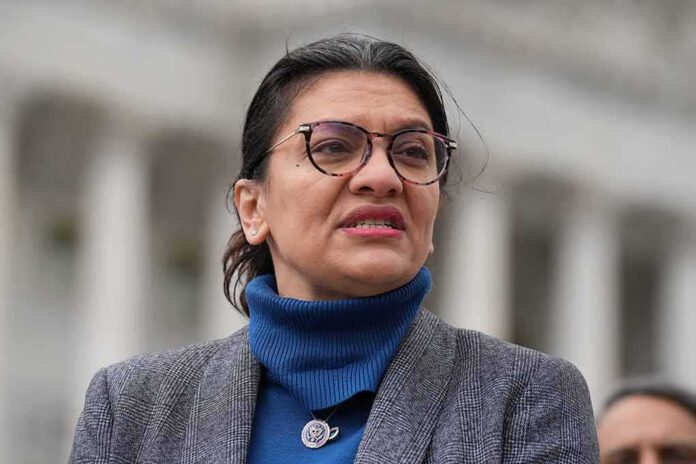
As Israel tallies votes, Rep. Rashida Tlaib branded any Israeli leader a “war criminal” and demanded a full U.S. arms embargo on Israel, escalating a fight over American policy and values.
Story Highlights
- Tlaib called for total arms embargo and sanctions on Israel until “Palestine is free.”
- United Nations investigators alleged Israel committed genocide; Israel rejects the charge.
- International Court of Justice orders addressed urgent risks but did not decide final guilt.
- Critics say the genocide claim fails on proof of intent and ignores Hamas’s tactics.
Tlaib’s sweeping charge and policy push
Rep. Rashida Tlaib said any Israeli leader is a “war criminal” and urged a full arms embargo and sanctions on Israel. She framed her demand as a moral duty and a legal response to alleged genocide, land theft, and erasure of Palestinian identity. Her stance goes much further than past calls for conditioning aid. Her push lands as Israel counts election votes, and it risks pressuring United States policy while allies watch how Washington treats a key partner.
United Nations investigators appointed by the Human Rights Council alleged Israel committed genocide in Gaza and said Israeli authorities carried out four of five listed genocidal acts under the 1948 treaty, including killing and inflicting destructive living conditions, claims Israel rejects. The commission’s chair, Navi Pillay, later said the state was responsible for four genocidal acts with specific intent, a high legal bar that many dispute. These findings drive Tlaib’s case for hard sanctions.
What international law has and has not decided
The International Court of Justice ordered provisional measures in the South Africa v. Israel case to address urgent risks under the Genocide Convention. Those orders do not decide the final question of genocide but require steps to protect civilians during the case. Legal scholars note the court’s emergency rulings aim to prevent irreparable harm and do not settle liability on the merits, which will take time and evidence to resolve. That nuance often gets lost in political debate.
Advocates of an embargo cite United Nations materials and rights reports that urge states to avoid aiding alleged atrocities and to consider halting arms transfers. Supporters argue that sanctions signal moral clarity and could reduce civilian harm. Research on embargoes shows mixed results. One study finds arms imports often drop sharply at first but the impact can fade as workarounds appear. Policymakers must weigh these tradeoffs when tying United States policy to complex war zones.
Israel’s rebuttal and disputes over evidence
Israel says it targets Hamas, not Palestinians as a group, and argues it acts in self-defense within international law. A Georgetown analysis noted the International Criminal Court prosecutor did not charge genocide in sought warrants, reading that as a sign of insufficient evidence of specific intent based on material he had. Israel’s Foreign Ministry has said that attacks on sites that appear civilian can still be lawful if fighters use human shields, which complicates targeting in urban war.
Advocacy critics of the United Nations commission argue the genocide claim fails on proving intent. A legal rebuttal says the commission leaned on disputed figures and selective quotes, and did not fully account for Hamas’s use of schools, mosques, and hospitals to hide fighters and weapons. This clash over intent and evidence matters. Genocide law requires both prohibited acts and the purpose to destroy a protected group in whole or in part. That is the heart of the legal fight.
What Tlaib’s demand means for U.S. policy now
Tlaib’s call would halt U.S. arms to a top ally in an active war. That would mark a break with decades of bipartisan practice. President Trump’s administration faces pressure from both sides: to back Israel’s right to self-defense and to ensure American weapons do not enable unlawful harm. United States officials must balance treaty duties, evidence standards, and real-time threats. The policy path should be clear-eyed, fact-based, and focused on civilian protection without handing wins to terrorists.
Conservatives see a pattern: sweeping claims, maximal sanctions, and little regard for U.S. interests or the realities of urban war. Congress should press for verifiable facts, enforce strict end-use checks, and support measures that deter civilian harm. But declaring any Israeli leader a “war criminal” pre-judges the law and undermines an ally fighting a group that hides among civilians. America must defend both its values and its friends, and anchor decisions in proven facts and lawful standards.
Sources:
un.org, news.un.org, icj-web.leman.un-icc.cloud, unwatch.org, tandfonline.com, rosalux.de, edepot.wur.nl