President Trump threatens to pull over 36,000 U.S. troops from Germany, hitting back at a NATO ally undermining America’s fight against Iran’s nuclear ambitions.
Story Snapshot
- Trump announces review of troop reductions in Germany after Chancellor Merz calls U.S. Iran operations “reckless.”
- Germany hosts largest U.S. military presence in Europe, yet refuses to support securing Strait of Hormuz.
- Public feud via social media escalates NATO tensions amid two-month-old U.S.-Iran conflict.
- Military leaders maintain cooperation despite political clash; decision expected soon.
Timeline of the Clash
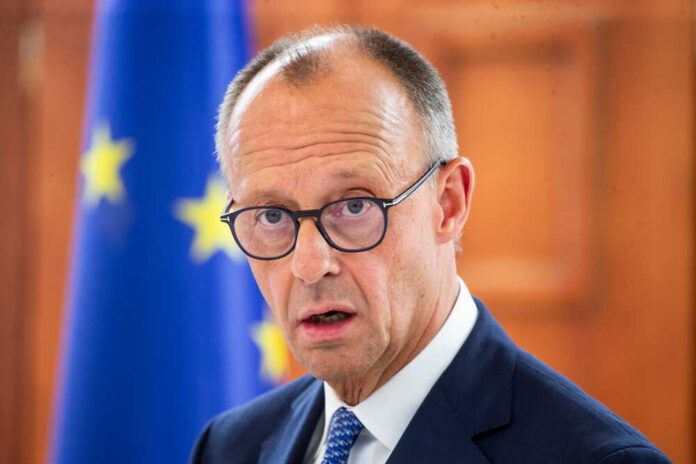
On April 27, German Chancellor Friedrich Merz spoke in Marsberg, labeling U.S. military operations against Iran “reckless” and claiming America faces humiliation from Iranian leaders. He demanded the war end quickly. The next day, April 28, President Trump fired back on Truth Social, accusing Merz of ignorance and suggesting he accepts Iran gaining a nuclear weapon. Trump warned such a weapon would hold the world hostage. This exchange set the stage for escalation.
Trump’s Troop Reduction Announcement
On April 29, Trump posted on Truth Social that the U.S. is studying a possible reduction of troops in Germany, with a decision coming soon. Germany stations more than 36,000 U.S. service members, the largest contingent in Europe since World War II. Trump tied this to Germany’s failure to send naval support for the Strait of Hormuz amid the two-month U.S.-Iran conflict. He also jabbed at Germany’s weak economy, linking it to poor leadership.
NATO Burden-Sharing and Historical Context
Trump’s move revives his first-term push to cut troops from Germany over insufficient NATO defense spending. Allies like Germany have long fallen short of commitments, forcing America to shoulder the load. This threat leverages U.S. military presence to demand fairness. Despite rhetoric, U.S. and German generals met recently, confirming strong operational ties. Pentagon deferred to the White House, which stayed silent on details.
Chancellor Merz downplayed tensions, calling U.S.-Germany relations good. Yet Berlin deems the Iran war a “strategic misstep,” highlighting NATO rifts. Iranian leaders exploit these divisions, weakening collective resolve against their nuclear program.
Fuck the krauts
Trump weighs pulling US troops from Germany amid clash with chancellor over Iran war https://t.co/o0ON2auLaD #FoxNews
— Leftism Delenda Est (@old_take) April 30, 2026
Implications for American Interests
A troop pullout could reshape European security, pressuring Germany to boost defense spending and deterring free-riding allies. It protects U.S. resources for real threats like Iran, not subsidizing Europe’s safety. Service members and families face uncertainty, but fairness demands allies step up. Long-term, this counters Russian or Chinese gains in Central Europe. Both conservatives and liberals see government elites prioritizing power over people—here, NATO bureaucrats fail everyday Americans.
Local German economies rely on U.S. bases, yet leaders obstruct our security. Trump’s base cheers holding allies accountable; even some left-leaning voices decry elite disconnect. This aligns with founding principles of sovereignty and self-reliance, rejecting endless foreign entanglements.
Sources:
Chosun Biz: Trump weighs pulling US troops from Germany
Fox News: Trump weighs pulling US troops from Germany amid clash with chancellor over Iran war
Jerusalem Post: Trump troop reduction announcement
Washington Examiner: Trump US troop reduction Germany Merz Iran