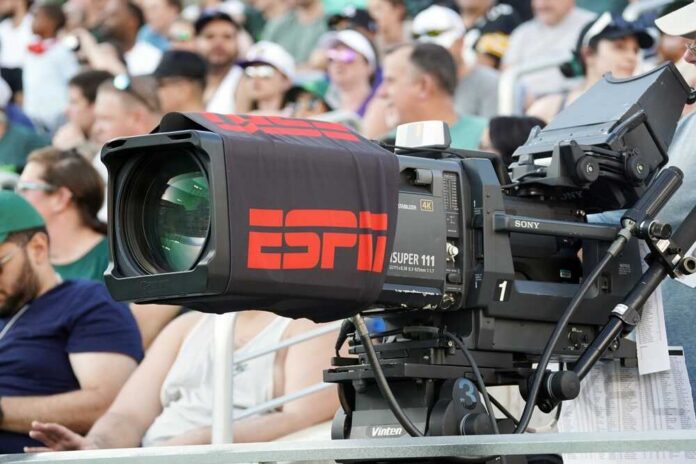
ESPN’s NFL Draft broadcast got so far behind real-time picks that fans learned selections from social media before the “official” TV reveal.
Quick Take
- The NFL’s new eight-minute first-round pick clock exposed broadcast delays that left ESPN and the integrated NFL Network trailing live developments.
- Viewers reported that multiple selections were effectively “spoiled” online while TV coverage still showed earlier teams on the clock.
- Host Mike Greenberg drew fresh backlash after a high-profile on-air mistake involving prospect Denzel Boston, later apologizing publicly.
- This underscores how legacy media can lose credibility fast when accuracy and speed slip in a social-first news cycle.
Eight-Minute Pick Clock Turned a TV Showcase Into a Catch-Up Game
The first round of the 2026 NFL Draft on April 24 exposed a basic problem for big-budget live TV: the show can’t lag behind the event. The league shortened the first-round decision window from 10 minutes to eight, and critics said ESPN’s coverage struggled to keep pace. Reports described the broadcast as “miles behind,” with fans seeing picks circulate on social media while television still treated earlier slots as unresolved.
ESPN Slammed for ‘Absolutely Embarrassing’ Blunders During NFL Draft Broadcast
READ: https://t.co/2j34BWVrtM pic.twitter.com/DuGGkZEy54
— The Gateway Pundit (@gatewaypundit) April 25, 2026
That gap matters because the draft is built on suspense. When viewers already know a selection, the analysis, graphics, and dramatic build become filler instead of information. Outlets covering the backlash pointed to a specific example where social media users appeared to know the 10th pick while the ESPN feed still showed the 7th pick “on the clock.” Even for viewers trying to avoid spoilers, phones and push alerts make that nearly impossible.
Mike Greenberg’s On-Air Error Became the Face of a Rough Night
Technical lag wasn’t the only issue. Mike Greenberg, one of ESPN’s most recognizable hosts, took heat for what reports called a “massive” factual mistake during the broadcast, including misidentifying prospect Denzel Boston. The error traveled quickly because draft clips and commentary spread instantly online, and viewers interpret basic identification mistakes as a sign the production is stretched thin or unprepared for the pace of live coverage.
Greenberg later issued an apology, calling the mistake “terrible,” according to coverage the next morning. That kind of quick response can limit damage, but it doesn’t solve the broader concern: in a live event where fans have abundant real-time alternatives, credibility is the product. When a network is late on picks and wrong on names, viewers start treating the broadcast like entertainment rather than a reliable feed.
ESPN’s Unified NFL Network Era Brings Scale—and New Failure Points
ESPN has carried draft coverage for decades, and the NFL Network’s role has evolved since it joined the TV mix in 2019. By 2026, reporting described NFL Network as integrated under ESPN, creating a consolidated approach that should, on paper, reduce duplication and improve coordination. Critics argued the opposite happened on draft night: centralization didn’t prevent delays, and the combined presentation still fell behind the faster eight-minute rhythm.
What the Backlash Reveals About Trust, Technology, and Consumer Choice
The public reaction was sharp because the NFL Draft is no longer competing only with other TV channels—it competes with the internet’s raw speed. When a broadcast can’t match the tempo, fans migrate to whichever source delivers first, whether that’s a social platform, an insider feed, or quick-hit highlights. From a limited-government perspective, the lesson is practical: audiences now “vote with their remote,” and institutions that miss basic execution lose loyalty.
For ESPN and the league, the immediate question is whether production changes can close the gap before future drafts with tighter clocks. The available reporting does not include a formal ESPN corporate statement beyond Greenberg’s apology, so it’s unclear what fixes—technical, staffing, or workflow—were implemented for the remaining rounds. What is clear is the incentive structure: in a fragmented media economy, fans won’t wait patiently while a major broadcaster catches up.
Sources:
ESPN Slammed for ‘Absolutely Embarrassing’ Blunders During NFL Draft Broadcast
ESPN’s Mike Greenberg makes embarrassing mistake on NFL Draft broadcast
Mike Greenberg Issues Apology After NFL Draft Mistake
NFL World Roasts ESPN’s Mike Greenberg After Draft Broadcast Error