China’s $1 trillion-plus trade surplus is a flashing red warning that America’s workers can lose even when Washington swears it has the upper hand.
Story Snapshot
- China posted a record trade surplus exceeding $1 trillion in the first 11 months of 2025, intensifying pressure on U.S. industry and global competitors.
- Exports from China to the U.S. fell sharply even as China’s total exports rose, signaling Beijing is rerouting trade to blunt Trump-era tariffs.
- A November 2025 one-year U.S.-China trade agreement brought limited, temporary stability, including soy purchases and a pause on certain rare earth restrictions.
- U.S. export controls on advanced chips have shown unintended effects, with Chinese firms like DeepSeek demonstrating rapid AI progress under constraints.
China’s Surplus Shows the Core Problem: Scale and Strategy
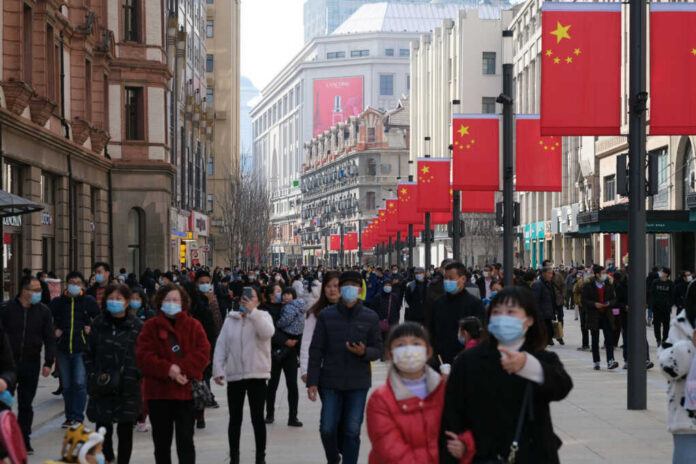
China’s economic rise was built for volume: low-cost manufacturing, heavy infrastructure investment, and an export engine designed to run hot even when demand shifts. That model is now producing a trade surplus exceeding $1 trillion in the first 11 months of 2025, a number that matters because it reflects persistent imbalance rather than a one-off spike. For U.S. policymakers, the surplus is a concrete measure of leverage Beijing gains through trade.
China’s leadership has also framed the moment as a response to tariff pressure, warning that the expanding global “tariff wave” is harming trade and jobs. That complaint is revealing: it suggests Beijing views tariffs as a meaningful constraint but not a decisive one. China’s export system is now large enough to absorb punches, redirect shipments, and keep factories running, even if individual markets like the United States become less accessible.
Tariffs Changed the Map, Not the Mission
Trade data in 2025 shows a mixed, telling picture. China increased total exports by about 5% versus 2024, yet exports to the United States dropped about 20%. That doesn’t mean Beijing stopped exporting; it means Beijing adapted by expanding shipments to other regions including Europe, Australia, Southeast Asia, Africa, and Latin America. From an American perspective, this is the central frustration of modern trade fights: penalties can shift routes without shrinking the underlying machine.
The Trump administration’s tariff strategy has aimed to protect domestic producers and reduce structural deficits, and it has clearly influenced flows into the U.S. market. But the rerouting effect also means American consumers and businesses can still encounter China-linked supply chains—just with more intermediaries, complexity, and potential cost. If the goal is resilient, transparent supply chains, enforcement and verification become as important as headline tariff rates.
The November 2025 Deal Bought Time, Not Resolution
The United States and China reached a one-year trade agreement in November 2025 after tariff escalations, with the U.S. reducing certain tariffs and China resuming regular purchases of U.S. soybeans. China also paused rare earth export controls as part of the arrangement. For U.S. agriculture, those purchases can provide real near-term demand. For broader U.S. industrial strategy, however, a one-year term underscores how fragile the “stability” really is.
The agreement’s structure highlights a recurring political problem in Washington: temporary deals can calm markets while leaving core imbalances intact. That dynamic feeds the broader voter belief—shared across right and left—that government can manage news cycles better than outcomes. Conservatives see it as proof that globalized systems reward competitors that don’t play by the same rules, while many liberals see working families stuck between corporate incentives and geopolitical bargaining.
What the “China Shock” Taught About Winners, Losers, and Accountability
Economists have long described how import competition from China produced concentrated pain in specific American communities. Research and commentary notes that the earlier “China shock” eliminated well over a million U.S. jobs and that many displaced workers and towns did not share in the new opportunities created elsewhere in the economy. The national numbers can look manageable even while particular regions experience lasting disruption.
That reality is why trade isn’t just an economic argument; it’s a trust argument. Voters who watched factories close often heard promises about retraining, mobility, and “the future,” then saw weak follow-through at the federal level. When today’s debate focuses only on aggregate GDP or stock prices, it risks repeating that mistake. Any durable U.S. response has to measure success in community-level outcomes, not just national averages.
DeepSeek and the Limits of Tech Containment
Technology competition is now intertwined with trade, and recent developments complicate simple narratives about containment. In January 2025, Chinese startup DeepSeek released a generative AI system described as rivaling ChatGPT while using less computing power and costing less to develop. Reporting tied that outcome to U.S. export controls on advanced chips that may have unintentionally accelerated Chinese innovation by forcing efficiency and domestic alternatives rather than dependence.
China’s Surging Economy Is a Major Problem for the U.S.https://t.co/ahs6QrPcyz
— PJ Media (@PJMedia_com) April 29, 2026
For Americans who want limited government but competent government, this is the hard balancing act: restrictions can protect sensitive technology, yet poorly calibrated rules can also incentivize competitors to innovate around U.S. advantages. The takeaway is not that controls never work, but that they must be paired with aggressive domestic competitiveness—energy reliability, faster permitting, stronger vocational pathways, and a business climate that rewards building at home. The research provided doesn’t settle that debate, but it does show the stakes are rising.
Sources:
u-s-china-economic-relations-implications-for-u-s-policy
how-us-trade-sanctions-fueled-chinas-innovation-surge