Protesters stormed a Madison police press conference after an officer fatally shot a homeless man who injured an officer with a knife, turning a local investigation into a loud fight over police power and public safety.
Story Snapshot
- A Madison officer shot and killed 38-year-old homeless resident Corey Ruiz during an attempted arrest after police say he injured an officer with a knife.
- Hundreds of protesters marched, shut down a Capitol concert, and confronted city leaders, demanding accountability and questioning police use of force.
- All four involved officers are on leave and the Wisconsin Department of Justice is running an external homicide investigation, but there is no body camera video.
- Madison’s mayor now promises to fund body cameras, while activists push a broader narrative of “police murder” and racial injustice.
Police Shooting On Madison’s East Side Sparks Immediate Unrest
On Wednesday afternoon, Madison police officers responded to reports of a man allegedly stealing bicycles and checking parked car doors in the city’s Marquette neighborhood. Officers located 38-year-old homeless resident Corey Ruiz, who fled on a bicycle before they stopped him and tried to arrest him in the middle of a busy street. During the struggle, officials say Ruiz pulled a knife and injured one officer, leading another officer to fire the shots that killed him at about 1:30 p.m.
The Madison Police Department confirmed that four officers were on scene, but only one fired his weapon, and all four have now been placed on administrative leave. City incident reports and later press briefings say officers first tried a stun gun before gunfire, suggesting they moved through more than one level of force in seconds. Officials have not released full video or a second-by-second timeline, leaving many details of the clash unclear and fueling strong reactions across the city.
Protesters Confront City Leaders And Shut Down Capitol Concert
Within hours of the shooting, residents gathered at the scene with candles, flowers, and handmade signs, creating a street-side memorial where blood had spilled in the roadway. That evening, hundreds marched from Madison’s east side to the Wisconsin State Capitol, chanting “no justice, no peace” and accusing police of “executing a human today,” as they demanded that the officer’s name be released. Demonstrators took over the stage of a summer “Concerts on the Square” event, forcing organizers to cancel the performance midstream.
The next day, tensions moved straight inside city government when protesters burst into a police station news conference that included the mayor and council leaders. As Police Chief John Patterson began to speak about the investigation, roughly twenty protesters seized the microphone and shouted down officials, accusing officers of murder and calling the department corrupt. One protester held a sign reading “Corrupt cops deserve to die too!!!,” showing how quickly the debate has shifted from scrutiny of one incident to open hostility toward law enforcement.
State Homicide Investigation And The Body Camera Gap
After the shooting, Madison police turned the case over to the Wisconsin Department of Justice Division of Criminal Investigation, which is now treating the matter as an open homicide investigation. State officials say they will conduct an independent criminal review and that the local district attorney will decide whether charges are warranted once the findings are complete. Governor Tony Evers publicly called for “transparency and accountability,” and urged protesters to remain peaceful as the process moves forward over the coming months.
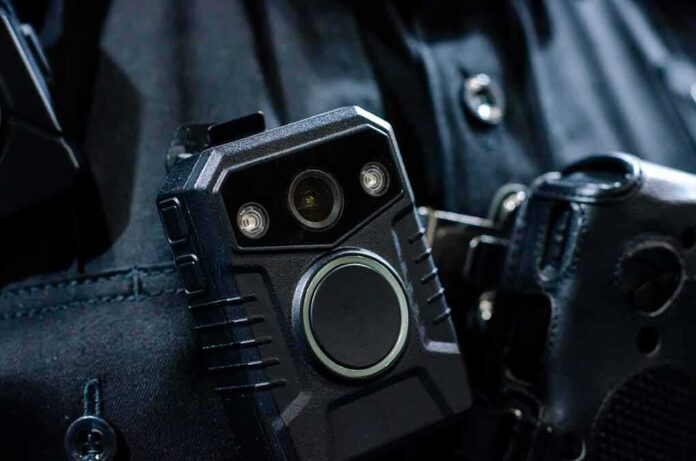
Despite the high-profile nature of the case, none of the four officers involved wore body cameras, a fact that has drawn sharp criticism from activists and many residents. Passersby and bystanders did record video of the confrontation on cell phones, and that graphic footage is now circulating online, shaping public opinion long before investigators release formal reports. Madison’s mayor Satya Rhodes-Conway says her upcoming budget will finally include money for body-worn cameras and a clear policy for their use, with implementation targeted for early next year.
Accountability Debate And What Comes Next For Conservatives
The clash in Madison fits a familiar national pattern where official statements focus on an “immediate threat” and legal justification, while activists insist a vulnerable person, in this case a homeless man, was needlessly killed. Protesters frame the shooting as part of broader “racial injustice” and police violence, even though investigators have yet to release a full force analysis or detailed forensic evidence. For many residents, especially those who back law and order, the knife attack on an officer complicates quick judgments and underscores how dangerous these street encounters can be.
For conservatives watching this story, two issues stand out: the need to protect officers facing real threats and the need to keep local government honest and limited in its power. President Trump’s administration expects cities to back their police when they are attacked, but it also supports clear rules, body cameras, and swift investigations so the public can see what truly happened. As Madison moves forward, the hardest but most important work will be separating heated rhetoric from hard facts while defending both public safety and constitutional rights.
Sources:
nytimes.com, abc7news.com, wsws.org, commondreams.org, wpr.org, youtube.com, propublica.org