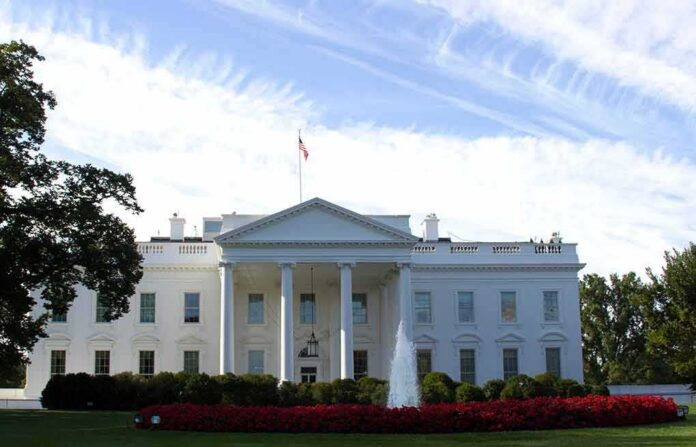
A senior Chinese Communist Party intelligence official now owns a building about 650 feet from the White House.
Story Highlights
- Filings show the Securities Building sold on July 21, 2026, for $8.4 million to the Philip Qiu and Family Foundation.
- Reporting identifies buyer Philip Qiu as a senior figure tied to Chinese state security and intelligence.
- The site sits roughly 650 feet northeast of the White House complex, raising security concerns.
- Federal actions in recent years expanded reviews and forced sales of China-linked real estate near sensitive U.S. sites.
What Happened: A Prime D.C. Building Changed Hands
Daily Caller News Foundation reporting, carried by AOL, says the historic Securities Building near the White House sold for $8.4 million on July 21, 2026. Filings list the purchaser as the Philip Qiu and Family Foundation, and reporting names Qiu as the new owner. The building stands about 650 feet from the White House complex, a location that commands attention and concern in any era, but especially amid rising scrutiny of foreign ownership near sensitive U.S. sites.
Reuters documented how the White House in 2024 forced a China-linked entity to divest land near U.S. missile assets after espionage concerns. That action showed the federal government will unwind risky deals, even after closing. It also signaled that proximity to strategic locations is not just a real estate matter, but a national security issue. That view now guides more reviews and tougher screening of foreign-linked property near critical facilities.
Why It Matters: Proximity, Access, and Security Risk
Location drives risk. A property steps from the White House offers lines of sight, physical access points, and potential tech infrastructure. Intelligence services look for small advantages that add up. Even routine renovations, leases, or equipment installs can become vectors. That is why the federal government has widened its lens on real estate near key sites. Tougher review powers now treat some land and buildings as security assets, not mere investments.
When the buyer is reported as a senior figure tied to Chinese intelligence, the stakes rise. China’s state security services target information, networks, and influence. A building this close to the White House could host offices, antennas, or tenants with access. None of that proves wrongdoing. But common sense says risk management must come first. That starts with full federal visibility into ownership, financing, planned uses, and any foreign government links.
The Policy Backdrop: Expanding Federal Review Tools
Reuters noted the administration’s 2024 order to unwind a China-linked land deal near a strategic base, an unusual but decisive move that set precedent for proximity-based action. The Treasury Department later expanded the authority of federal reviews for real estate deals close to dozens of U.S. military sites. Those rules aim to spot and block risks early, and to require divestment when needed. These steps reflect a broader shift from passive screening to active defense.
Conservatives have pushed similar guardrails for years, warning that foreign adversaries use property to gain leverage. Lawmakers proposed bans on Chinese Communist Party agents buying land near federal sites, seeking clear lines that stop risky deals at the door. The new Washington sale shows why vigilance must extend beyond bases to the nation’s seat of power. If a hostile state can buy reach, it will. The answer is firm law, fast action, and zero blind spots.
What Comes Next: Due Diligence and Guardrails
Federal agencies should examine the sale, ownership structure, and any ties to foreign state security. If risks appear, the government has tools to act, up to and including forced divestment, as seen in 2024. City and federal authorities can also watch building permits, tenant lists, and communications equipment. Transparency, strict leasing, and security audits can reduce risk while the review proceeds. The goal is simple: protect the presidency, protect national security, and protect the American people.
Sources:
feedpress.me, bizjournals.com, americanprogress.org, newhouse.house.gov