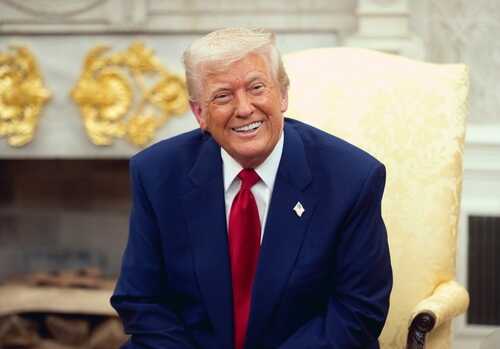
Donald Trump’s White House hosted five West African leaders in a closed-door summit billed as a pivot from aid to trade—deliberately excluding Africa’s largest economies and raising alarm across diplomatic and humanitarian circles over the emerging U.S. strategy to counter China’s grip on the continent.
At a Glance
- Trump hosted leaders from Gabon, Liberia, Mauritania, Senegal, and Guinea-Bissau.
- Nigeria, Egypt, Ethiopia, and South Africa were excluded from the event.
- Trump promoted trade partnerships over foreign aid during the summit.
- Critics warn aid cuts may destabilize fragile regions in Africa.
- The move is seen as a geopolitical strategy to counter China’s mineral dominance.
“Business, Not Aid” Strategy Sparks Rift
Speaking at the White House State Dining Room, Trump declared a new era in U.S.–Africa relations, telling leaders they “offer incredible commercial opportunities” and promising American investment in resource extraction, logistics, and technology. But invitations were extended to just five smaller West African nations—excluding the continent’s political and economic heavyweights.
Watch a report: Trump Tells African Leaders: We Are Shifting From Aid To Trade.
The snub, first reported by Reuters, immediately drew criticism. Diplomats from Nigeria and South Africa privately condemned the summit as “performative,” accusing the U.S. of deliberately avoiding BRICS-aligned nations. Ethiopia and Egypt, both key players in African trade and security, were not consulted.
China Shadows Every Move
Trump’s message was clear: the U.S. would no longer “bleed billions” in aid but would pursue mutually beneficial deals, especially in critical minerals. Analysts say this mirrors China’s approach—but with fewer strings attached. Gabonese officials, for example, said Trump expressed interest in potash and rare-earth exports.
According to Brookings, the summit was a direct response to China’s deepening footprint in African infrastructure and energy sectors. But critics note the U.S. lacks the scale of long-term financing offered by Beijing.
Africa’s mineral-rich corridor has become the next great arena in the China–U.S. global rivalry, and Trump’s high-level engagement, though selective, signals an aggressive American reentry.
Humanitarian Fallout Ignored?
Trump’s pivot from aid to business has sparked humanitarian concern. As AP reports, aid to countries like Liberia once comprised more than 2% of their GDP—funding education, health, and infrastructure. With programs slashed or unfunded, NGOs warn of cascading effects: higher infant mortality, disease outbreaks, and famine.
U.S. officials argue trade creates sustainable value, but aid groups warn that economic deals alone won’t shield vulnerable populations from instability.
As African leaders left Washington without a joint communiqué or clear development plan, many observers feared the summit had revealed more about U.S. geopolitical anxiety than its long-term vision. For now, Africa’s biggest players remain sidelined—and China is still watching.