President Trump’s bold plan to use Venezuelan oil to cut American energy costs has slammed into a wall of corporate and political resistance that shows how deep the damage from years of mismanagement and sanctions really runs.
Story Snapshot
- Trump tied Venezuela’s future to at least $100 billion in investment from American oil companies but has not secured firm commitments.
- The White House says the United States will control Venezuelan oil sales and profits “indefinitely,” raising big questions about execution and transparency.
- Oil executives and analysts call Venezuela “uninvestable” right now, citing wrecked infrastructure, legal risk, and low prices.
- Years of sanctions and socialist misrule left Venezuela’s oil fields and refineries in ruins, making any real recovery a multi-year, high-cost project.
Trump’s $100 Billion Bet Runs Into Industry Pushback
President Trump has pitched a huge capital push into Venezuela, telling Americans that major United States oil firms would invest at least $100 billion to rebuild the country’s shattered energy infrastructure. That level of private money, he argues, could restore output, weaken hostile regimes that once used Caracas as a partner, and lower costs for American families. But after meetings at the White House, executives from Big Oil made clear they had not promised anything like that figure and were not ready to rush back into Venezuela.
Industry leaders are blunt about the problem. Exxon Mobil chief executive Darren Woods reportedly told Trump that, under current laws and contracts, Venezuela is “uninvestable,” a word that sums up years of socialist expropriation and legal chaos. Corporate teams see huge political risk, the threat of future seizures, and unclear property rights. They also see low global oil prices, which make it hard to justify tens of billions in spending in a country still sorting out who is in charge. For investors who answer to shareholders, those red flags matter.
U.S. Claims Control Over Venezuelan Oil Sales
While companies hesitate, the administration has moved to lock in control over Venezuelan crude flows. Energy Secretary Chris Wright said the United States plans to oversee the sale of Venezuela’s oil “indefinitely,” using seized and redirected barrels as leverage over the interim authorities in Caracas. President Trump has said Venezuela will send between 30 and 50 million barrels to the United States and that he will control the profits from those sales, which would flow through accounts that Washington oversees for what it calls the benefit of the Venezuelan people.
White House officials say they have struck a deal with interim leaders in Venezuela that allows the United States to manage export sales and direct proceeds. Earlier announcements framed this as both a way to keep corrupt former officials from looting the sector and a way to ensure ordinary Venezuelans see relief after years of economic collapse. For many conservatives, that promise to use oil wealth to break a leftist regime’s grip fits a long-held belief in energy as a tool of freedom. But the lack of public detail on the deal terms and audit controls also raises transparency concerns that could be used by critics to attack the effort later.
Decades of Damage Make Fast Recovery Very Hard
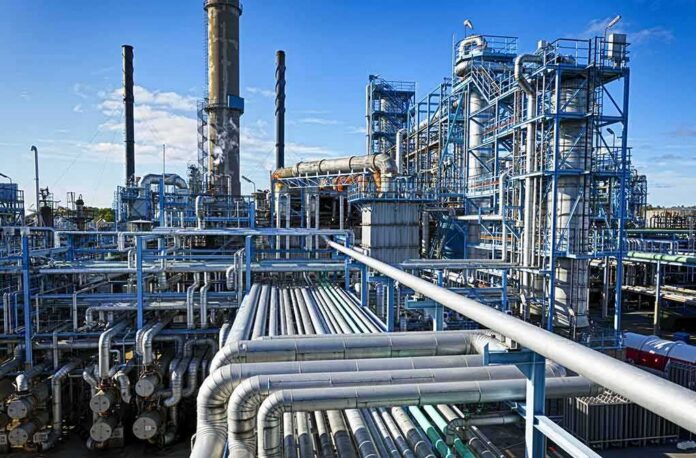
Any serious plan for Venezuela must face the wreckage left by socialist rule and years of sanctions. Analysts say the country still holds some of the world’s largest oil reserves, but note that pipelines, wells, and refineries are “ugly and rusty,” gutted by disinvestment, corruption, and technical neglect. Output today is roughly around one million barrels per day, a fraction of past levels, and experts estimate it could take ten years and between about $80 billion and $180 billion to restore production near its former peak.
Energy specialists stress that the main obstacles are not geology but law, security, and time. Any American company that drills in Venezuela needs solid contracts with a recognized government that will still exist years from now. That means a stable successor regime and clear rules for profits, taxes, and asset control. Even if politics settle soon, firms must sign agreements, bring in crews, rebuild equipment, and restart fields. That process, analysts say, takes many months just to begin and many years to deliver big volumes, no matter how strong the White House’s will may be.
Sanctions History and Market Reality Slow the Push
Trump’s team is trying to pivot from years of United States sanctions to a new era of controlled revival, but the old rules still matter. Past measures blocked dealings with Venezuela’s national oil firm and choked off investment, contributing to deep poverty and a flood of refugees. Now the administration is talking about “selectively” easing sanctions for approved deals while keeping a wider embargo in place to maintain leverage. That halfway step can confuse companies that fear running afoul of regulators years down the road if politics change again.
Global market math also cuts against fast movement. With world oil supplies steady and prices not far from recent lows, experts warn that the returns on sinking tens of billions into high-risk Venezuelan projects may be too thin to justify the gamble. Lenders and insurers can add steep risk premiums for operations in a country that just went through a military intervention and still faces armed groups and crime. Those extra costs make projects harder to finance, even if Washington offers political backing. For now, that combination of risk, cost, and delay is the core roadblock blocking Trump’s vision from turning quickly into barrels and jobs.
Sources:
zerohedge.com, washingtonpost.com, news.sky.com, bbc.com, aljazeera.com, cnn.com, nytimes.com, theguardian.com, theatlantic.com, reuters.com, abcnews.com