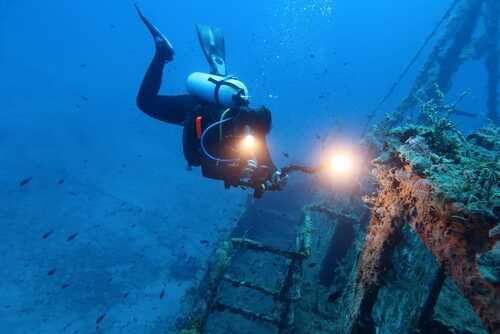
Archaeological discoveries off Egypt’s coast have uncovered stunning evidence of ancient maritime luxury that could rewrite our understanding of Cleopatra’s final years and challenge decades of scholarly assumptions about Egypt’s most famous queen. New findings, including a sunken port and a 2,000-year-old luxury pleasure boat, provide material evidence that strengthens a controversial theory regarding Cleopatra’s secret burial transport route and sheds light on Ptolemaic and Roman-period royal maritime practices.
Story Highlights
- Sunken port near Taposiris Magna supports controversial theory about Cleopatra’s secret burial route
- 2,000-year-old luxury pleasure boat wreck discovered off Alexandria reveals royal maritime practices
- Discoveries challenge conventional scholarly consensus about Cleopatra’s final resting place
- Findings strengthen the case for an underground tunnel connection to the Mediterranean burial transport
Sunken Port Discovery Reinforces Burial Route Theory
Egypt’s Ministry of Tourism and Antiquities announced the discovery of a sunken ancient port near Taposiris Magna on September 18, 2025. The site revealed towering columns, polished stone flooring, cemented blocks, ship anchors, and amphorae dating to Cleopatra’s era. This discovery directly aligns with archaeologist Kathleen Martínez’s controversial hypothesis that Cleopatra was secretly transported through a 1,300-meter underground tunnel from the sea to the temple complex for burial.
The port discovery provides the first major underwater archaeological evidence supporting this transportation route theory. Martínez and co-discoverer Bob Ballard found material evidence of functional maritime infrastructure connected to Taposiris Magna’s temple complex, challenging the conventional scholarly view that Cleopatra’s remains lie in Alexandria or submerged royal cemeteries there.
Mosaics and historians told of Egyptian pleasure boats, but for the first time, archaeologists have found the wreck of one. The timbers are well preserved, and the vessel was around 115 feet long! It could have been a part of naval ceremonies for Isis.https://t.co/9SDFU84So9 pic.twitter.com/bRLgzGIx2R
— Archaeology Magazine (@archaeologymag) December 9, 2025
Luxury Vessel Reveals Royal Maritime Culture
On December 8, 2025, archaeologist Franck Goddio announced the discovery of a nearly 2,000-year-old Egyptian pleasure boat wreck off Alexandria’s coast. The vessel measures 114-115 feet in length and 23 feet in width, containing exceptionally preserved timbers reaching 92 feet long with Greek graffiti dated to the first century CE. The European Institute for Underwater Archaeology determined this luxury craft served royal excursions and ceremonial purposes during the Roman period.
The pleasure boat’s location within Alexandria’s Portis Magnus port complex, near ongoing excavations around the Isis Temple on Antirodos island, suggests ritual connections to goddess worship. Goddio proposed the vessel participated in annual ceremonial voyages honoring Isis, providing concrete evidence of Ptolemaic and Roman-period luxury maritime practices that were integral to royal power and religious ceremonies.
Scholarly Community Remains Divided on Significance
While these discoveries have elevated international attention to Egyptian maritime archaeology, the scholarly community maintains division over their connection to resolving Cleopatra’s burial location. Many established Egyptologists acknowledge the importance of understanding maritime infrastructure while remaining skeptical about definitive connections to the burial question. The Martínez hypothesis represents a minority viewpoint within Egyptology, despite increasingly substantial physical evidence supporting the secret burial route theory.
The discoveries demonstrate advanced archaeological techniques and international collaboration between Egyptian authorities and recognized institutions. National Geographic’s documentary “Cleopatra’s Final Secret” featuring the port discovery indicates mainstream validation, though definitive resolution would require additional textual evidence or direct burial remains. These findings nevertheless represent meaningful progress in understanding ancient Egyptian material culture during one of history’s most significant periods.
Watch the report: Wreck of 2,000-year-old pleasure boat discovered off Egypt’s coast
Sources:
Ancient Egyptian ‘superyacht’ hints at existence of Cleopatra’s barge.
Archaeologists Have Uncovered a Sunken Ancient Egyptian Port