After the Supreme Court cleared key parts of President Trump’s mail-ballot security order, lower-court judges rushed to throw up new roadblocks anyway.
Story Highlights
- The Supreme Court lifted a major block on Trump’s mail-ballot safeguards, allowing some implementation to proceed for now.
- The Justice Department asked the Court to pause a sweeping injunction covering 23 states and Washington, D.C..
- The order sets verification steps for voter lists and ballot envelopes to keep mail voting citizen-only and secure.
- Opponents claim the rules exceed presidential power and risk disenfranchisement, and more rulings are still pending.
What The Supreme Court Did And Why It Matters
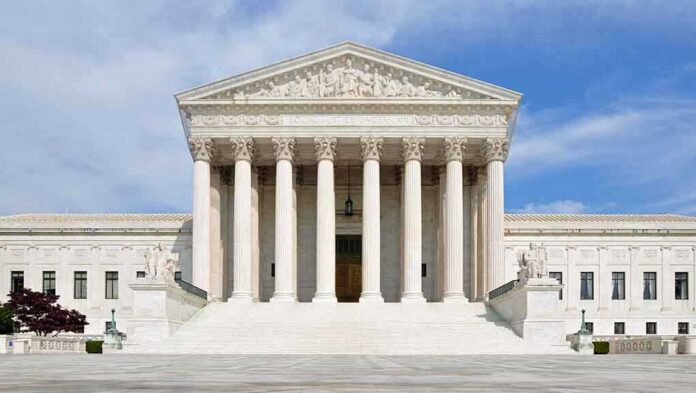
On August 24, the Supreme Court lifted a lower-court order that had blocked parts of President Trump’s mail-ballot security policy in 23 states and Washington, D.C. The unsigned ruling let implementation move forward while lawsuits continue. Three liberal justices dissented. The order did not decide the final legality. But it removed a sweeping stop sign that threatened election integrity efforts ahead of November. News outlets described the ruling as a win that applies “for now”.
On July 27, the Department of Justice asked the Court to put the Boston judge’s broad injunction on hold. That ruling had frozen enforcement in states that sued to stop the order. The request argued the government needed to implement common-sense checks in time for ballot mailings. The emergency relief targeted the injunction’s wide scope and timing. It sought space to run the program while courts review the claims on the merits.
What The Policy Actually Requires
The executive order directs the Postal Service to use basic verification steps. States would provide lists of eligible mail voters. Ballot-envelope designs would be reviewed in advance to meet security and delivery standards. Postal facilities could decline ballot mail that does not follow those standards. The policy aims to keep ballots going only to eligible voters and reduce errors that slow delivery or invite abuse. Court filings describe these steps in detail.
Allies say these measures are routine quality control, not suppression. House Speaker Mike Johnson said that making sure mailed votes are valid and properly registered should not be controversial. Supporters argue citizen-only voting is a bedrock rule, and the federal government can act to protect federal elections from illegal ballots. They frame the order as simple validation, like checking a boarding pass at the gate. They stress it targets process, not people.
The Legal Fight And The Claims Against It
Opponents sued in multiple courts, saying the president cannot direct how states run mail voting. Judges in early rulings questioned presidential authority and warned of possible disenfranchisement if rules roll out close to the election. Some described parts of the order as likely unconstitutional. Critics also said there is little proof of widespread mail fraud. They pointed to studies and past data that report very low mail-ballot fraud rates.
Justice Sonia Sotomayor wrote that the Supreme Court’s August 24 ruling did not decide whether the administration has authority to implement the directives. That means the cases will continue in lower courts. One judge later adjusted her own injunction in light of the Supreme Court’s order. For voters, the headline is simple: parts of the policy can proceed now, but the final legal answer is still coming.
What This Means For Voters And Election Integrity
The path ahead includes tight timelines and intense scrutiny. States must share accurate lists quickly. The Postal Service must apply envelope and delivery standards without delaying lawful ballots. The administration says these steps protect citizen-only voting and reduce chaos. Opponents warn of confusion and rejected mail. Both risks are real when rules change late. The Supreme Court gave the green light to keep moving, so execution must be precise and transparent.
For conservatives, the issue is trust. Americans deserve mail voting that is lawful, trackable, and secure. Clear rules help every honest voter. Clean lists reduce undeliverable ballots. Standard envelopes improve scanning and speed. These are normal safeguards in any system that handles sensitive items. Courts will keep arguing about lines of authority. Meanwhile, the mandate is simple: count every lawful vote, and stop illegal ones, with rules that are uniform and clear.
What To Watch Next
Watch for new guidance from the Postal Service on envelope standards and handling. Look for state notices about updated mail-voter lists and submission deadlines. Expect more court filings and possible narrow orders that tweak specific steps. Voters should confirm registration status and follow local ballot instructions. The Supreme Court’s action eased one big legal brake. The next test is practical: can agencies and states run tighter checks without slowing lawful votes? We will track the rollout closely.
Sources:
redstate.com, reuters.com, cnn.com, thehill.com, bloomberg.com, cnbc.com, npr.org, ag.ny.gov