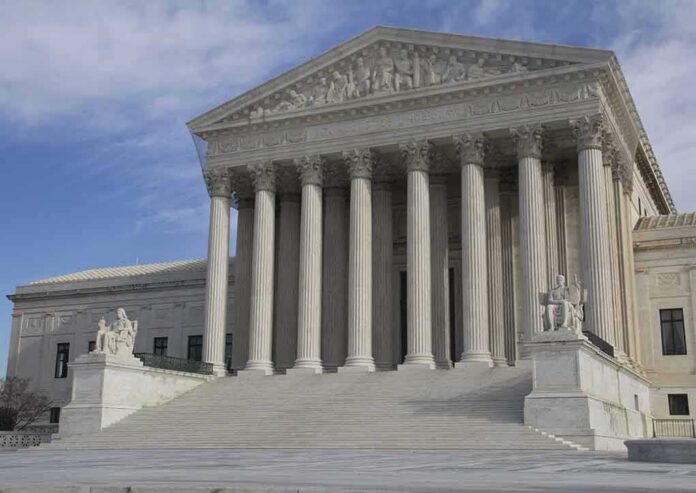
The Supreme Court cleared a key roadblock to President Trump’s mail-ballot integrity order, allowing parts to move forward before the midterms.
Story Highlights
- The Supreme Court lifted one injunction, giving the administration room to act now.
- The order directs the Department of Homeland Security to build citizenship lists for states.
- The order involves the Postal Service in mail-ballot delivery standards tied to eligibility lists.
- Other court orders still limit parts of the policy while final rules are completed.
What The Supreme Court Allowed And What It Did Not
The Supreme Court on August 24 lifted a lower-court order that had blocked parts of President Trump’s executive order on mail voting. The justices accepted the Department of Justice’s view that the states challenging the policy were too early, and that they lacked standing for a sweeping halt. The unsigned order gives the administration narrow space to keep working while the broader case moves ahead on the merits. The ruling does not resolve the core constitutional fight over state control of elections.
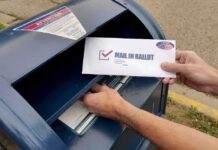
The executive order calls for the Department of Homeland Security to assemble state-by-state lists of adult United States citizens, share those lists with states, and support cross-checks of voter rolls. It also directs the United States Postal Service to align mail-ballot handling with eligibility lists and to seek voter-eligibility data from states. Supporters say this targets illegal voting by tightening identity and citizenship checks for mailed ballots and adds a federal tool to confirm eligibility.
The Ongoing Court Landscape And Limits On Implementation
Even with the Supreme Court action, lower-court rulings still restrict parts of the plan. A federal appeals court kept in place a block on building a federal citizenship list for states and on any Postal Service rule that would limit delivery to only people on that list. Those judges said the president likely lacked authority for those steps. Other judges have called early challenges premature because final agency rules were not complete yet. The bottom line is mixed progress while the merits remain unsettled.
The American Civil Liberties Union reported that a federal court issued a preliminary injunction stopping the Postal Service from enforcing the new mail-ballot rules for now. That case adds to the patchwork by pausing parts of the order while agencies finish rulemaking and courts weigh statutory limits on Postal Service powers. The administration argues that the Postal Service can set uniform mail standards. Critics claim Congress never gave it authority to police who may vote by mail.
Why The Administration Says The Order Matters
President Trump’s team argues that citizenship checks and clean lists protect every lawful vote. The plan uses federal data to help states find errors and to reduce ballots sent to people who are not eligible. The Supreme Court’s action signals that agencies can keep building the framework while courts review the details. Backers say this is a targeted administrative fix, not a takeover of state elections, because states still run voter registration and ballot counting.
Supporters also note that mail systems need clear, uniform practices to prevent abuse. They say the Postal Service already manages how ballots move through the mail and can add safeguards that confirm eligibility without slowing delivery. They argue that better lists, smarter barcodes, and clear handling rules will cut undeliverable ballots and reduce chances of double mailing. They add that cleaner rolls reduce costs and make elections run smoother for local clerks.
Why Opponents Say It Goes Too Far
Opponents, including several states and advocacy groups, argue the order intrudes on state power over elections and risks blocking eligible voters. They warn that database matching can produce false positives when names overlap or records are out of date. They point to rulings that questioned the president’s authority to generate state voter lists and the Postal Service’s power to set binding ballot rules. They say the policy could add confusion close to voting.
Reuters reported that earlier in the year, a judge in Washington, D.C., declined to block the order at that stage, saying agencies had not yet changed how Americans vote because rules were still pending. That decision highlights why some courts focused on timing and record-building before final judgments. The Supreme Court’s latest step fits that theme: allow limited progress, then decide the merits with a fuller record, including the agencies’ final rules and justifications.
What To Watch Next
Watch for the Department of Homeland Security’s technical standards for citizenship matching and for the Postal Service’s final rule text and legal basis. Expect fresh court filings once those are published. The key legal tests are simple to state: did Congress authorize these steps, and do they respect state control of elections. The answers will decide how far federal agencies can go to secure mail ballots without crossing constitutional lines.
Sources:
youtube.com, npr.org, cnbc.com, aclum.org, nytimes.com, reuters.com, apnews.com, lawforward.org