
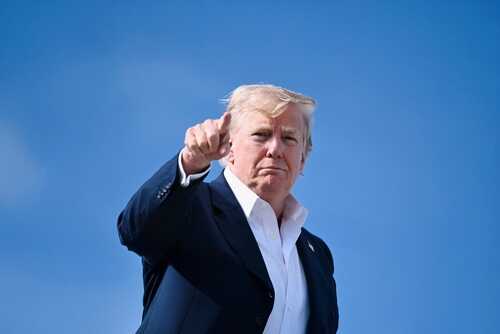
President Trump’s recent visit to the Ford Dearborn Truck Plant underscores a significant shift in U.S. manufacturing priorities, highlighting the ongoing battle between traditional and progressive economic policies. The tour aimed to showcase the administration’s focus on reviving traditional manufacturing sectors through tariff policies and regulatory rollbacks, a strategy highlighted by Ford’s decision to discontinue the F-150 Lightning and commit $19 billion to gas-powered vehicles. This shift illustrates the tangible effects of the current economic strategies on the domestic auto industry.
Story Overview
- President Trump visited Ford’s Dearborn Truck Plant to promote manufacturing policies.
- Trump’s policies are credited with boosting domestic auto production.
- Ford executives praised the administration’s economic strategies.
- Tariff impacts on the auto industry show mixed results, sparking debate.
Trump’s Visit to the Ford Plant: A Manufacturing Milestone
On January 13, 2026, President Donald Trump visited the Ford Rouge Center’s Dearborn Truck Plant in Michigan. The tour, accompanied by Treasury Secretary Scott Bessent and Ford’s top executives, aimed to showcase Trump’s economic policies’ impact on U.S. manufacturing. The visit highlighted the administration’s focus on reviving traditional manufacturing sectors through tariff policies and regulatory rollbacks. Ford’s decision to discontinue the F-150 Lightning in December 2025, followed by a $19 billion shift from EV to gas-powered vehicles, underscores the tangible effects of such policies.
President Donald Trump toured an assembly line making Ford F-150 pickups in Dearborn. https://t.co/m4tA6NgOLL
— News Channel 3 WWMT-TV (@wwmtnews) January 13, 2026
Economic Policies and Their Impact on the Auto Industry
President Trump’s economic strategies, particularly tariffs and regulatory rollbacks, have been credited with reigniting the domestic auto industry. Ford and General Motors reported sales gains in 2025, a testament to the administration’s success in boosting U.S.-based manufacturing. However, the University of Michigan economists updated their predictions, indicating a “small positive” impact on domestic auto production, which contrasts with their initial forecast of 13,000 job losses. Despite these gains, the broader effects of tariffs remain mixed, with varying outcomes for different manufacturers.
During the visit, Ford executives praised the administration’s policies. CEO Jim Farley attributed the company’s expansion plans to these strategic decisions, signaling a positive reception from corporate leaders. The potential renegotiation of USMCA could further alter North American automotive supply chains, posing both opportunities and challenges for the industry.
Regional and National Implications
The Ford plant visit served as a symbolic endorsement of Michigan’s manufacturing prowess and Trump’s economic agenda. Michigan’s economy, heavily reliant on automotive manufacturing, stands to benefit from the current administration’s policies. Ford workers, whose livelihoods depend on these manufacturing jobs, may experience increased job security and potential job creation through domestic production expansion.
However, the shift from EV to traditional vehicle production presents a complex scenario. While gas prices have decreased and economic sentiment appears positive, concerns about living expenses and the long-term viability of such production shifts remain. The U.S. Supreme Court’s upcoming decision on Trump’s authority to levy tariffs unilaterally could further impact the economic landscape.
Watch the report: Trump visits a Ford pickup truck factory, aiming to promote his efforts to boost manufacturing
Sources:
Trump’s visit to Ford plant: Selfies, an American flag truck and a middle finger
Fact-check: Donald Trump touts economy, downplays costs in Michigan speech
Trump’s Factory Tour Highlights Manufacturing Success