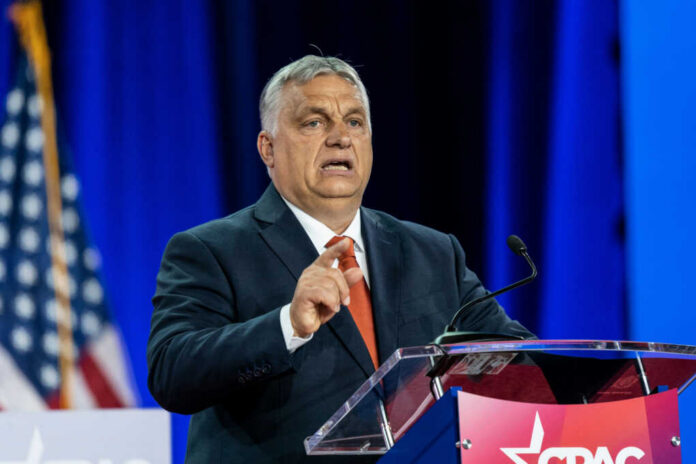
Hungary’s new prime minister just tore down the fences around Viktor Orbán’s old fortress-like offices, and Europe’s elites are cheering a “new era” that should make every conservative in America ask what kind of “democratic renewal” Brussels really has in mind.
Story Snapshot
- Peter Magyar opened Orbán’s former office complex to visitors and media, branding it a break from “autocratic” rule.
- The move comes with vows to restore “rule of law,” reset relations with the European Union and unlock billions in frozen funds.
- Corporate media is selling the fence removal as proof of democratic rebirth, even though concrete reforms remain mostly promises.
- The fight over Hungary’s direction echoes America’s struggle between national sovereignty and globalist pressure.
Orbán Out, Magyar In: Brussels Welcomes a “New Hungary”
Peter Magyar was sworn in as Hungary’s new prime minister after his center-right Tisza party won a landslide election, ending Viktor Orbán’s sixteen-year hold on power and securing a two-thirds supermajority in parliament. Magyar framed his victory as the start of a “regime change,” accusing Orbán of autocratic rule and deep corruption while promising to restore democratic institutions and checks and balances that critics say eroded over the last decade and a half. Corporate outlets immediately echoed that storyline, celebrating a supposed clean break from nationalist politics and aligning Magyar with European Union priorities on governance and foreign policy, especially regarding Ukraine and Russia. [3]
Magyar’s government has loudly promised to mend fences with the European Union after years of clashes between Budapest and Brussels over migration, judicial reforms and media law. He has signaled that unlocking roughly twenty billion dollars in frozen European Union funds will be one of his top goals, tying his agenda to satisfying the same bureaucrats who punished Orbán’s government over “rule of law” disputes. That financial leverage gives Brussels enormous influence over Hungary’s internal reforms and raises predictable concerns about whether national sovereignty will be traded away for relief money and elite approval. [3]
Fences Removed, Doors Opened: Powerful Symbol or Political Theater?
Within days of taking office, Magyar staged a highly visual gesture by personally removing the fences around the Karmelita complex, the former Catholic monastery on Budapest’s Castle Hill that Orbán converted into his executive offices. The building had become a potent symbol of his rule after security cordons and strict rules made the area effectively off-limits to ordinary Hungarians, with journalists even barred from taking photographs during earlier controlled visits. Magyar announced that the site would now be open for tours booked through a public website, declaring that “there is no place for cordons in Hungary after the change of regime” and emphasizing that the complex was renovated with taxpayer money and should belong to the people, not a single leader. [1]
The new government has also highlighted the luxury and exclusivity of Orbán’s office environment, including historic artwork borrowed from public museums to decorate the former prime minister’s private spaces, a reminder that state resources often serve political image-making at the very top. Investigative reporting previously had to use freedom of information tools just to identify what taxpayer-owned pieces had been pulled into the Carmelite offices, underscoring how closed the complex had become during Orbán’s tenure. By contrast, Magyar has released images and video from inside, inviting visitors to see the opulent surroundings and implicitly framing the fence removal as a moral cleansing of a palace of power. That contrast plays well on television and social media, but it does not by itself rewrite laws, regulations or media rules. [1]
Promises of Anti-Corruption and Media Overhauls Still Unproven
Beyond the optics, Magyar is pledging to build new institutions that he says will hold Orbán’s network accountable. He has proposed a National Asset Recovery and Protection Office that would investigate misuse of public funds and attempt to reclaim money allegedly siphoned off during the previous government’s sixteen years in power. He has also vowed to suspend the news services of Hungary’s public broadcaster, widely criticized as a mouthpiece for Orbán’s party, until objectivity can be restored. These moves are being sold as a reset of the rule of law and media independence, but so far they are still largely plans and promises rather than fully implemented structures with a track record. [3]
Critics of Magyar’s narrative point out that the legal details behind these initiatives have not yet been published in the sources currently available, and there is no confirmation that European Union officials have actually unfrozen any of the blocked funds. The absence of primary documents, formal mandates and measurable enforcement actions makes it difficult for observers to judge whether the new offices and investigations will truly break entrenched patronage networks or simply reshuffle them under a different faction. For Hungarians, the risk is that a dramatic ceremony of opening doors and tearing down fences becomes a substitute for deeper structural change; for Americans watching from afar, the episode is a reminder that elites often use the language of “democracy” and “anti-corruption” to bless political realignments that still concentrate power in government hands. [3]
Why This Matters to American Conservatives and the Trump Era
Hungary’s transition is not just a European story; it mirrors debates raging in the United States during President Trump’s second term about whether national leaders should answer to global institutions or to their own citizens. Orbán was often praised by American populists for resisting mass migration, aggressive social engineering and European Union overreach, while his opponents branded him an authoritarian who captured courts and media. Now, with Magyar promising closer ties to Brussels and a softer stance toward the European establishment, Western media are celebrating what looks like a restoration of the old order. That should ring alarm bells for conservatives who have watched similar establishment comebacks in Washington every time voters push back against woke agendas and open-border policies. [3][4]
Conservatives can welcome legitimate transparency without buying the entire globalist narrative. Allowing taxpayers to see the offices they funded and reducing unnecessary security theatrics is healthy in any republic. But when powerful bureaucracies and corporate newsrooms insist that symbolic gestures like fence removals prove a nation has suddenly been “saved,” it is wise to ask what deeper changes are being demanded in exchange for elite approval and financial rewards. Whether in Budapest or Washington, real self-government depends less on photo opportunities than on defending national sovereignty, protecting free speech, resisting one-sided media control and keeping unelected global institutions from dictating domestic policy under the banner of “restoring democracy.” [3]
Sources:
[1] Web – Orban’s new, ‘austere’ office decorated with 38 pieces of historic …
[3] Web – Hungary’s new PM takes oath of office, ending Orban’s 16-year rule
[4] Web – Eastern Opening | The Orange Files