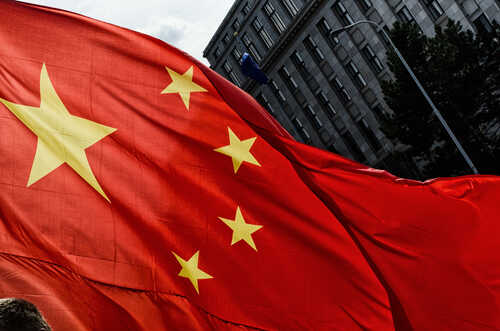
Beijing’s new slogan of “constructive strategic stability” with the United States sounds cooperative on paper, but conservatives should ask whether it is a clever trap to box in American power while China tightens its grip over Taiwan and the global order.
Story Snapshot
- Xi Jinping is pushing a three‑year framework of “constructive strategic stability” to shape U.S.-China ties.
- China’s formula promises “cooperation” while locking in long‑term competition on Beijing’s terms.
- Trump-era policy documents already warned that Chinese leaders routinely break commitments and use coercion.
- Hard questions remain over whether engagement rhetoric restrains China or simply restrains America.
Xi’s “Constructive Strategic Stability” Vision, Explained
Chinese President Xi Jinping told President Donald Trump in Beijing that the two sides had agreed to a relationship based on what he calls “constructive strategic stability,” a phrase now advertised as the new positioning for China-United States ties over the next three years and beyond.[2] Beijing’s official description centers this approach on cooperation as the “mainstay,” measured competition, manageable differences, and “lasting stability” where peace is supposedly the expectation, not the exception.[2][3] Chinese commentators argue this framework sets boundaries on rivalry rather than ending it.[2]
Pepe Escobar, a long-time geopolitical analyst, notes that if we take Xi at his word, this amounts to a structural reset: first cooperation, then managed competition, with predictable peace as the desired end state.[1] He stresses, however, that Xi is not naïve about American power and does not genuinely expect Washington to treat cooperation as the permanent “mainstay” of the relationship.[1] Instead, the phrase helps Beijing define the vocabulary and psychological terrain of the next phase of strategic competition with the United States.[1][3]
Why Trump’s America Learned to Distrust Beijing’s Promises
Trump’s first-term White House issued a formal strategy document in 2020 that bluntly stated Beijing’s actions do not match its commitments, stressing that China has “repeatedly demonstrated” it does not offer real compromises in response to American goodwill gestures.[2] The report concluded that the United States must respond to the People’s Republic of China’s actions rather than to its stated commitments, explicitly rejecting the idea that flattering language or summits alone can change Beijing’s behavior.[2] That hard-earned lesson now frames how many conservatives view Xi’s “stability” rhetoric.
The same Trump-era strategy warned that Beijing relies on intimidation and coercion to eliminate perceived threats and advance its strategic objectives worldwide, including through a massive military buildup and broken promises in disputed seas.[2] It also rejected Beijing’s long-standing demand that Washington provide the “proper atmosphere” before dialogue, saying the United States sees no value in engagement for symbolism or pageantry and instead demands tangible results.[2] For readers who remember decades of bipartisan “engagement,” this marked an official admission that polite talk had not delivered real security.
Taiwan As the Non‑Negotiable Red Line in Xi’s Framework
Xi has tied his stability concept directly to Taiwan, calling the island “the most important issue” in China-United States relations and describing “Taiwan independence” and cross-Strait peace as irreconcilable as fire and water.[1][2] Chinese officials insist the Taiwan question is an internal matter to be settled peacefully, but they pair that claim with warnings that Washington must exercise “extra caution” in how it handles the issue.[1] Escobar cautions that mismanaging Taiwan could instantly reset the supposedly optimistic three-year framework back to zero.[1]
Analysts cited in regional reporting say Beijing’s emphasis on Taiwan within “constructive strategic stability” is not just diplomatic packaging but a bid to lock in de facto red lines while keeping the overall relationship calm enough to avoid open confrontation.[2] From that perspective, stability is not a concession but a method for Beijing to sustain long-term competition, harden its position on sovereignty, and reduce the risk that U.S. pressure might rally allies or trigger economic decoupling at a pace China cannot manage.[2][3] For American conservatives, this raises concerns about whether “stability” means Washington self-censors to avoid offending Beijing.
Engagement Versus Leverage: What Should Guide U.S. Policy Now?
Policy analysts who still see value in constructive engagement argue that the United States can benefit from encouraging China’s more cooperative behavior, as long as Washington remains fully prepared and firm when Chinese actions challenge American interests.[3] A Brookings Institution study notes that past engagement helped secure progress in areas such as nonproliferation while warning that public condemnation and sanctions, if not paired with a broader strategy, can backfire by letting Beijing paint America as a bully to its domestic audience.[3] That perspective urges Washington not to abandon dialogue altogether.
Stability, strategy, and constructive engagement are reshaping China–US relations. A new paradigm emphasizes long-term cooperation and global stability over volatile, transactional ties. Key takeaways: prioritizing stability to unlock strategic, construc… https://t.co/XLJLyC1pAS
— khabarasia.com (@MyNews366) May 16, 2026
More recent assessments, however, concede that the old consensus around deep engagement has collapsed, with Democrats and Republicans now broadly agreeing on the need to be “much tougher” on China.[5] Carnegie Endowment analysts describe a new era of managed coexistence where strategic competition is a given and any cooperation must be anchored in hard power and verifiable outcomes, not trust.[5] For Trump supporters who watched factories close, technology stolen, and the Chinese military surge ahead, Xi’s soothing language about “constructive strategic stability” will only be credible if matched by concrete changes in behavior and ironclad protection of American sovereignty, industry, and allies.
Sources:
[1] Web – U.S.-China Relations
[2] Web – [PDF] United States Strategic Approach to the People’s Republic of …
[3] Web – U.S. Policy Toward China – Brookings Institution
[5] Web – U.S.-China Relations for the 2030s: Toward a Realistic Scenario for …