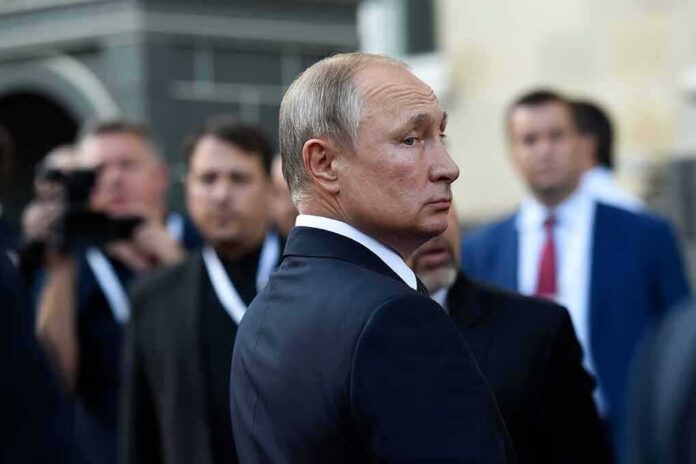
The United States invited Vladimir Putin to the G20 summit in Miami, with officials saying direct talks can help solve problems.
Story Highlights
- Secretary of State Marco Rubio said the U.S. invited Putin to the December G20 in Miami.
- President Trump signaled openness to dialogue while doubting Putin will attend.
- The Kremlin said Putin has not decided whether he will travel to Miami.
- Summit diplomacy aims to manage tensions through leader-level meetings, even without big deals.
U.S. Invitation Announced by Secretary of State Rubio
Secretary of State Marco Rubio said the United States invited Russian President Vladimir Putin to the Group of 20 summit in Miami this December. Rubio said meeting adversaries is sometimes needed to solve problems, and the United States hopes Putin will accept the invitation. The statement sets the stage for a high-stakes gathering on American soil. The host city, Miami, will see world leaders discuss energy, trade, security, and the global economy under President Trump’s leadership.
President Trump has backed the invitation as part of broader engagement, while making clear he is not sure Putin will attend. A Kremlin readout said Russia has not yet decided on attendance. That leaves open whether Putin will join other leaders in person in Miami. The Russian Deputy Foreign Minister has said Russia received an invitation at the highest level, confirming the formal outreach from Washington.
What the Invitation Signals and What It Does Not
Rubio’s framing stresses practical talks over posturing. Inviting an adversary can open channels to reduce risk and miscalculation. Research on summit diplomacy finds that leader meetings often happen during tense times, yet they may stabilize expectations more than they deliver sweeping deals. For Americans watching energy prices, wars, and trade fights, that means the value may be steadying the field. Talks can set clear red lines and timelines, even if they do not end disputes overnight.
Conservatives can welcome a simple test: talk where it helps America, walk away where it does not. The aim is peace through strength, not photo ops. Hosting the Group of 20 gives the United States home-field control of the agenda and security. That can help push priorities like energy security, supply chains, and fair trade. It also lets the Trump administration rally allies to press Russia on behavior that harms stability, while keeping options on the table if Moscow stalls.
How Miami’s Summit Could Shape Real Issues
Energy markets remain tight after years of bad policy that hiked costs. A clear stand with producers and refiners can anchor lower prices at home. Trade rules that punish American workers can be challenged in sessions that force answers, not slogans. Border security and the fight against transnational crime can get time on the agenda too. Bringing leaders together in Miami allows the United States to steer talks toward concrete steps that back jobs, families, and national security.
If Putin attends, the United States can deliver firm messages in person. If he skips, the United States can proceed with partners and set terms that reward good behavior and isolate bad actors. Either way, the invitation puts the burden on Moscow to show whether it wants stability or more brinkmanship. The Kremlin has said no final decision has been made, and observers will watch for travel signals and staffing moves in the weeks ahead.
The Stakes for American Leadership
Hosting the Group of 20 in Miami gives President Trump a platform to press for results that matter to families. Strong borders, cheap and reliable energy, and fair trade are core issues that shape paychecks and safety. Summit diplomacy is not magic. It is a tool. Used well, it can lower risk and lock in gains for the United States, while exposing actors who refuse fair terms. That is why Washington extended the invite, and why it is ready to set tough lines if needed.
Secretary of State Marco Rubio says the U.S. has formally invited Vladimir Putin to the G20 summit in Miami on Dec. 14–15. Putin’s attendance has not been confirmed, but Rubio said the meeting could give him an opportunity to speak with Trump and other world leaders#Trump #Putin pic.twitter.com/rJG1h83Bwr
— Toasted Tv News (@ToastedTvNews) September 24, 2026
The coming weeks will show whether Putin accepts the stage or stays away. The administration says the door is open for talks that serve American interests first. Voters should judge the summit by outcomes: lower energy shocks, stronger supply lines, and clearer deterrence. Direct engagement, backed by strength, can advance those goals. If Moscow balks, the United States will still drive the agenda in Miami with allies who are ready to move.
Sources:
bgnes.com, washingtonpost.com, newrepublic.com, xab.info, citizensforethics.org