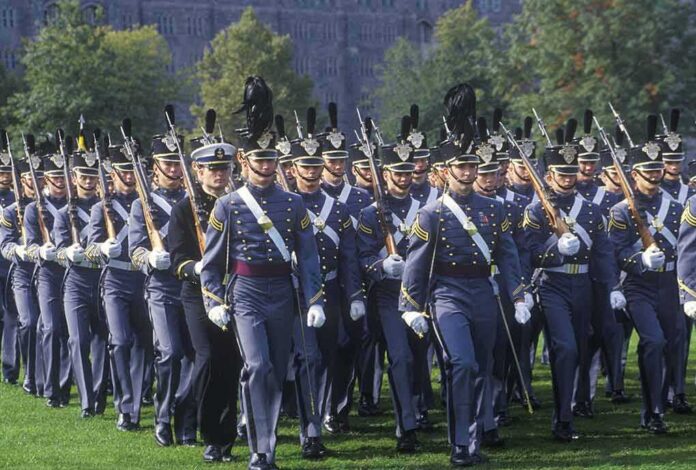
A new Pentagon draft memo aims to scrap civilian tenure and purge “ideologically driven” courses from America’s military academies in the name of warfighting.
Story Snapshot
- The Pentagon is weighing an end to civilian tenure at West Point, Annapolis, and other academies, shifting power away from long‑term professors toward mission‑driven leaders.
- The draft memo orders a line‑by‑line review of every course, cutting classes that do not clearly build tactical, operational, or strategic warfighting skills.
- The proposal reflects a wider Trump‑era push to strip job protections from federal civilians and remove “woke” influences from the defense workforce.
- Supporters say the change will rebuild the warrior ethos; critics warn it could sideline healthy debate and conservative civilian voices along with left‑wing ones.
Pentagon Draft Targets Tenure and Non‑Warfighting Courses
According to reporting on an unreleased draft memorandum, the Pentagon is considering its most sweeping remake of military higher education in decades. The document, titled “Refocusing the Military Service Academies and Senior Service College on Warfighter Education,” would abolish tenure for civilian faculty at service academies and senior war colleges, including West Point, the Naval Academy, the Air Force Academy, and institutions like the Naval War College. The memo has not yet been signed by top leaders, but it lays out a clear direction: move these schools away from behaving like liberal universities and back toward training warriors.
The draft memo argues that tenure, a system built to protect academic freedom in civilian universities, “more often leads to stagnation, complacency, and inflexibility.” It claims tenure lets curriculum drift away from the mission of educating warfighters and toward the research interests of professors, many of whom are civilians shaped by campus culture. Under the proposal, tenure would end “effective immediately” once approved, and the Pentagon’s personnel chief would have 60 days to issue guidance to unwind civilian tenure and begin the curriculum review. That change would make every civilian instructor clearly accountable to the warfighting mission instead of lifetime job security.
Line‑by‑Line Course Review and Ideology Concerns
The same memorandum directs officials to do a “line‑by‑line” review of every course taught at the academies and senior service colleges. Each class would be judged by a single standard: does it directly advance tactical, operational, or strategic warfighting? Courses labeled “non‑essential” or “ideologically driven” would be cut from the catalog. For many conservative readers, that language speaks to years of frustration with diversity seminars, critical race theory‑style content, and globalist social science that crowded out hard skills like gunnery, logistics, and battlefield leadership. The memo tries to push teaching time back toward the core job of winning wars.
This draft fits with a broader conservative blueprint promoted by Restoration of America, which calls for major changes in admissions, curriculum, faculty, and governance at military schools. That agenda urges Congress to ban race, ethnicity, and sex in academy admissions, require that at least three‑quarters of coursework focus on direct warfighting, and replace most civilian professors with active‑duty or retired officers. It also calls for abolishing tenure at all military education institutions, stating that military installations are not universities and must be treated as instruments of national defense. The draft Pentagon memo does not adopt every detail from that blueprint, but it tracks closely with the same warfighting‑first vision.
Part of a Larger Crackdown on Civilian Job Protections
This proposed change to academy tenure is not happening in isolation. Over the last several years, the Pentagon has repeatedly rewritten rules for its civilian workforce to make performance and mission alignment more important than seniority or long‑term protections. Past policies shifted layoff decisions to focus on job reviews instead of tenure and veteran status, making it easier to cut workers seen as poor fits. More recently, a memo from top defense officials told managers to act with “urgency and determination” to dismiss underperforming civilian employees, stripping away key protections that once made it very hard to fire them. These moves landed in the Trump administration’s wider effort to break the grip of the permanent bureaucracy.
President Trump also signed an order creating a new Schedule Policy/Career classification for about 8,000 federal positions, removing many civil service job protections from those roles. That step opened the door to replacing entrenched policy staff who did not support his agenda. In the Pentagon, Secretary of Defense Pete Hegseth has already ordered major realignments of civilian workers and ended Pentagon‑funded attendance at several elite universities seen as hostile to American values. The academy tenure memo fits squarely inside this pattern: move faster to fire or bypass civilians who resist a warfighting‑first, America‑first direction, and build a faculty more loyal to that mission.
Debate Over Civilian Voices and Warrior Ethos
Supporters of the draft memo argue that cutting tenure and trimming “ideological” courses is needed to rebuild a strong warrior ethos and stop mission drift. They point to long‑standing efforts to bring more civilian faculty into places like the Air Force Academy and West Point, which over time pushed the mix closer to fifty‑fifty between military and civilian teachers. Critics of those past changes said the academies were becoming too much like typical campuses, with faculty who did not fully share the values of military service. The new proposal would reverse that trend by tying job security and course offerings tightly to warfighting performance.
Just In: Pentagon weights abolishing civilian tenure and overhaul course offerings at the military service academies and senior war colleges that educate future military officers. https://t.co/lbqJuGeqVM
— Ryan Sprouse (@RSprouseNews) July 31, 2026
At the same time, some scholars warn that eliminating tenure outright could also silence independent voices that help keep the military honest. Civilian professors have sometimes defended constitutional norms, cautioned against groupthink, and sounded alarms when politics overwhelmed professional standards. Without tenure, they fear that any instructor who questions a policy could simply be let go. For conservative readers, the key question is whether the Pentagon will use this power to finally remove left‑wing “woke” influences, or whether a future liberal administration could flip the script and purge conservative civilians instead. For now, the memo remains a draft, but it shows how serious the fight over the soul of America’s academies has become.
Sources:
cbsnews.com, usafalibrary.com, congress.gov, media.defense.gov, westpoint.edu, yahoo.com, esd.whs.mil, opm.gov, constitutioncenter.org, notus.org, stripes.com, youtube.com