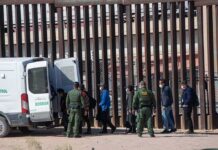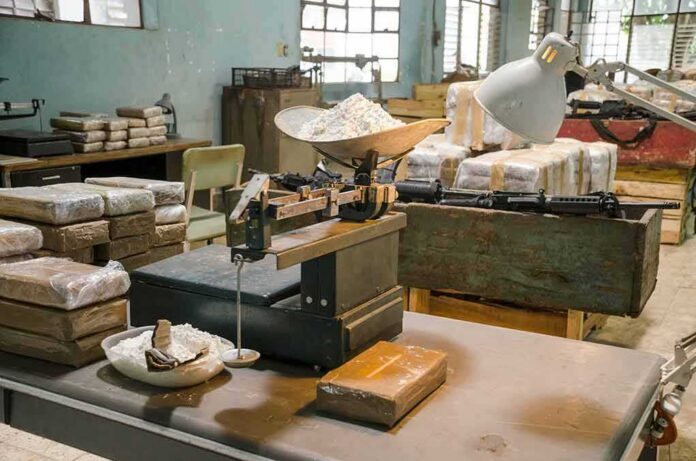
A massive desert meth lab tied by authorities to Mexico’s Sinaloa Cartel shows how far cartel crime has pushed into California’s back yard.
Story Snapshot
- Los Angeles Port Police say a Sinaloa Cartel-run meth operation was busted in a remote California desert lab.
- Agents seized about 1,378 pounds of meth worth an estimated $12.5 million, plus $80,000 in cash.
- Three Mexican nationals were arrested at the scene, accused of running the large-scale drug lab.
- The bust fits a long pattern of Sinaloa-linked trafficking networks using Southern California as a key hub.
Desert Meth Superlab Busted In Los Angeles County
Los Angeles Port Police and federal agents say they uncovered a secret meth lab hidden in a remote desert area of Los Angeles County, tied to a larger Sinaloa Cartel trafficking probe that began in January. During a July 28 search warrant, officers seized about 1,378 pounds of meth in both crystal and highly condensed liquid form, with an estimated street value of $12.5 million. Investigators also seized roughly $80,000 in cash and arrested three Mexican nationals suspected of cooking the drugs on site.
According to a prepared statement quoted by one outlet, Los Angeles Port Police said the targeted lab was “directly linked to the Sinaloa Cartel,” a powerful Mexican drug organization that has used California as a production and transit zone for years. Earlier in the same investigation, authorities had already seized about 20,000 fentanyl pills and 20 pounds of meth tied to the same network, showing this was not a one-time cook but part of a sustained trafficking pipeline. Officials describe the case as a joint effort between federal, state, and local law enforcement partners.
How This Fits The Sinaloa Cartel’s Southern California Footprint
Law enforcement and prosecutors have tied the Sinaloa Cartel to multiple major meth trafficking schemes across Southern California over the past decade, making this new bust part of a wider, troubling pattern. California’s attorney general previously announced a 500‑pound meth seizure from a transnational group linked to a Mexican cartel, highlighting how industrial‑scale narcotics move through the region, not just local street‑level dealing. Federal strike forces have also charged dozens of defendants in Los Angeles and the Imperial Valley in cartel‑linked cases involving thousands of pounds of meth and other hard drugs, plus bulk cash smuggling.
In one Imperial Valley case, court records describe a network with ties to “Los Rusos,” a violent Sinaloa faction that helped move more than 3,600 kilograms—about 8,000 pounds—of methamphetamine and other drugs, using tractor‑trailers, stash houses, and undercover buys. Across these operations, agents have relied on tools like wiretaps, controlled buys, and surveillance to break apart cells that use Southern California as both a warehouse and a gateway to the rest of the country. The new desert lab raid echoes this model: remote production, large quantities, and an alleged command chain that runs back to cartel leadership in Mexico.
Big Win Against Cartels, But Border And Community Risks Remain
This bust is a clear victory for law enforcement and for communities tired of seeing their neighborhoods flooded with cheap meth and fentanyl, but it also exposes how deeply foreign cartels have dug into American soil. A lab of this size does not appear overnight; it reflects months or years of cross‑border logistics, chemical sourcing, and money movement that exploit gaps in border security and weak interior enforcement. Past federal operations have shown cartels tapping corrupt insiders and complex transport routes to keep product flowing even as individual labs and loads get taken down.
Breaking Bad: LA Port Police Bust Huge Alleged Sinaloa Cartel Meth Operation in CA Desert https://t.co/Asb8jmtGtN
— Darrell (@Damn_Lucky) August 5, 2026
For families and taxpayers, the stakes are simple: every pound of meth cooked in a California desert threatens kids, fuels homelessness and crime, and drives health and policing costs higher, while foreign cartels cash in. President Trump’s administration now faces the task of turning big one‑off busts into lasting control by tightening the border, cutting off chemical supplies, and backing local departments on the front lines. At the same time, officials need to be transparent by backing cartel claims with solid evidence in court, so the public can see exactly how these networks operate and how they are being dismantled.
Sources:
redstate.com, nbclosangeles.com, breitbart.com, latimes.com