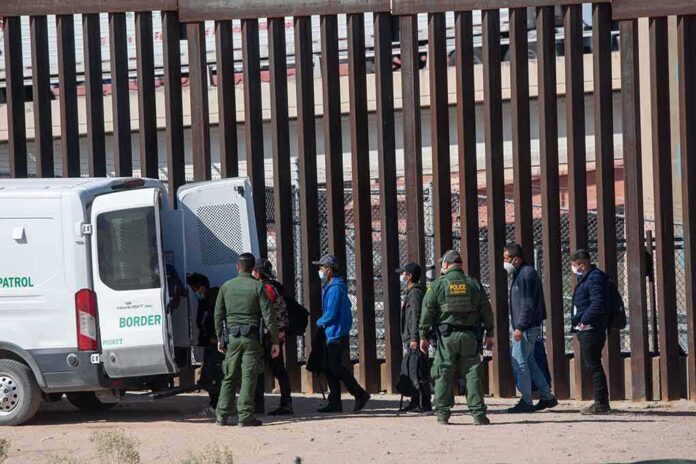
The Department of Homeland Security says the United States has recorded 16 straight months of zero releases at the southern border.
Story Highlights
- The White House and border agencies report 16 months of zero releases at the border.
- Customs and Border Protection leadership publicly echoed the milestone.
- Officials say ending catch-and-release restored the rule of law and deterrence.
- Experts note border security is measured by multiple metrics beyond releases.
What Officials Announced And Why It Matters
The White House highlighted a Department of Homeland Security report claiming 16 consecutive months with zero releases at the border. The announcement credited enforcement policies that ended catch-and-release and prioritized detention and swift removal. Fox News Digital reported the streak as an unprecedented mark confirmed by the Department of Homeland Security and United States Customs and Border Protection. The White House amplified the claim on social media, framing the border as “locked down” and America secure under President Trump’s leadership.
Customs and Border Protection Commissioner Rodney Scott reinforced the claim, posting that the Trump administration delivered 16 straight months of zero releases and linking to more details from the Department of Homeland Security. Conservative outlets and local media also repeated the announcement, pointing to sustained enforcement and removals over more than a year. These aligned messages show a coordinated push to signal deterrence, capability, and a clear break from prior policies that released large numbers into the interior.
How Zero Releases Changed Border Operations
Department of Homeland Security leaders say the end of catch-and-release shifted outcomes toward detention and removal. Earlier analyses of enforcement patterns showed that when the chance of release drops, removals within 60 days increase, reflecting faster case resolution and fewer incentives to reenter. Legal guidance limits the use of parole to case-by-case exceptions for urgent humanitarian reasons or significant public benefit, tightening the path for broad release programs that had expanded in recent years. Officials argue this legal and operational stance reinforced rule of law and public safety.
The administration’s message pairs the zero-release streak with a claim of stronger deterrence up and down the migration chain. By keeping custody at the point of encounter and speeding removals, the government aims to reduce repeat crossings and smuggling profits. Supporters say this approach saves communities from downstream costs in schools, hospitals, and public safety. The White House and allies framed the milestone as a promise kept to restore order at the border and protect American families from the consequences of past lenient policies.
What “Zero Releases” Measures — And What It Does Not
“Zero releases at the border” targets a specific operational outcome: people apprehended at or between ports are not released into the country at that point. Analysts have long warned that one number cannot define border security by itself. The Migration Policy Institute urges using several measures together, such as illegal inflows, recidivism, screening at ports of entry, and final enforcement results, because single indicators can mislead if viewed alone. That framing helps explain why officials also cite removals and crime trends alongside releases.
The White House@WhiteHouse
16 months of zero releases at the border. Deportations up. Violent crime across America down.
Justice is the one thing you should always find. 🍻🇺🇸 pic.twitter.com/zJ7pMrRNS9— Dwight Tidwell (@tidwell_dwightn) September 21, 2026
This multi-metric view does not weaken the announced milestone; it clarifies scope. The zero-release streak focuses on a key choke point where policy signals matter most to smugglers and would-be crossers. Pairing that with lawful limits on parole authority and faster outcomes creates a clearer system with fewer loopholes. For conservatives who demanded an end to releases that eroded trust, the 16-month record marks a concrete shift: stronger borders, a firmer rule of law, and accountability from Washington after years of lax enforcement.
Sources:
youtube.com, texasscorecard.com, townhall.com, x.com, cis.org, cbsa-asfc.gc.ca, apnews.com