Washington’s latest immigration vetting shift is reigniting a hard question: can the federal government screen out genuine security threats without turning political speech into a disqualifier for legal status?
Story Snapshot
- DHS says green card and naturalization applicants will face closer review for past “extremist” behaviors and statements.
- USCIS guidance treats certain speech—such as flag desecration and some anti-Israel/pro-Palestinian messaging—as “overwhelmingly negative” factors in adjudications.
- Supporters argue stronger screening is necessary after prior vetting failures tied to watchlist encounters at the southern border.
- Civil-liberties critics warn the policy risks viewpoint-based discrimination and could chill lawful speech by immigrants seeking legal status.
What DHS Says Changed in Green Card and Citizenship Reviews
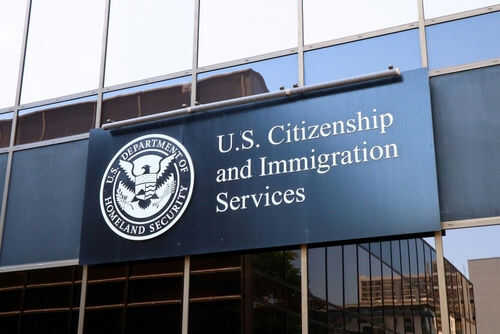
DHS, through U.S. Citizenship and Immigration Services, confirmed on April 28, 2026, that immigration officers will apply closer scrutiny to applicants’ prior statements and conduct that DHS says may indicate “extremist” views. DHS described the target as behavior like espousing terrorist ideologies, advocating violent overthrow of the U.S. government, expressing hatred for American values, or providing material support to terrorists. The clarification came after reporting on internal documents describing the new approach.
The guidance is notable because it moves beyond traditional screening that focuses on identity checks, criminal history, and known security flags. DHS-linked examples in the reporting include participation in pro-Palestinian protests, certain social media posts critical of Israel, and desecration of the American flag—each treated as a potentially serious negative factor. That framing effectively places some political expression into the same decision pipeline as security-related indicators, even though the policy’s stated purpose remains national security.
Why Republicans See a Security Imperative—And Why Critics See a Speech Test
Republicans have pushed for tougher vetting in response to documented weaknesses during the early-2020s border surge. A GOP-led House Judiciary Committee report cited more than 250 migrants on terrorist watch lists encountered at the southern border in fiscal years 2021–2023, including 99 who were allowed to remain in the United States. Former DHS adviser Charles Marino argued that inadequate vetting under the previous administration degraded border security, strengthening the political case for more aggressive screening tools.
At the same time, civil-liberties advocates argue the new approach blurs the line between identifying dangerous actors and policing viewpoint. Defending Rights and Dissent criticized the policy as a government attempt to decide who may enter or stay “based purely on political views,” describing it as a disturbing attack on free speech. The tension is predictable in 2026: conservatives want a federal system that can reliably keep extremists out, while liberals fear executive power being used to punish unpopular speech.
The Practical Risk: Subjective Standards Inside a Massive Bureaucracy
The unresolved issue is less the goal—screening for genuine violent extremism—than the way it is operationalized. Phrases like “hatred for American values” can be difficult to define consistently, especially across a high-volume agency where officers must make consequential decisions with limited time. Even if DHS intends to focus on security risks, broad categories can invite uneven enforcement, which fuels mistrust among the public that already suspects government systems are more political than neutral.
This subjectivity also creates incentives for “chilling” behavior among applicants. A rational immigrant seeking a green card or citizenship may avoid lawful protest activity, controversial social media posts, or blunt criticism of U.S. policy to reduce adjudication risk. That effect is not limited to one side of the Israel-Palestine debate; a rule that treats controversial expression as an “overwhelmingly negative” factor could, in practice, pressure applicants to self-censor on any hot-button issue that an adjudicator might interpret as anti-American.
What to Watch Next: Legal Challenges, Enforcement Guidance, and Political Blowback
DHS has confirmed the policy and its rationale, but public reporting suggests key implementation details remain unclear. Observers will look for how USCIS trains officers, what evidence standards apply to social media or protest participation, and whether applicants can meaningfully rebut an “extremist views” inference. This is also the kind of policy that often ends up tested in court, because immigration benefits involve federal discretion while free-speech principles remain politically and culturally foundational.
DHS To Vet Immigrants For 'Extremist Views' https://t.co/loVsFWiJ1M
— zerohedge (@zerohedge) April 29, 2026
The broader political context matters. With President Trump in a second term and Republicans controlling Congress, Democrats have fewer legislative tools and will likely focus on litigation, agency oversight narratives, and media pressure. For voters across the spectrum who believe the federal government routinely overreaches, the durability of this policy may hinge on whether DHS can credibly demonstrate it is catching real security threats—not simply punishing offensive speech—while also preventing the kind of bureaucratic drift that turns flexible guidance into a de facto ideological test.
Sources:
https://www.cbsnews.com/news/violent-extremists-afghan-evacuees-immigrant-communities-dhs-bulletin/