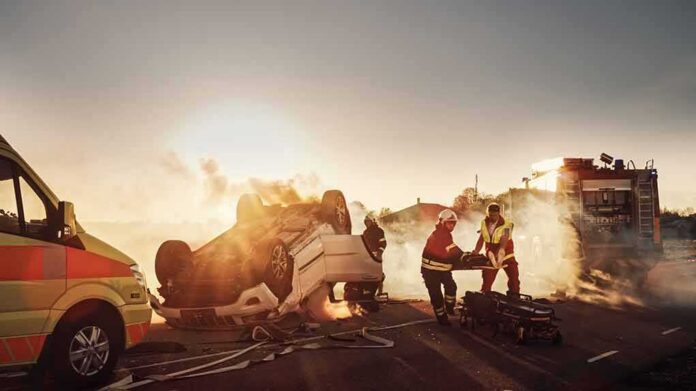
Hungarian police say a Polish tour bus left the M3 motorway at about 1 a.m., fell into a ditch, and overturned, killing 12 and injuring dozens.
Story Snapshot
- Police report 12 dead after a Polish bus overturned on Hungary’s M3 motorway.
- Officials say 57 passengers and two drivers were on board.
- Preliminary police view points to possible driver fatigue; the driver is in custody.
- At least 10 suffered serious injuries, with many more treated for minor wounds.
Police Account of the Deadly Overnight Crash
Hungarian police said a Polish tour bus went off the M3 motorway near Mezőkeresztes around 1 a.m. local time Sunday. Officers reported the coach entered a roadside ditch and overturned. Authorities confirmed 12 people died at the scene or shortly after. They said dozens were hurt and treated at area hospitals. The bus carried 57 passengers and two drivers, according to emergency officials. Police said one driver was taken into custody as part of the inquiry into what led to the crash.
Officials described a large, complex rescue. Medical teams moved quickly to triage patients. Reports from state and medical sources counted at least 10 with serious injuries and more with minor wounds. One patient was listed in critical condition, while nine had serious injuries and 37 reported minor injuries, according to early tallies cited in European coverage. Leaders in Hungary and Poland expressed condolences and support for families and survivors as recovery efforts continued.
Early Focus on Fatigue as a Possible Factor
Police stated that preliminary information suggested the driver likely fell asleep, which can happen more often on dark, straight motorways in the early hours. That view tracks with broader road safety research that links fatigue to a notable share of severe crashes, especially at night and on highways. Investigators will examine driving time records, rest schedules, and any coach data to confirm timing and speed. Officials have not yet released a final cause and continue to collect evidence.
European road safety findings say fatigue may contribute to about 15 to 20 percent of crashes overall, with higher shares in serious and motorway wrecks. Studies also show crash risk rises after long work or drive hours and during overnight periods when alertness dips. These patterns make fatigue a common first hypothesis in overnight coach crashes, while investigators test brakes, tires, steering, and other factors to rule out defects or hazards on the road.
Passenger Count, Casualties, and the Investigation Path
Authorities said the bus carried 57 passengers and two drivers, a typical crew size for long-haul tours. That count helps explain the range of injuries when a large vehicle rolls. Emergency managers and police coordinated scene control, medical evacuations, and next of kin notifications. For investigators, the next steps often include reviewing tachograph and global positioning data, mapping tire marks, and checking guardrails and surface conditions. These steps can confirm whether drowsiness, speed, or a sudden maneuver set the rollover in motion.
12 Dead as Polish Pilgrims’ Bus Crashes in Hungary
Twelve Polish pilgrims have died after a bus carrying 59 people overturned on the M3 motorway in Hungary while returning from a pilgrimage to Međugorje in Bosnia and Herzegovina.
The crash occurred near Mezőkeresztes at around… pic.twitter.com/dccC9Z4Tc2
— Hivileo.co.ke (@hivileo1) August 16, 2026
Officials have urged patience while teams finish the technical work. Police will match digital records with interviews from passengers, the surviving driver, and first responders. Medical reports can clarify the sequence of injuries. Maintenance logs can show the coach’s condition before departure. This careful process matters because a clear cause can guide better enforcement of rest rules and safer tour scheduling. The goal is simple: protect travelers so families get home safely after long-distance trips.
Sources:
straitstimes.com, bostonglobe.com