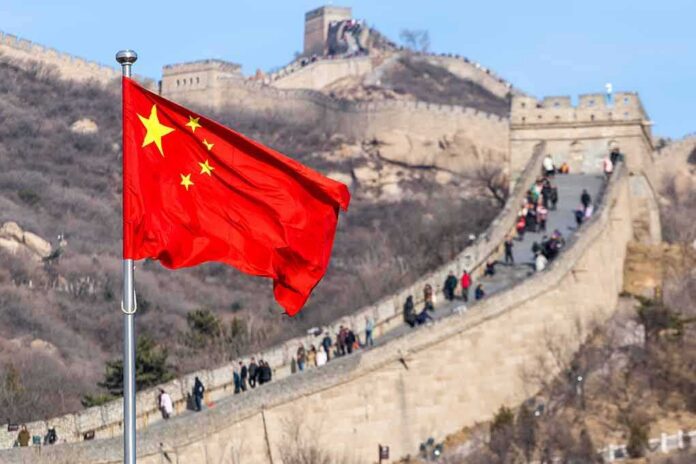
Secretary of State Marco Rubio says walking away from China would be “reckless and irresponsible,” even as he keeps warning that Beijing wants to become the world’s top power at America’s expense.
Story Snapshot
- Rubio told reporters in Manila that the United States and China “have to have a relationship” despite deep disagreements.
- He called it “reckless and irresponsible” for the world’s two largest economies to cut off communication.
- The comments come ahead of a planned meeting between President Trump and Chinese leader Xi Jinping in September.
- Rubio, once a leading Senate China hawk, is now pushing dialogue while still defending American interests.
Rubio Insists America Must Keep Talking To China
Secretary of State Marco Rubio met his Chinese counterpart, Foreign Minister Wang Yi, on the sidelines of a Southeast Asian summit in Manila. Rubio told reporters the two nations “have to have a relationship” because they are the world’s most powerful economies and military powers. He said both sides agreed there are “areas of great differences” that “we’ll have to work through”.
Rubio has repeated this warning for months. In February, he said the two nuclear-armed superpowers “must be able to talk, communicate, and interact.” Refusing to meet, he said, would be foolish and “frankly, dangerous”. That is not soft talk. It is the same peace-through-strength logic President Trump has used with adversaries from Iran to Russia: stay tough, but never stop talking.
From Senate China Hawk To Top Diplomat
Rubio built his Senate career as one of Beijing’s fiercest critics, pushing sanctions over human rights abuses and warning about the Chinese Communist Party’s ambitions. Some outlets have noted his tone has grown more cordial since becoming secretary of state, a shift tied to President Trump’s broader strategy of managing the relationship rather than provoking open conflict.
Rubio pushed back on the idea that he has gone soft. He told reporters he has always believed America and China must maintain relations, even in his Senate years, because “it’s the two largest economies in the world, probably the two most powerful militaries in the world”. For conservatives who value strength over surrender, that distinction matters. Talking to an adversary is not the same as trusting one.
Setting The Stage For A Trump-Xi Summit
The Manila meeting comes as Washington prepares for Xi Jinping’s expected visit to the United States in September, a summit that could shape trade, security, and military posture for years. Rubio described his talks with Wang Yi as an effort to manage tensions before that high-stakes meeting, not to paper over them.
Rubio also discussed building what the State Department called a “constructive relationship of strategic stability based on fairness and reciprocity” during a separate call with Wang Yi. That phrase, fairness and reciprocity, is the same demand Trump has made of China on trade for years. It signals Rubio is not abandoning the administration’s tough line, just wrapping it in diplomatic language.
Why Communication Beats Silence
Rubio’s core argument is simple: silence between nuclear powers is more dangerous than disagreement. He has said repeatedly that a lack of communication “could lead to conflict,” a risk no responsible administration can ignore. That is not weakness. That is the same hard-nosed realism that has guided American foreign policy through decades of standoffs with hostile powers.
Secretary of State Marco Rubio says maintaining a working relationship with China requires a "delicate balancing act."
He warns that any military or economic conflict between the U.S. and China would be "catastrophic" for both countries and the world.
Rubio adds the U.S. must…
— ►Boboski (@ayoakinkunle) August 2, 2026
Rubio insists Washington remains clear-eyed about Beijing’s intentions even while talking. He has said the United States stays “engaged” with China while warning that its rise could ultimately threaten China’s own long-term interests if it does not cooperate on fair terms. For an administration built on putting America first, that is the balancing act voters were promised: strength paired with smart diplomacy, not blind trust.
Sources:
facebook.com, state.gov, china.usembassy-china.org.cn, washingtonpost.com, nytimes.com, aljazeera.com, youtube.com