Barack Obama’s fiery attack on the Supreme Court for enforcing the Voting Rights Act against racial gerrymandering exposes deep divisions over race-based districting, raising alarms about threats to color-blind governance.
Story Snapshot
- Supreme Court struck down Louisiana’s second majority-Black congressional district on April 29, 2026, ruling it relied excessively on race in violation of constitutional standards.
- Former President Obama slammed the decision as “gutting” the Voting Rights Act, urging Americans to mobilize against it.
- Ruling protects against racial gerrymandering while upholding Section 2 challenges, mirroring 2023 Alabama precedent but limiting race-driven maps.
- Louisiana’s GOP delegation faces potential redraw, shifting House balance amid 2026 midterm pressures.
Supreme Court Rejects Racial Gerrymandering in Louisiana
The Supreme Court issued a 6-3 decision on April 29, 2026, invalidating Louisiana’s congressional map. The court found the second majority-Black district, represented by Democrat Cleo Fields, stretched over 200 miles in a “snake-like” fashion to connect Black populations. Chief Justice John Roberts criticized the map for prioritizing race above traditional districting principles like compactness and community interests. This ruling enforces constitutional limits on racial considerations in redistricting, even when responding to Voting Rights Act claims. Louisiana’s current delegation holds five Republicans and one Democrat from the original majority-Black second district. The decision requires a new map, potentially before 2026 midterms, preserving GOP advantages without overt racial engineering.
Obama’s Criticism Ignites Partisan Backlash
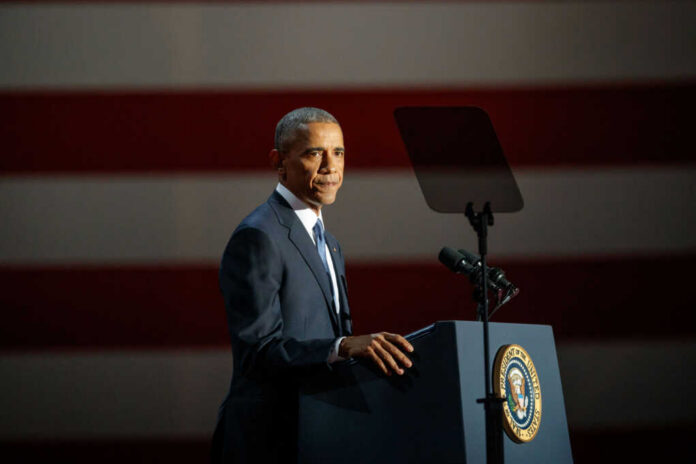
Barack Obama responded immediately, claiming the ruling “effectively guts a key pillar of the Voting Rights Act” and calling on Americans to act. His statement frames the decision as undermining minority voting power, despite the court upholding Section 2’s role in preventing vote dilution. Legal experts counter that the ruling strengthens VRA enforcement by rejecting maps that overemphasize race, akin to the 2023 Allen v. Milligan case in Alabama. Obama’s mobilization effort highlights ongoing tensions between federal judiciary authority and Democratic strategies to expand representation through race-based districts. In a Trump-led 2026, such rhetoric fuels perceptions of elite resistance to America First reforms.
Historical Context and VRA Precedents
The Voting Rights Act of 1965 bans racial discrimination in voting, with Section 2 allowing challenges to maps diluting minority votes. Louisiana’s map, drawn post-2020 census with one majority-Black district amid a 33% Black population, faced lawsuits. Lower courts deemed it unlawful, prompting the remedial second district that SCOTUS rejected for excessive racial focus. This follows Shelby County v. Holder (2013), which ended preclearance, and Milligan (2023), which mandated fair minority representation without racial predominance. The ruling balances civil rights protections against Equal Protection Clause mandates for race-neutral districting where possible.
Justice Clarence Thomas’s concurrence reportedly went further, critiquing racial gerrymandering outright. Conservative justices expressed skepticism toward expansive Section 2 uses during arguments, signaling limits on judicially mandated race-based remedies. This aligns with principles of individual liberty over group identities in electoral design.
Political and Electoral Implications
Short-term, Louisiana must redraw its map under court supervision, likely retaining GOP strength by avoiding invalidated districts. Long-term, the precedent pressures Democrat-leaning states while shielding Republican ones from similar challenges. Nearly 70 congressional districts rely on Section 2 protections, and this decision could curb their creation if race dominates. Critics like ACLU’s Sophia Lin Lakin call it a “profound betrayal,” warning of lost minority voices on key issues. Yet, it reinforces limited government by curbing judicial overreach into state redistricting sovereignty.
Barack Obama Weighs In On Supreme Court “Gutting” Voting Rights Act by Striking Down Louisiana’s Racially Gerrymandered Map and It Instantly Backfires
READ: https://t.co/QptUopCVP8 pic.twitter.com/4FgefoEP0n
— The Gateway Pundit (@gatewaypundit) April 30, 2026
Amid bipartisan frustration with D.C. elites, this ruling underscores shared concerns over politicized courts and gerrymandering that prioritizes power over fair representation. Conservatives see victory in color-blind principles; liberals decry weakened safeguards. As Trump advances reforms, such cases highlight the federal government’s failure to prioritize the American Dream for all citizens through merit, not racial quotas.
Sources:
Obama Calls On Americans To Act After Slamming Supreme Court Over Louisiana Voting Map