As global elites warn that President Trump’s trade and tax agenda is pushing the world toward crisis, the real story is whether America’s return to strong borders, fair trade, and lower taxes is finally exposing decades of reckless globalism instead of causing the next crash.
Story Snapshot
- Critics claim Trump’s tariffs and fiscal policies are sowing the seeds of a new financial crisis, but even they admit no actual U.S. crisis has occurred.[1][2][5]
- The 2025 tariff shock clearly rattled markets, yet it was driven by years of leverage and fragility built under prior policies that favored cheap imports and easy money.[2]
- Analysts at Stanford and in markets frame the outlook as “uncertain,” not doomed, showing that crisis narratives are still speculative and highly political.[5]
- New tariffs may hurt growth in the long run, but they also raise trillions in revenue that can reduce federal debt if Washington resists its old spending habits.[2]
How Trump’s Tariffs Became the New Scapegoat for Market Turmoil
Economic commentators who opposed Trump from day one are now pointing to the 2025 tariff shock as proof that his America First agenda is destabilizing global markets and edging the United States toward financial crisis.[1][2] A widely cited analysis from the Centre for Economic Policy Research describes the April 2025 tariffs as “large, surprising, and systemic,” noting that equity markets tumbled, volatility spiked, credit spreads widened, and even Treasury trading showed signs of strain.[2] The author calls this a “macro-financial shock” that activated a self-reinforcing loop of falling asset prices, margin calls, and deleveraging.[2] That framework conveniently downplays how today’s fragility rests on years of leverage, ultra-low rates, and policies that encouraged Wall Street to treat global supply chains and cheap foreign labor as permanent, risk-free pillars of the system.[2]
Critics also revive their longstanding complaint that Trump’s overall economic agenda—tax cuts, deregulation, and tougher trade rules—has somehow raised the risk of recession and inequality.[1][3] Research from the Economic Policy Institute, a left-leaning organization, contends that the administration’s policies have increased near-term recession risks by slowing household spending growth and reshaping who benefits from tax changes.[1] Commentators similarly claim that reduced financial regulation could heighten systemic risk, reviving arguments from Trump’s first term when rolling back Obama-era rules was portrayed as inviting another 2008-style meltdown.[3][5] But these assessments lean heavily on models and assumptions rather than concrete evidence of failed banks, broken markets, or missed Treasury auctions tied directly to Trump’s policies.[1][3][5]
Uncertainty, Not Inevitable Collapse: What the Data Really Shows
Even among mainstream institutions, the more careful language is not “imminent crisis” but “uncertain outlook.” Stanford’s economic policy brief on Trump’s second term concludes that analysts can be sure of “perhaps only one thing: an uncertain economic outlook,” pointing to tariffs, tax cuts, and regulatory changes as sources of unpredictability, not proof of collapse.[5] Market strategists interviewed in financial media describe tariff-related selloffs as real risks, but some still frame them as tradable volatility and even buying opportunities, contingent on interest rate cuts and earnings growth. The key point is that none of the materials alleging danger documents an actual systemic breakdown in the United States—no widespread bank failures, no Treasury default, and no sustained seizing up of funding markets tied directly to Trump’s agenda.[1][2][5] Instead, the record shows bouts of stress layered on top of a complex mix of forces, including prior policy mistakes, Federal Reserve decisions, and global geopolitical shocks.[1][4][5]
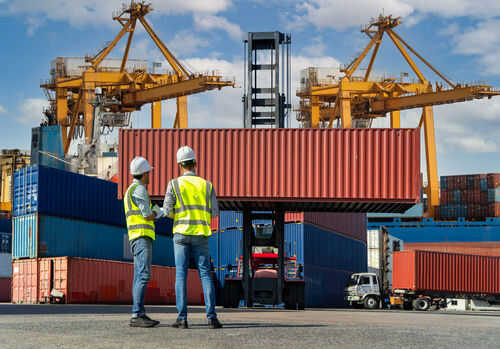
New modeling of Trump’s 2025 tariff package from the Penn Wharton Budget Model underscores how contested the narrative really is.[2] Their analysis projects that the across-the-board import tariffs and higher rates on dozens of countries will reduce long-run gross domestic product by about 6 percent and wages by 5 percent, with a middle-income household facing an estimated $22,000 lifetime loss.[2] At the same time, those same tariffs are projected to raise over $5.2 trillion in revenue in the first decade and more than $16 trillion over thirty years on a conventional basis, funds that could be used to reduce federal debt and encourage private investment if Washington finally restrains spending.[2] In other words, the policy that critics present as reckless could, if paired with discipline, claw back resources from decades of offshoring and help repair a debt path that ballooned under both parties.
Who Really Built Today’s Fragile Financial System?
The deeper question for conservative readers is whether Trump’s policies are creating fragility—or exposing the fragility left behind by globalist and big-spending agendas that treated unlimited debt, open-ended trade deficits, and permanent monetary easing as normal.[3][6] Analyses of Trump’s first term note that deficits rose as taxes were cut and spending remained high, but those deficits sat on top of an already swollen national debt built through years of bipartisan refusal to confront entitlement growth and war spending.[3] International research surveying the post-Trump global economy attributes welfare losses, higher inflation, and elevated recession risks to shifts in trade and policy, yet those same studies rely on projections that blend Trump-era changes with structural issues that predate his presidency by decades.[7] When critics now label every bout of volatility as “Trump’s crisis,” they often gloss over how much of today’s leverage, concentration, and moral hazard was baked in while they were cheering on the old order.
For families wondering whether they face another 2008, the honest reading of the evidence is sobering but not fatalistic. Tariffs and rapid policy shifts can absolutely rattle markets and, in extreme cases, feed into broader stress through leveraged positions and shrinking risk appetite.[2] But the current record shows uncertainty, not inevitable collapse: no documented U.S. systemic crisis tied to Trump’s second term, debate among economists, and clear trade-offs between long-run growth, national security, and fiscal repair.[1][2][5] The real risk is that Washington wastes the tariff windfall on new spending, keeps ignoring structural debt, and lets unelected institutions use “market stability” as a pretext to undermine voters’ choice for a more sovereign, America First economic model.
Sources:
[1] Web – The Trump administration’s macroeconomic agenda harms …
[2] Web – Why the tariffs caused turmoil in financial markets – CEPR
[4] YouTube – How will Donald Trump’s policies impact interest rates?
[5] Web – President Trump’s Administration: The Impact on Financial Services …
[6] Web – Framing the next four years: Tariffs, tax cuts and other uncertainties …
[7] Web – [PDF] Economic Crises in the Global Economy After Trump’s Introduction …