
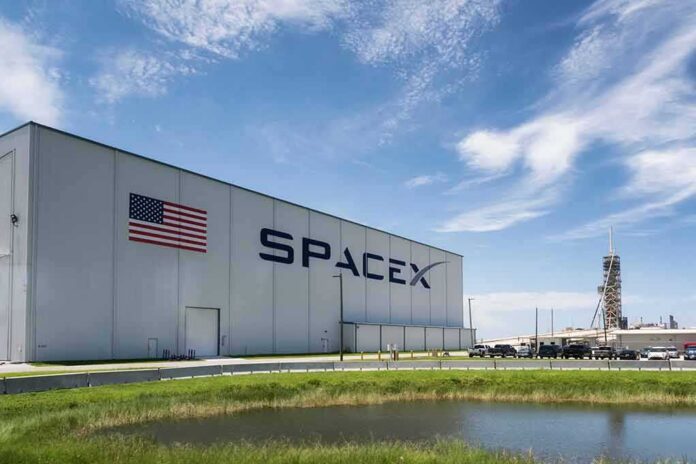
SpaceX says Starship Flight 14 will try to reach orbit and deploy Starlink, marking the program’s first true orbital mission with real payloads.
Story Highlights
- SpaceX states Flight 14 begins Starship’s orbital missions and will carry Starlink V3 payloads.
- Launch is targeted from Starbase, Texas, with a morning window on September 28, pending final conditions.
- The mission aims for several hours in orbit to gather long-duration performance data.
- Federal approvals and mission details have moved in phases typical for major launch campaigns.
SpaceX Sets First Orbital Starship With Payloads
SpaceX announced that starting with Flight 14, Starship will begin flying orbital missions and start delivering Starlink V3 satellites and other payloads. The company framed this flight as the turning point from high-altitude testing to real space operations with revenue cargo on board. This shift matters for American industry. A heavy-lift, reusable ship that can place many satellites at once can lower costs, expand broadband, and keep the United States ahead of rivals who want to dominate space-based networks.
SpaceX listed Flight 14 on its launch pages, and industry trackers show a target on Monday, September 28, with a morning window from Starbase, Texas. Reports describe a 75-minute window opening at 8:15 a.m. Eastern time, which is 7:15 a.m. Central time, matching prior SpaceX posts and updates. Schedules changed from an earlier September 22 aim as SpaceX refined the vehicle and worked through standard checks. Such shifts are common as teams align hardware, weather, and the final regulatory steps.
Mission Plan: Orbit, Deploy, And Learn
The flight plan calls for Starship to reach low Earth orbit, spend hours on orbit to test long-duration systems, and deploy Starlink V3 satellites into stable orbit. Reports indicate an orbital altitude near 275 kilometers and multiple laps around the planet, giving engineers data on power, thermal control, and communications across a real mission timeline. SpaceX also plans new tests tied to future goals such as in-space propellant transfer, which is essential for deep-space missions and lunar logistics later on.
Specialist trackers and outlets have mapped likely milestones, from liftoff through stage separation to orbital insertion, and then satellite deployment. The company’s approach reflects a fast-iterate model: fly, learn, and fold lessons into the next ship. That pace helped Falcon 9 become the world’s workhorse. If Starship repeats that path, America gains unmatched lift and cadence. That helps national security launches, rural broadband, disaster recovery links, and the broader economy that depends on space-based services.
Regulatory Steps And Why They Matter
The Federal Aviation Administration regulates commercial space launches under federal law. SpaceX must obtain the right licenses to launch and, when relevant, to reenter vehicles. Reporting shows how these approvals often arrive close to the target date, and how different federal filings cover different needs, like communications authority versus the launch itself. This layered process is normal. It balances safety, airspace use, and environmental rules while allowing private firms to push innovation at speed.
SpaceX received FAA approval for Starship Flight 14, on track for Monday as the first revenue flight carrying 26 V3 Starlink satellites, per tracker with FAA source.https://t.co/qFaZKI7g8i
— shipfrontier (@shipfrontierai) September 27, 2026
Recent coverage highlights that the final launch license timing has tracked with the September 28 target, which SpaceX and multiple outlets flagged in updates across mid to late September. Readers should expect dynamic schedules up to liftoff. Weather, range coordination, and late-stage checks can all move times. What is clear is the mission’s purpose: reach orbit, deploy payloads, and gather data to make the system more reliable and more useful on the next flight.
Why This Matters For American Strength
A successful orbital Starship expands American capacity in space while lowering costs for taxpayers and customers. Broad, low-cost launch access supports jobs, national defense satellites, and rural families who need better internet. It also counters global rivals who build state-backed rockets to lock in markets and influence. Private innovation here at home keeps control with the American people and away from international bodies that do not share our values of free speech, strong borders, and limited government overreach.
What To Watch On Launch Day
Viewers should watch four moments. First, liftoff and early ascent show engine reliability. Second, stage separation and upper-stage ignition confirm the path to orbit. Third, on-orbit operations test power, thermal balance, and communications over several hours. Fourth, satellite deployment proves the mission can deliver for paying customers. Each step, if successful, turns Starship from a massive test article into a working ship. That progress supports American leadership in space and the free world that depends on it.
Sources:
youtube.com, techtimes.com, spacex.com, teslarati.com, spacelaunchschedule.com, space.com