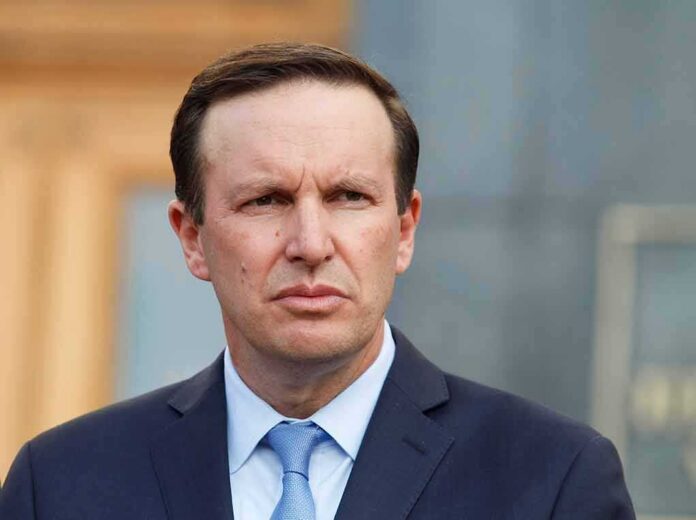
Senator Chris Murphy suffered a stroke during his son’s hockey game and is hospitalized but described as awake and improving, his office says.
Story Snapshot
- Murphy’s chief of staff says doctors diagnosed a stroke and moved him to Johns Hopkins for monitoring.
- He is awake, alert, and responding well to treatment, with optimism for a full recovery.
- Reports from major outlets match the office statement and timing of events.
- Medical details like stroke type and treatment specifics have not been released.
Confirmed Health Event and Current Condition
Allison Herwitt, chief of staff to Senator Chris Murphy, said the senator felt arm numbness at his son’s hockey game on Saturday. Staff said a local hospital diagnosed a stroke and then transferred him to Johns Hopkins Hospital for further monitoring. The office reported he is awake, alert, and responding well to treatment. They added that doctors are encouraged and expect a full recovery, though that is a forward-looking goal at this stage.
Major news outlets published the same account based on the named office statement. CBS News, NBC News, ABC News, and Politico each reported the stroke diagnosis, symptom onset, and the move to Johns Hopkins. These reports align on core facts and timing and cite Herwitt by name. No outlet quoted a treating physician or hospital spokesperson in their initial coverage, which is common in early medical updates for public figures.
What We Know and What Remains Private
The office statement did not include clinical details such as stroke type, location, clot or bleed status, or the exact treatment given. That level of detail often stays private without a patient release. Medical sources explain that recovery after stroke depends on the type of stroke, how fast it was treated, and how the patient responds over time. Many people continue to recover for months, and early improvement often signals a better outcome, though each case is unique.
Early signs reported by the office are positive. “Awake and alert” and “responding well” are good indicators soon after a stroke, but doctors usually assess function over days and weeks. Clinical guidance notes that the course can vary widely and that meaningful gains often come with time, therapy, and close follow-up. Families and the public often get staged updates that balance privacy with the need for clear information about a lawmaker’s ability to serve.
Implications for Senate Work and Public Duties
Murphy serves as a Democratic senator and is active on legislation that affects national policy. A short hospital stay or a longer recovery could affect hearings, votes, or committee work, depending on medical advice. The Senate has adapted before when members faced health issues, using proxy tools within chamber rules when allowed, scheduling adjustments, and bipartisan courtesies. Any specific schedule changes will likely come from Murphy’s office once doctors provide guidance.
For readers, the lesson is simple and serious. Stroke can strike fast, and swift action matters. Doctors and medical guides agree that faster care lowers the chance of lasting harm, and early gains often predict better recovery. If you see sudden numbness, face droop, speech trouble, or vision loss, call emergency services at once. Quick action saves brain cells, protects independence, and can give families a much better path forward.
Sources:
cbsnews.com, nbcnews.com, msdmanuals.com, medlineplus.gov, mayoclinic.org