A new crisis is forming thousands of miles away, threatening to unleash toxic contamination on American communities as rising seas endanger thousands of hazardous sites along the coast. Climate scientists and environmental health professionals warn that sea level rise, driven by decades of greenhouse gas emissions, is creating a crisis for the United States. Thousands of hazardous and toxic sites—refineries, sewage plants, and defense facilities—along US coastlines are at risk of flooding in the coming decades.
Story Highlights
- Over 5,500 hazardous sites could flood by 2100, endangering public health and the environment.
- Marginalized communities face disproportionate exposure to toxic chemicals from industrial flooding.
- Recent research and NOAA advances highlight the urgency, but federal preparedness programs have been cut.
- Professionals warn that without urgent action, the US faces escalating risks from climate-driven disasters.
Threat to American Communities
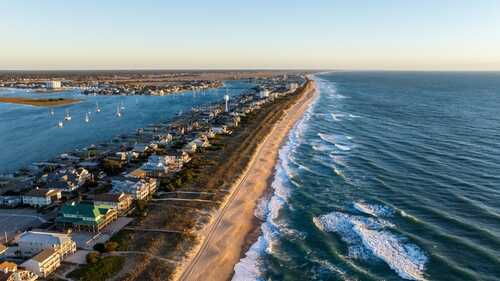
Climate scientists and environmental health professionals warn that sea level rise, driven by decades of greenhouse gas emissions, is creating a crisis for the United States. Thousands of hazardous and toxic sites—refineries, sewage plants, and defense facilities—along US coastlines are at risk of flooding in the coming decades. By 2100, under high emissions scenarios, more than 5,500 hazardous sites could be exposed to severe flooding, threatening to release dangerous chemicals into surrounding communities. This risk is especially acute in states like Florida, New Jersey, California, Louisiana, New York, Massachusetts, and Texas, where industrial activity and population density intersect with rising seas.
Experts warn of crisis forming thousands of miles away that could drown US: 'There's just no way around that' // https://t.co/Jzm3jAMOtE
— Metro COLA (@MetroCOLA) November 20, 2025
Disproportionate Impact on Vulnerable Populations
Recent research published in Nature (2024) highlights that marginalized and low-income communities are disproportionately affected by the threat of toxic site flooding. Past disasters like Hurricane Katrina in 2005 and Hurricane Harvey in 2017 demonstrated how industrial sites can release hazardous chemicals during extreme weather events, with vulnerable populations often bearing the brunt of the health and environmental consequences. Professionals such as Lara Cushing of UCLA and Rachel Morello-Frosch of UC Berkeley stress the urgent need for mitigation, emergency preparedness, and cleanup standards to protect these communities from the compounding risks of climate change and industrial infrastructure.
NOAA has made advances in coastal flood prediction, enabling forecasts up to six weeks in advance. However, recent cuts to federal risk reduction programs and early warning systems have raised concerns about the nation’s preparedness for future disasters. Policy analysts warn that reduced investment in resilience undermines long-term safety and increases future costs, leaving many at-risk sites inadequately protected against the growing threat of sea level rise.
Urgent Calls for Action
Professionals agree that much of the risk from sea level rise is already “locked in” due to past emissions, but urgent action can still mitigate the worst outcomes. Researchers call for robust mitigation strategies, emergency preparedness plans, and land-use reforms to address the inequitable hazards faced by vulnerable communities. The Nature study, widely cited and peer-reviewed, underscores the scale and urgency of the threat, while NOAA remains the authoritative source for flood prediction and climate data. Policy analysis from organizations like the Council on Foreign Relations highlights the consequences of reduced investment in resilience and the need for systemic policy change to protect American lives and the environment.
The intersection of climate change, industrial infrastructure, and environmental justice presents a complex challenge for policymakers, industry operators, and communities. With the potential for billions in damages, lost economic activity, and chronic public health crises, the stakes could not be higher. The time for decisive action is now, before the next major storm or high-tide flooding event unleashes a toxic disaster on American shores.
Experts warn of crisis forming thousands of miles away that could drown US – The Cool Down – https://t.co/1RLusRjOia #GoogleAlerts
— Florida Issues (@FloridaIssues) November 20, 2025
Sources:
Professionals warn of a crisis forming thousands of miles away that could drown the US: ‘There’s just no way around that.’
Professionals warn of a crisis forming thousands of miles away that could drown the US: ‘There’s just no way around that’.
Professionals warn of a crisis forming thousands of miles away that could drown the US: ‘There’s just no way around that.’