Trump’s two-word promise for Cuba—“very soon”—lands like a drumbeat, because everybody knows the real question is what comes the morning after.
Story Snapshot
- Trump told a Phoenix rally the “great strength” of the U.S. military will bring a “new dawn” for Cuba after “70 years” of waiting.
- Cubans and Cuban-Americans seized on the vagueness: “Soon” sounds emotional, not operational, and people want a date, a plan, and an end state.
- Pentagon officials have reportedly increased contingency planning, while stressing no order exists and no timeline has been announced.
- Trump’s escalation follows months of sharper signals: a national-emergency order tied to Cuba’s security ties and remarks hinting Cuba could be “next.”
Phoenix, April 17: A Promise Built for Applause and for Leverage
Trump delivered the line at a Turning Point USA rally in Phoenix on April 17, 2026, framing Cuba as a long-suffering neighbor overdue for a break. He spoke directly to Cuban-Americans, describing brutality under the island’s regime and casting American power as a clock about to strike. The rhetoric mattered because it fused two things presidents often keep separate in public: moral solidarity and explicit military muscle.
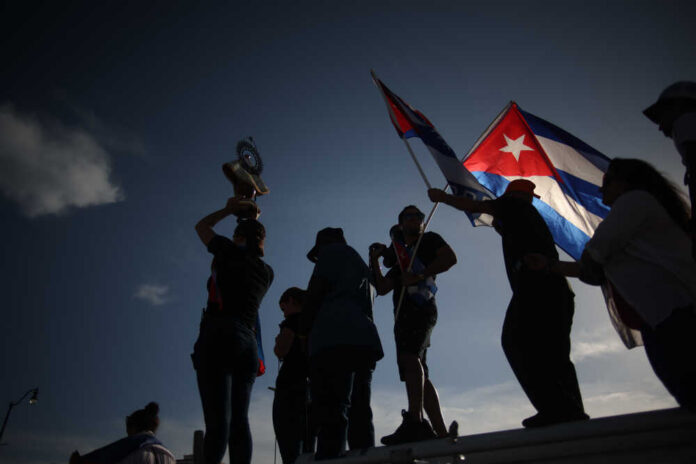
The phrase “new dawn” sounds like liberation, but the trigger phrase was “very soon.” People living under authoritarian systems learn to treat vague timelines as a survival skill. A promise without a date can operate as hope, intimidation, or political theater depending on who hears it. Trump’s supporters heard momentum. Cuban officials heard threat. Ordinary Cubans heard a familiar uncertainty: when outsiders talk big, locals pay the price.
Why “Very Soon” Sets Off Alarm Bells in Havana and in Miami
Cuban media reaction focused less on Trump’s sentiment and more on specificity, because specificity signals intent. If a White House wants negotiation, it speaks in conditions. If it wants coercion, it speaks in deadlines and capabilities. Trump chose neither; he chose suspense. For audiences over 40 who remember the Cold War, that’s the point: ambiguity forces adversaries to spend money, move assets, and make mistakes.
Cuban President Miguel Díaz-Canel, according to reporting cited in U.S. coverage, responded with defiance and talk of resistance. That posture fits the regime’s operating manual: external threat becomes internal glue, justifying repression and rationing as patriotism. American conservatives should recognize the pattern. Communist governments often rely on enemies—real or manufactured—to distract from empty shelves and failed central planning. The challenge is pressuring a regime without gifting it a propaganda lifeline.
The Policy Trail Behind the Soundbite: Emergency Powers and Contingency Planning
Trump’s Phoenix line did not appear from nowhere. Reports describe a January 29, 2026 executive order declaring a national emergency tied to Cuba’s security posture, including allegations about a major Russian signals intelligence presence and defense connections with China. In late March, Trump reportedly predicted Cuba “will fail very soon.” By mid-April, he hinted the U.S. might “stop by” Cuba after dealing with Iran-related conflict.
Pentagon planning is the quiet part that makes the loud part credible. USA Today-sourced reporting summarized by a newsletter outlet says the Department of Defense has ramped up strategic preparation for a potential operation if Trump orders it, while emphasizing the scenario remains hypothetical. That distinction matters. Militaries plan for everything; presidents decide what becomes real. Adults who lived through Iraq know the difference between “can” and “should” gets blurred fast once planning meets politics.
Military Victory Looks Easy; Political Victory Is the Trap Door
Analysts cited in the reporting argue the U.S. would likely overwhelm Cuba’s outdated forces quickly. That claim passes a basic reality check: geography favors U.S. reach, and Cuba lacks the modern air-and-sea capabilities to contest American power for long. The harder question is what Brian Fonseca of Florida International University warned about: winning the fight is simpler than winning the peace, because governance and legitimacy don’t come from shock and awe.
Regime change talk always skips the invoice. A “new dawn” means someone must secure ports, protect civilians, manage a transition, and prevent criminal networks from filling the vacuum. It means refugee pressure on Florida and the region, humanitarian supply chains, and a post-conflict policing problem that never trends on social media. Conservative common sense says this: if Washington promises transformation, it owes taxpayers a definition of success that can be measured and ended, not maintained forever.
The Most Plausible Near-Term Outcome: Pressure First, Force as a Shadow
Reporting suggests economic pressure remains the primary tool, with military action positioned as a contingency. That aligns with how America usually coerces a small adversary without detonating regional chaos: tighten sanctions, isolate elites, target illicit finance, and exploit fractures inside the regime. The military’s role can remain a shadow—visible enough to deter and to frighten, but not so forward that it forces the White House into a corner where only invasion proves toughness.
Trump’s rhetoric also plays domestically. Cuban-Americans have long been a decisive audience in Florida politics, and moral language about tyranny resonates in that community for obvious reasons. The question is whether emotion becomes policy discipline. If the administration truly believes Cuba hosts hostile intelligence infrastructure and deepens ties with adversaries, it should say what objective it seeks: dismantle facilities, deter basing, or replace a government. Each path demands a different cost.
President Trump: Very Soon the 'Great Strength' of the American Military will Create 'a New Dawn for Cuba.' https://t.co/7tSjljT0tA #gatewaypundit via @gatewaypundit
— Tuck's News (@tucksnews) April 18, 2026
Cuba’s skeptics asking “what day exactly?” are doing what citizens in any free society should do: demanding timelines, definitions, and accountability. A “new dawn” can mean freedom, or it can mean instability dressed up as salvation. Trump’s statement raised the temperature; Pentagon planning raises the stakes. The next signal to watch is not another rally line, but an unglamorous one: whether the White House starts naming concrete goals that can be achieved without turning Cuba into America’s next long, expensive project.
Sources:
“But what day exactly?”: Cubans question Trump about the promised “new dawn” for Cuba
The Pentagon is planning for a military operation in Cuba. Here’s what we know and what Díaz-Canel i