Democrats crossed party lines to back Republican Mike Rogers for U.S. Senate in Michigan, signaling a realignment against the left’s hard-edge agenda.
Story Highlights
- Mike Rogers launched a “Democrats for Mike Rogers” coalition on a Detroit front lawn.
- Several lifelong Democrats and an outgoing Democratic state lawmaker backed Rogers.
- Jill Biden’s former press secretary endorsed Rogers over Democrat Abdul El-Sayed.
- Rogers is courting disaffected Jewish Democrats through targeted outreach.
Democrats-for-Rogers Coalition Goes Public in Detroit
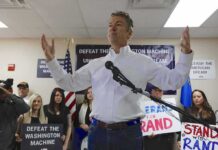
Mike Rogers unveiled his “Democrats for Mike Rogers” coalition at a home in western Detroit, standing with voters who said they will back him over Democrat Abdul El-Sayed. Reporters on scene described a front-lawn event built to show visible crossover support. The group included Democrats who said they had never voted Republican before. The announcement gave Rogers a visual contrast with a divided Democratic base still cooling after a tight primary fight.
Local coverage confirmed the gathering featured several named Democrats, including outgoing state Representative Karen Whitsett of Detroit, who appeared with Rogers at the lawn event. Their message centered on safety, cost of living, and rejection of far-left ideas that have failed Michigan families. The setting in a Detroit neighborhood underscored a pitch to working voters who are tired of high prices, crime concerns, and activist politics that ignore everyday needs.
High-Profile Democrat Endorsement Undercuts El-Sayed
Michael LaRosa, who served as press secretary to First Lady Jill Biden, publicly endorsed Rogers over El-Sayed. LaRosa’s defection matters because it tells center-left voters they have permission to cross over. It also shows frustration with a progressive candidate after a bruising Democratic primary. Conservative readers know this pattern: when a Democrat staff veteran backs a Republican, it signals trouble for the left’s narrative of unity and momentum.
Social media clips and write-ups amplified LaRosa’s move and highlighted why some Democrats prefer Rogers. They cited stability, national security, and economic focus over ideology. The endorsement fed earned media for the Rogers campaign and chipped at El-Sayed’s claims of a consolidated party. While endorsements do not guarantee votes, a well-known figure breaking ranks can change attention, fundraising, and volunteer energy at the margins in a close race.
Democratic Primary Fallout and Crossover Opportunity
Abdul El-Sayed won the Democratic primary by a single point after a contentious race, leaving lingering divisions. That narrow margin suggests soft support among moderates and suburban voters who dislike far-left policies. Rogers is pressing that opening, pitching Democrats who prioritize safe streets, affordable energy, and border security. Campaigns often use elite cues to guide voters who feel politically homeless. In tight contests, that nudge can move enough votes to matter.
Research on endorsements shows they work best when the messenger is credible and the issue is salient. Here, the messengers include a Democratic state representative and a former Biden official, who both carry weight with center-left audiences. The salience is high because Michigan families face real pain from high costs and public safety worries. That makes a cross-party cue more potent than a generic ad or party-line talking point.
Targeted Outreach to Jewish Democrats
Jewish leaders who have long supported Democrats are now organizing fundraisers and outreach for Rogers, according to community-focused reporting. Their efforts point to concerns about national security, anti-Israel activism, and rising antisemitism. Rogers has calibrated his message to these voters, focusing on support for America’s allies, strength abroad, and law-and-order at home. That approach contrasts with progressive factions that often excuse campus chaos and street intimidation.
Poll: Mike Rogers and Abdul El-Sayed Virtually Tied in Michigan Senate Race https://t.co/RJqIM7Jqjt via @BreitbartNews
— NATIVE_AMERICAN_BITCH_FROM_THA_SLAPAHOE_TRIBE 𖧶🪓 (@TRUMPGIRL_STL) August 21, 2026
The Jewish outreach reflects a bigger theme: many voters want sober leadership, not performative politics. They want borders enforced, energy that is affordable, and schools that teach reading and math, not divisive ideology. Rogers’ coalition framing aims to unite those priorities. If he keeps building visible, credible crossover support, he can expand the map in blue-leaning areas and force Democrats to defend ground they once took for granted.
What This Means for Michigan Voters
Michigan families now see a clear contrast. Rogers is courting moderates who reject soft-on-crime policies, censorship pressure, and green mandates that raise utility bills. El-Sayed must rally a fractured base while answering doubts from Democrats who think the party moved too far left. President Trump has pushed an agenda of secure borders, energy dominance, and economic growth. Rogers is aligning his pitch with those goals while welcoming voters who want practical results.
Endorsements alone do not decide elections, but they can open doors in neighborhoods where Republicans rarely get a hearing. The Detroit lawn event, the LaRosa endorsement, and Jewish community outreach gave Rogers three distinct bridges to cross-party voters. Each bridge rests on kitchen-table issues: safety, cost of living, and trust. If those bridges hold, Michigan could send a Republican to the Senate who promises to check Washington’s overreach and stand up for common sense.
Sources:
redstate.com, foxnews.com, abdulforsenate.com, heritagereview.com, x.com