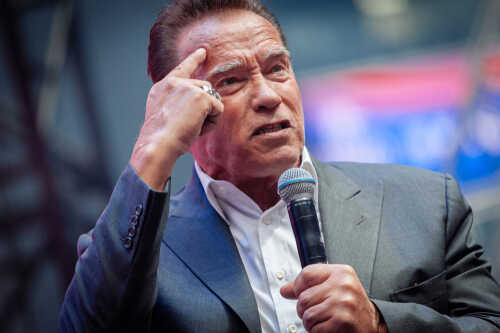
Arnold Schwarzenegger has accused Governor Gavin Newsom of manipulating California’s redistricting process to entrench Democratic power and erode voter representation.
At a Glance
- Schwarzenegger publicly condemned Newsom’s redistricting plans
- He labeled gerrymandering as “evil” and undemocratic
- Critics say the new district maps favor long-term Democratic control
- The conflict highlights deep partisan divides over electoral boundaries
- Republican leaders are rallying behind Schwarzenegger’s stance
Terminator Targets Partisan Redraw
Arnold Schwarzenegger, former Republican governor of California, has launched a pointed attack against Governor Gavin Newsom’s proposed redistricting strategy. According to Schwarzenegger, the effort is a clear attempt to manipulate voting districts for partisan gain—a process he categorically labels as “evil.”
Schwarzenegger’s office emphasized that gerrymandering takes power away from voters and places it in the hands of politicians. This public rebuke brings renewed attention to California’s ongoing struggles over fair representation and electoral transparency.
Watch now: Arnold Schwarzenegger opposes California redistricting efforts · YouTube
The former governor’s opposition underscores his long-standing advocacy for nonpartisan redistricting, a legacy from his tenure that led to the creation of California’s independent citizens redistricting commission. That model was intended to remove direct political influence from the drawing of legislative boundaries, though recent actions suggest a potential reversal of those ideals.
Governance or Grab?
Critics of Newsom’s latest redistricting efforts allege that the changes would reinforce Democratic dominance by consolidating favorable districts while diluting opposition representation. The proposal, while not yet finalized, has stirred concerns that it could bypass California’s independent redistricting mechanisms under legal or procedural justifications.
Schwarzenegger’s response frames the redistricting push as an attack on constitutional principles. He has consistently maintained that voters must be empowered to select their leaders—not be corralled into politically engineered districts that preordain election outcomes.
His remarks are resonating with conservative and centrist voters alike, particularly those wary of growing partisanship in state-level politics. The controversy is now poised to become a broader flashpoint as California navigates upcoming legislative cycles.
Political Lines in the Sand
The dispute has sparked broader Republican mobilization. Party officials and grassroots activists have adopted Schwarzenegger’s criticisms to argue that Newsom is exploiting institutional mechanisms to maintain political supremacy.
Phrases like “The Terminator opposes Governor Newscum’s gerrymander scheme” are circulating among critics online, reflecting a mix of satire and serious concern about the direction of state governance. The message, though hyperbolic, captures a sentiment echoed across political forums: distrust of redistricting driven by partisan objectives.
Meanwhile, Democrats have largely defended the map adjustments as necessary updates to reflect demographic shifts and voter trends. However, no formal response has been issued to Schwarzenegger’s critique as of publication.
The long-term implications may stretch beyond California, with the dispute potentially informing national conversations around redistricting ethics and democratic accountability.
Sources
Reuters
Bloomberg
Politico
Los Angeles Times
NPR