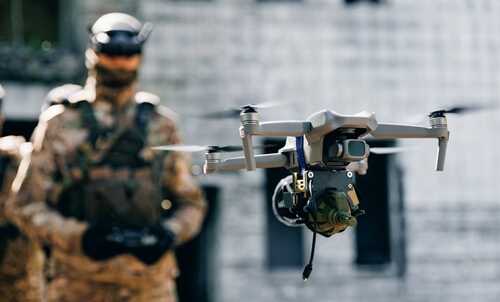
America’s airspace faces an unprecedented threat as military leaders warn that drones could become the defining security challenge of our lifetime, forcing policymakers to choose between national defense and cherished civil liberties. The rise of cheap, sophisticated drone technology, exemplified by its impact on the Ukrainian battlefield, has spurred the formation of a new anti-drone task force, JIATF 401. This unit is tasked with cutting through bureaucracy to unify counter-UAS efforts.
Story Snapshot
- The Army Secretary calls drones the “threat of humanity’s lifetime,” citing lessons from Ukraine’s battlefield.
- A new anti-drone task force, JIATF 401, is consolidating national defense efforts and cutting through bureaucratic red tape.
- Rapid drone innovation outpaces current regulations, raising concerns over privacy, civil liberties, and government overreach.
Military Leaders Sound the Alarm on Drones
U.S. Army Secretary Dan Driscoll has declared drones and flying improvised explosive devices as the “threat of humanity’s lifetime,” citing Ukraine’s success in drone warfare as a wake-up call for American defense strategy. His remarks, broadcast in November 2025 following months of escalating drone attacks worldwide, have sparked urgent debate across conservative circles. The battlefield transformation in Ukraine, where drones have destroyed billions in enemy equipment at low cost, exemplifies the asymmetrical threat now facing the United States. With adversaries leveraging cheap, commercially available drones, the security stakes have never been higher.
Transcript: Sen. Bill Cassidy on "Face the Nation with Margaret Brennan," Nov. 16, 2025 🔗 https://t.co/r0fPZph1eR
— The Kings Ark™ (@thekingsark) November 16, 2025
America’s Counter-Drone Response: Task Force JIATF 401
In direct response to these rising threats, Defense Secretary Pete Hegseth ordered the formation of the Joint Interagency Task Force 401 (JIATF 401) in August 2025. This unit was established to unify American efforts at countering unmanned aerial systems, replacing outdated bureaucracies and accelerating innovation. JIATF 401’s mandate is clear: streamline defense operations, reallocate resources, and deliver rapid solutions to the drone problem. The Army is also reactivating specialized training programs and integrating lessons learned from Ukraine into all branches, ensuring that U.S. forces remain equipped to defend American airspace against both foreign and domestic threats.
Regulatory Dilemmas and Conservative Concerns
As the technological arms race intensifies, federal and state regulatory frameworks lag behind, complicating effective airspace defense. Calls for comprehensive drone monitoring and mitigation frameworks have grown louder, but conservatives remain wary of any government policy that risks overreach or erodes constitutional rights. Real-time aerial surveillance, while critical for detecting and neutralizing threats, raises questions about privacy and the potential misuse of surveillance powers. The balancing act between rapid innovation and civil liberties is central to the debate, with Congress now tasked to craft legislation that protects both national security and individual freedoms.
While some analysts are optimistic about AI-driven monitoring systems, others warn that the regulatory environment must not stifle private enterprise or undermine American values. The policy landscape remains contentious, with both industry and public safety leaders pressing for pragmatic solutions that address evolving drone threats without sacrificing the core tenets of liberty and limited government.
Economic, Social, and Political Impacts of the Drone Threat
The implications of the drone arms race extend beyond the military sphere, with increased scrutiny on commercial drone use and public safety. Defense spending is rising as lawmakers prioritize counter-UAS technologies, while the tech and aerospace industries see explosive growth in innovation. Civilians and local communities face the possibility of collateral effects from drone incidents and new regulations, sparking debates over surveillance, airspace rights, and economic opportunity. Politically, the urgency of the drone threat has fostered bipartisan cooperation, even as the Trump administration continues its push for limited, accountable government and robust constitutional protections.
Industry Perspectives
Military leaders, including Secretary Driscoll and Secretary Hegseth, have emphasized the existential nature of the drone threat and the need for a unified response. National Guard commanders have likened the potential for mass-casualty drone attacks to a “new 9/11,” while tech professionals point to the promise and challenges of AI-powered monitoring. Policy analysts urge Congress to pursue balanced regulation that enables innovation but safeguards public safety and privacy.
Watch the report: Army Secretary Dan Driscoll says drones pose “threat of humanity’s lifetime”
Sources:
Army Secretary Highlights Urgent Drone Threats and Innovation Lessons from Ukraine
Army Secretary Highlights Urgent Drone Threats and Innovation Lessons from Ukraine – Azat TV