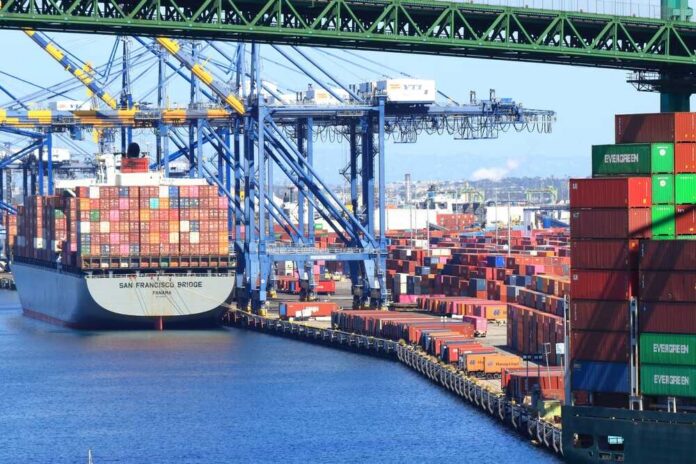
A federal judge just dealt President Trump his second devastating loss on tariffs in three months, ruling that his 10 percent global import tax violated a 1970s trade law and ordering refunds to the businesses and state that challenged him.
Quick Take
- The U.S. Court of International Trade ruled 2-1 on May 7 that Trump’s Section 122 tariffs were unlawful and unauthorized, striking down the replacement policy after his broader “Liberation Day” tariffs fell to the Supreme Court in February.
- Small businesses like toy maker Basic Fun! and spice importer Burlap & Barrel, along with Washington State, won refunds plus interest and exposed the legal fragility of the administration’s tariff strategy.
- The ruling applies narrowly to the plaintiffs, leaving uncertainty for thousands of other importers paying the 10 percent duty while the Trump administration prepares an appeal.
- The decision reinforces that Congress, not the president, controls tariff authority, potentially reshaping trade policy ahead of the July 24 expiration date and 2026 midterm elections.
When a Law Becomes a Weapon Without Permission
The Trade Act of 1974 grants presidents a narrow tool: temporary tariffs up to 15 percent for no more than 150 days when the United States faces balance-of-payments crises. The law targets genuine international payment emergencies, not chronic trade deficits. Trump’s administration invoked Section 122 in February after the Supreme Court gutted his broader IEEPA tariffs, arguing that trade deficits and current account shortfalls qualified as balance-of-payments problems. Two Obama-appointed judges rejected this reasoning, finding the White House conflated distinct economic concepts to justify what amounted to an end-run around the court’s earlier rebuke.
Judge Mark Barnett and Judge Claire Kelly wrote that the tariffs “is invalid, and the tariffs imposed on Plaintiffs are unauthorized by law.” The dissenting judge, a George W. Bush appointee, argued the law permitted broader presidential leeway. This split reflects a deeper constitutional tension: how much trade authority can a president claim when Congress delegates power but sets boundaries? The majority sided with statutory limits over executive flexibility, a pattern that now repeats across Trump’s tariff attempts.
The Unlikely Victors: Small Business Takes Down Trade Policy
Basic Fun!, a toy company, and Burlap & Barrel, a specialty spice importer, are not household names. Neither is Washington State’s commerce department. Yet these plaintiffs, represented by the libertarian Liberty Justice Center, dismantled the administration’s second tariff strategy in court. Basic Fun! CEO Jay Foreman declared: “We fought back today and we won, and we’re extremely excited.” For importers already squeezed by supply chain costs and inflation, the ruling mandates refunds with interest on tariffs already paid, offering immediate financial relief.
The court’s 53-page opinion specifically cited economic harm to the plaintiffs, finding no justification for continuing unlawful tariff collection. This narrow scope—applying only to Washington State and the two companies—creates a peculiar legal limbo. Thousands of other importers still pay the 10 percent duty while the appeal process unfolds, unsure whether they too will receive refunds or whether the ruling will expand. This uncertainty disrupts supply chains and payment planning for businesses already navigating volatile trade conditions.
The Broader Constitutional Reckoning
Trump’s tariff losses reflect a constitutional principle older than the republic itself: Congress controls the purse and trade. Article I of the Constitution explicitly grants Congress power over tariffs and taxes. When presidents invoke statutes to sidestep this authority, courts increasingly push back. The Supreme Court’s February 2026 ruling that the International Emergency Economic Powers Act does not authorize tariffs set the stage. The CIT’s May decision extends that logic to a more obscure statute, signaling that judges will not tolerate creative legal interpretations that hollow out congressional prerogatives.
Trade lawyers note Section 122’s historical rarity. Presidents rarely invoke it because the statutory criteria are stringent. Nixon used it in 1971 for a temporary 10 percent surcharge, and it was upheld but treated as exceptional. Trump’s use—framing a chronic trade deficit as an emergency balance-of-payments crisis—stretches the law’s intent. The CIT majority recognized this, distinguishing between a true balance-of-payments deficit and the narrower trade deficit the administration emphasized. This distinction matters legally and politically, as it reinforces that statutory language constrains executive power even during polarized times.
What Happens Next: Appeal and Expiration
The Trump administration has signaled it will appeal to the U.S. Court of Appeals for the Federal Circuit and potentially the Supreme Court. The tariffs themselves expire July 24, 2026, unless Congress extends them—an unlikely prospect given bipartisan concerns about inflation and supply chain disruption. This timeline creates pressure: the appeal process typically takes months, potentially stretching past the July deadline. If the tariffs expire before the Federal Circuit rules, the appeal could become moot, allowing Trump to claim vindication while avoiding a final judicial defeat.
Congress holds the ultimate leverage. Lawmakers could vote to extend the tariffs under Section 122 or authorize new duties under different statutory language. However, divided opinion within both parties—with some members supporting tariffs for protection and others opposing them for economic reasons—makes legislative action uncertain. The midterm election context adds another layer: tariffs that raise consumer prices may face backlash, while tariffs that shield manufacturing could appeal to key constituencies.
The Larger Pattern: Judicial Guardrails on Executive Trade Power
Two court losses in four months signal a judiciary willing to enforce statutory limits on presidential tariff authority. This contrasts sharply with Trump’s first term, when courts upheld tariffs under Section 232 of the Trade Expansion Act, a statute with broader language authorizing duties for national security. The current decisions suggest judges will distinguish between statutes with clear delegations and those where presidents overreach. Trade scholars at institutions like the Cato Institute view this as a healthy check on executive overreach, arguing that without judicial enforcement, statutory language becomes meaningless.
The economic stakes are substantial. A 10 percent tariff on most imports affects roughly 500 billion dollars in annual trade flows. Small businesses, retailers, and consumers bear the cost through higher prices and reduced purchasing power. The CIT’s ruling, though limited to specific plaintiffs, signals that courts recognize these harms and will not rubber-stamp tariff authority claimed through creative statutory interpretation. For importers, this creates a window of hope that broader relief may follow if the appeal fails or the ruling expands.
The May 7 ruling represents more than a legal setback for the administration. It reflects an enduring constitutional principle: presidential power in trade, like all executive authority, operates within statutory boundaries. When those boundaries are crossed, courts will enforce them, regardless of political pressures or electoral cycles. Whether this principle holds through appellate review remains uncertain, but the pattern is now clear. Trump’s tariff strategy faces sustained judicial skepticism, forcing the administration to either find new legal theories or convince Congress to act. For small businesses that challenged the policy, the victory is real, even if its ultimate scope remains contested.
Sources:
Court strikes down Trump’s 10 global tariffs; judge rules grant cuts unconstitutional
Federal Court Strikes Down President’s Latest Tariffs
Trump’s 10% global tariffs struck down by federal court in new blow to president’s policy
Trump’s global tariffs ruled illegal by federal court
Federal court rules against new global tariffs Trump imposed after loss at the Supreme Court