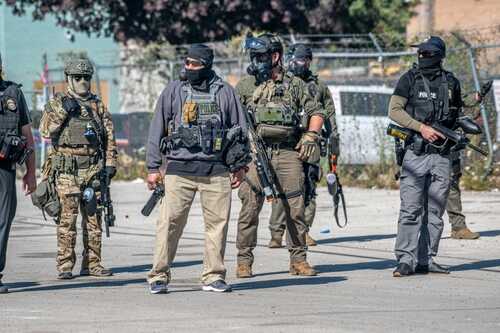
The U.S. Department of Justice (DOJ) released data this month regarding the 614 immigrants detained during a series of federal immigration enforcement actions, known as “Operation Midway Blitz,” conducted by U.S. Immigration and Customs Enforcement (ICE) in Chicago between June and October 2025.
Story Highlights
- Of the 614 immigrants detained in the Chicago ICE operations, 598, or 97.4%, had no prior criminal records.
- The detentions were carried out during an operation that federal agencies stated was intended to remove dangerous criminals.
- Federal Judge Jeffrey Cummings extended a consent decree, increasing the eligibility for release on bond or monitoring devices for detainees.
- The ACLU of Illinois and the National Immigrant Justice Center are among advocacy groups that have initiated legal challenges and public protests.
ICE Enforcement and Detainee Data
Data released by the Department of Justice indicates that out of the 614 immigrants detained by ICE in Chicago from June to October 2025, only 16 were found to have criminal records. This information has been cited in legal and community discussions regarding the scope of the enforcement operations. The raids, which were executed using federal resources including mass arrests, were publicly described by the Trump administration as operations targeting “the worst of the worst.” The Department of Homeland Security (DHS), which oversees ICE, continues to assert that national operations primarily target criminals, but has faced scrutiny over the data specific to the Chicago actions.
New data from the Department of Justice found that 97% of the 600+ Chicagoans abducted by ICE had no criminal records.
Trump’s thugs terrorized our city for just a handful of lawbreakers. We need to get ICE under control before they attack other cities as well.#ice #chicago pic.twitter.com/Nq7Xk326XP
— Mike Quigley (@RepMikeQuigley) November 21, 2025
Judicial and Community Response
Judicial oversight has increased following the operations. Federal Judge Jeffrey Cummings extended a consent decree designed to provide protections for immigrants from certain detentions. The extension also increases the number of detainees eligible for release on bond or monitoring devices, highlighting the ongoing legal environment surrounding the raids.
Simultaneously, community protests have taken place across Chicago. Advocacy groups, including the ACLU of Illinois and the National Immigrant Justice Center, have challenged the legality of the detentions and called for greater accountability. These organizations have raised concerns that the targeting of immigrants without criminal records has resulted in family disruption and economic hardship.
Policy and Legal Context
With the DOJ’s release of the criminal record data, the focus shifts to a reevaluation of current immigration enforcement priorities. The possibility of many detainees becoming eligible for release has intensified the discussion on long-term policy reform and the necessity for a more targeted approach to enforcement. The outcomes of continuing legal challenges may establish precedents for future immigration enforcement actions across the United States. The controversy surrounding the operations also contributes to a broader public debate regarding the balance between national security and the protection of individual rights.
Watch the report: Data shows very small percentage of people arrested by ICE in Chicago area had criminal records
Sources:
DOJ Figures Show 97.4% of 614 Detained Immigrants in Chicago Had No Criminal Record
Ninety-Seven Percent of Chicago ICE Arrests Had No Criminal Record
DOJ Records Show Hundreds of Immigrants Arrested in Chicago Had No Criminal Histories