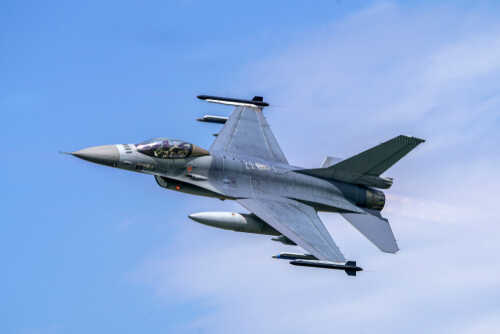
A routine training flight took a turn when a U.S. Air Force Thunderbirds F-16C Fighting Falcon crashed in the remote desert landscape of San Bernardino County, California. Captured on widely shared video, the incident destroyed the $20 million aircraft but, miraculously, left the pilot with only minor injuries following a successful ejection. Military authorities are now investigating the cause of the high-profile crash near Death Valley.
Story Snapshot
- An F-16C Fighting Falcon crashed in California, resulting in a $20 million loss.
- The incident was captured on video, widely shared on social media.
- The pilot ejected safely, sustaining only minor injuries.
- The crash is under investigation by military authorities.
Dramatic Crash in the Desert
On December 3, 2025, an F-16C Fighting Falcon operated by the U.S. Air Force Thunderbirds crashed on a dry lake bed near Trona Airport in San Bernardino County, California. The incident quickly garnered attention due to its dramatic nature and the high-profile status of the Thunderbirds. Video footage shared by the @DisasterAlert2 X account captured the moment of impact, showing a massive plume of smoke rising in the remote desert landscape.
The pilot successfully ejected from the aircraft and sustained only minor injuries, a testament to the effectiveness of modern ejection systems. The Thunderbirds, known for their precision flying and aerial demonstrations, face the temporary loss of an aircraft valued at approximately $20 million. Despite the loss, the pilot’s survival without serious injury marks a fortunate outcome in a potentially catastrophic situation.
Ongoing Investigation
The investigation into the crash is being led by the China Lake Police Department and Naval Air Weapons Station China Lake. As of December 4, 2025, the cause of the crash remains unclear. Military and law enforcement agencies are collaborating to determine the factors that led to the incident. The U.S. Air Force is committed to maintaining safety standards and will review operational protocols based on the investigation’s findings.
This incident highlights the inherent risks of military aviation, particularly during demonstration flights that push aircraft to their operational limits. The Thunderbirds have historically maintained a strong safety record, and this event underscores the importance of rigorous safety protocols and pilot training.
Thunderbird Crash: Training flight ends in fiery crash!
📡 What We Know: An F-16C Fighting Falcon from the U.S. Air Force Thunderbirds crashed during a training mission near Trona Airport in California. The pilot ejected with minor injuries. Crash cause is under investigation. pic.twitter.com/0Zfv4qiTgV— John Cremeans (@JohnCremeansX) December 4, 2025
Implications and Public Concern
The crash has led to public concern about aviation safety, especially given the dramatic footage. However, the successful ejection and minor injuries sustained by the pilot mitigate negative perceptions. The loss of the aircraft represents a significant financial impact, necessitating budget considerations for replacement or repair.
The investigation’s findings could influence safety protocols across military aviation operations. If any procedural issues are identified, the Thunderbirds may need to adjust their performance routines or training programs. The incident could also prompt other military demonstration teams to review their safety measures.
Watch the report: F-16 Fighter Jet Crashes in the Trona, Southern California |Pilot Safety Details Under Investigation
Sources:
Video Shows US Military Plane Crash Near Death Valley
Air Force pilot safely ejects before F-16 fighter jet crashes in California desert
Video Shows US Military Plane Crash Near Death Valley