
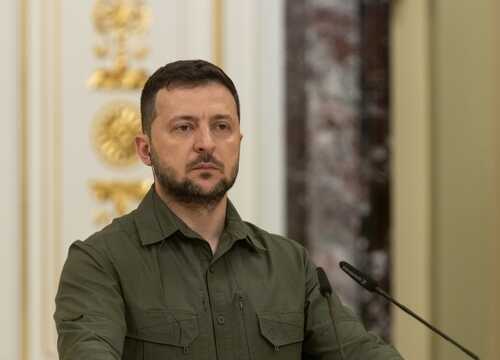
Ukraine’s willingness to pause its NATO ambitions could redefine the geopolitical landscape in Eastern Europe, raising critical questions about the future of security dynamics in the region. This significant development centers on Ukraine reportedly considering a suspension of its formal NATO membership bid in exchange for robust security guarantees from a “coalition of the willing,” including the U.S. and European allies. This proposal offers a potential shift in the security architecture, offering an interim solution to the conflict with Russia while maintaining Ukraine’s long-term Euro-Atlantic goals.
Story Highlights
- Ukraine considers pausing NATO bid for security guarantees.
- Potential shift in security architecture with a non-NATO coalition.
- Implications for U.S. and European security commitments.
- Concerns over long-term deterrence against Russian aggression.
Ukraine’s Strategic Shift
In a significant development, Ukraine is reportedly considering pausing its NATO membership ambitions in exchange for robust security guarantees from a coalition of willing nations, including the U.S. and European allies. This proposal, if realized, could reshape the security framework in Eastern Europe, offering a temporary solution to the ongoing conflict with Russia while maintaining Ukraine’s long-term Euro-Atlantic aspirations.
Ukrainian President Volodymyr Zelenskyy has signaled a readiness to suspend the formal NATO bid, contingent upon receiving strong, enforceable security commitments. This move aligns with ongoing diplomatic efforts involving high-profile envoys and back-channel discussions aimed at establishing a new security architecture outside the traditional NATO framework.
Zelensky DROPS Ukraine’s NATO bid — Reuters
He told reporters he’s willing to trade full-on membership for ‘bilateral security guarantees’ from US and Europe
He says it’s ‘already a compromise’ — it’s actually less than the bare minimum pic.twitter.com/vuUyBe0d9X
— RT (@RT_com) December 14, 2025
The Role of European Allies
European nations, alongside the United States, are exploring the feasibility of creating a “coalition of the willing” to provide Ukraine with the necessary security assurances. This initiative reflects Europe’s growing need to bolster its strategic autonomy amid shifting U.S. foreign policy priorities. The coalition would aim to offer a credible deterrent against Russian aggression, leveraging existing bilateral security agreements under the G7 framework.
NATO’s role remains crucial, as it continues to provide political backing and logistical support to Ukraine. The alliance has expressed its support for Ukraine’s eventual membership while acknowledging the interim need for alternative security arrangements. This dual approach underscores NATO’s commitment to deterring Russian threats without escalating tensions.
Ukraine’s Shift: Zelenskyy Drops NATO Bid for Bilateral Security Guarantees
Implications for Regional Security
The potential shift in Ukraine’s NATO strategy raises important questions about the long-term stability of Eastern Europe. While a non-NATO security guarantee could facilitate negotiations with Russia, it must be robust enough to deter future aggression. The credibility of such guarantees is pivotal, as previous informal agreements, like the Budapest Memorandum, have failed to prevent breaches of Ukrainian sovereignty.
Additionally, the establishment of a coalition-based security regime may alter the post-Cold War order, moving away from a NATO-centric model to a more flexible, multi-layered architecture. This transition could redefine power dynamics in the region, impacting not only Ukraine but also neighboring states concerned about their security perimeters.
Watch the report: Ukraine Willing To Drop NATO Bid For Security Guarantees | WION News
Sources:
NATO’s Partnerships and Cooperation with Ukraine
Zelensky offers to drop NATO bid for security guarantees but rejects US push to cede territory
Ukraine offers to drop Nato membership demands