More than a million people packing central Madrid to hear a pope preach faith, family, and the dignity of the poor sends a message that should rattle every secular elitist who keeps insisting Christianity is dying in the West.
Story Snapshot
- Over one million worshippers reportedly filled Madrid’s Plaza de Cibeles and surrounding streets for Pope Leo XIV’s Corpus Christi Mass and procession.
- The visit comes as corporate media and secular activists keep pushing religion to the margins, yet ordinary people still flock to public displays of faith.
- Pope Leo’s message in Spain emphasized that the faith cannot be locked in a “museum of the past” and that God stands with the poor and forgotten.
- The scale of the crowd exposes how global elites misread the hunger for tradition, family, and public expressions of Christian belief.
Historic Turnout in a Secularizing Spain
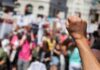
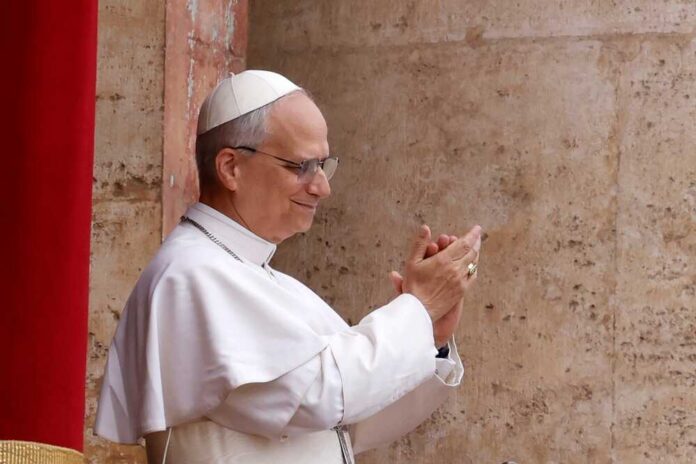
Reports from Catholic and local news outlets describe Pope Leo XIV’s Sunday Corpus Christi Mass and procession in Madrid as the largest event of his pontificate, with estimates around 1.2 million people gathered in and around Plaza de Cibeles. A short news clip notes that “more than a million people poured into a central Madrid plaza” for the main Mass and procession, underscoring that this was not a routine parish gathering but a national-scale moment. Madrid authorities and church organizers had already framed the papal trip, scheduled from June 6 to 12 with Pope Leo in Madrid June 6 to 9, as a major civic and religious event for the city.[1]
The massive Sunday crowd followed another striking scene the previous evening: a youth prayer vigil in central Madrid that drew approximately 500,000 young people, according to organizer estimates reported by a Catholic news service.[1] That event combined music, testimonies, Marian devotion, and Eucharistic adoration, with young people filling the plaza and surrounding streets hours before the pope arrived.[1] Together, the vigil and the Corpus Christi celebration created a two-day surge of visible Catholic witness in a country where surveys show many self-identified Catholics rarely attend Mass. For believers frustrated by constant talk of “decline,” these scenes looked like a popular referendum for faith in public life.
Pope Leo’s Message: Faith Is Not a Museum Piece
During his visit, Pope Leo XIV confronted head-on the narrative that Christianity belongs only in private life or history books, telling secular Spain not to leave the Catholic faith in the “museum of the past.” In his homilies and addresses, he urged Catholics to live a faith that is concrete and public, not merely “comfortable” or “private,” as one report on the Madrid events summarized. He challenged the crowd to see the poor and marginalized not as statistics but as brothers and sisters, stressing that God stands with the poor and that believers are called to do the same. That message resonates in an era of rising economic pressures, globalist technocracy, and cultural elites who often dismiss both the working class and traditional religion.
A separate account of his youth encounter in Madrid quoted Pope Leo urging young people to become “men and women of flesh and blood,” rejecting superficial digital façades in favor of real, committed lives rooted in Christ.[1] That appeal runs directly against the grain of a culture saturated with social media performance, disposable relationships, and identity politics. For many conservative Christians watching from abroad, his words in Spain echoed longstanding concerns about how modern consumerism and ideologically driven education tear at the foundations of family, community, and moral responsibility. Instead of offering vague spirituality, he called for concrete discipleship—and half a million young people showed up to listen.[1]
Crowd Numbers, Media Spin, and the Battle Over Public Faith
Coverage of the Madrid events illustrates a familiar media pattern: claims of “more than a million” attendees emerge first from live narration, organizers, and sympathetic outlets, while official police-style counts and forensic crowd analyses are slower or absent.[3] In this case, several Catholic and local reports explicitly cited figures above one million for the Corpus Christi Mass and procession, with one Catholic outlet stating that 1.2 million people participated. No primary-source rebuttal from city authorities or independent auditors has surfaced in the available reporting, leaving the higher estimate unchallenged but not mathematically certified.[2]
🇪🇸 1.2 million people packed Madrid's Cibeles Square today for Pope Leo XIV's Sunday mass.
Real Madrid fans use that same square to celebrate titles. Today it had a different kind of crowd.
Writer: Juliepic.twitter.com/BhCE7x7osI https://t.co/h0IdqLYOMW
— Mario Nawfal (@MarioNawfal) June 7, 2026
That ambiguity matters because crowd numbers themselves have become part of the cultural struggle. Large religious gatherings are often downplayed or framed as outliers by secular commentators, while activist marches aligned with progressive causes receive glowing coverage and uncritical acceptance of high attendance claims. Here, though, the visual evidence of packed plazas and streets in Madrid is difficult to square with the idea that public Christianity is disappearing.[2] The broader context underscored by one analysis is that attendance numbers at mass events are frequently rounded up or relayed without transparent methods, yet the underlying reality—a huge, energetic Catholic presence in Spain’s capital—is not seriously in dispute.[3]
Why This Matters for Conservatives Watching from America
For American readers who care about religious liberty, family, and constitutional protections, the Madrid scenes carry a warning and an encouragement. The warning is that secularization, demographic decline, and aggressive ideological campaigns can hollow out Christian practice over time, just as surveys show nearly half of Spanish Catholics almost never attend Mass. The encouragement is that when believers are given clear teaching, public space, and freedom to gather, they still respond in enormous numbers. That truth pushes back against narratives used to justify restricting faith in the public square.
As debates rage in the United States over school prayer, conscience rights, and government attempts to police speech and belief, the sight of over a million people peacefully assembling around the Eucharist in a major European capital is a powerful reminder: ordinary people still want God, not just government. Madrid’s experience suggests that the deeper question is not whether faith has a future, but whether Western leaders will respect that future—or try to regulate it out of existence.
Sources:
[1] YouTube – More than a million line Madrid’s streets to cheer Pope Leo
[2] Web – Pope Leo XIV’s visit to Madrid
[3] YouTube – LIVE: Pope Leo Holds An Open Air Mass In Madrid’s Cibeles Square