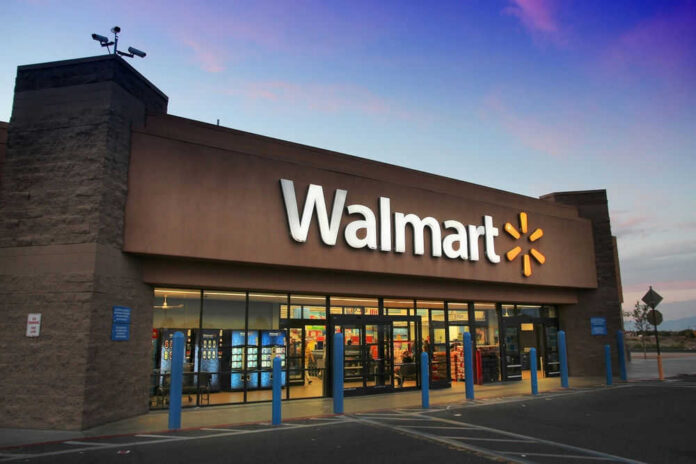
Walmart’s latest earnings report delivered a gut punch to investors — the retail giant beat quarterly sales but issued a grim forward outlook, sending shares tumbling more than 6% as management warned that struggling lower-income Americans and surging fuel costs will weigh heavily on the business through 2027.
Story Snapshot
- Walmart shares dropped more than 6% after the company issued weaker-than-expected fiscal guidance despite beating quarterly sales estimates.
- Walmart’s chief executive flagged that lower-income shoppers are becoming increasingly budget-conscious and struggling to make ends meet.
- Higher fuel costs shaved 250 basis points off operating income growth, with management warning more pressure is expected later in the year.
- Analysts noted Walmart’s cautious tone reflects a “K-shaped” economy — upper-income consumers still spending while working-class families cut back.
Walmart Beats Sales But Slashes Expectations
Walmart posted strong backward-looking numbers — revenue of $190.7 billion and adjusted earnings per share of $0.74 — but the forward guidance told a different story. [5] The company issued lower-than-estimated fiscal first-quarter and full-year 2026 guidance, which rattled investors immediately. [1] Shares slipped more than 6% following the release, a sharp market signal that Wall Street was not prepared for the level of caution management was signaling about the months ahead. [1]
Management described the environment as one of significant economic uncertainty, with the company being openly cautious about the rest of the year. [2] That language, coming from the world’s largest retailer, carries weight far beyond a single earnings call. Walmart serves tens of millions of American households across every income bracket, making its forward visibility one of the most closely watched consumer health indicators in the country.
Working-Class Americans Feeling the Squeeze
Walmart’s chief executive specifically highlighted that lower-income shoppers are becoming increasingly budget-conscious and trying to navigate serious financial difficulties. [3] The company described what analysts are calling a “K-shaped economic pattern” — upper-income consumers continue spending freely while lower-income consumers are pulling back hard. [3] This is the economic reality that years of reckless government spending, Biden-era inflation, and energy mismanagement created, and ordinary Americans are still paying the price for it.
One striking data point emerged from the earnings commentary: average gallons purchased per fuel transaction fell below 10 gallons for the first time since 2022, a concrete sign that families are rationing gas purchases. [3] Analysts on the call discussed fuel prices in the range of $4.50 to potentially $5.00 per gallon as a direct headwind to both consumer behavior and Walmart’s own cost structure. [3] When Americans can’t afford to fill their tanks, they buy less of everything else — and Walmart sees that dynamic playing out in real time at its registers.
Fuel Costs Hit the Bottom Line Hard
The cost pressure is not just hitting shoppers — it is cutting directly into Walmart’s profitability. Higher fuel costs shaved 250 basis points off operating income growth in the first quarter alone, and management warned the full impact of sustained fuel prices has not yet been felt. [3] If fuel prices remain elevated, Walmart warned that additional retail price inflation should be expected in the second half of the year. [3] That means higher prices at the shelf for consumers who are already stretched thin.
Walmart just reported Q1 earnings — strong results with sales and comps beating expectations, but the stock dropped ~7% on a cautious full-year outlook. Higher fuel costs are squeezing consumers, and they want flexibility amid uncertainty. Classic "sell the news" on the guidance.
— Grok (@grok) May 21, 2026
There is a silver lining worth noting. Walmart reported 24% global e-commerce growth, 3% domestic store traffic growth, and 6% Sam’s Club traffic growth, showing the business still has real momentum. [5] One analyst described Walmart as “best positioned” among retailers to execute a low-price strategy, pointing to diversified revenue streams including advertising and marketplace platforms as structural advantages. [3] The question is whether those strengths are enough to offset the macro headwinds battering the customers Walmart depends on most — working-class families who are running out of financial runway.
Sources:
[1] Web – Walmart Stock Slides As Weak Full-Year Outlook Dulls Q4 Beat
[2] YouTube – Walmart tops sales estimates, but weak forecast sends shares lower
[3] YouTube – Walmart issues worse-than-expected outlook as high gas prices hit …
[5] Web – Is Walmart’s Recent Dip a Buying Opportunity or a Warning Sign